
The 2026 Blueprint: Cheaper Bots, Faster Drugs, and Borderless AI
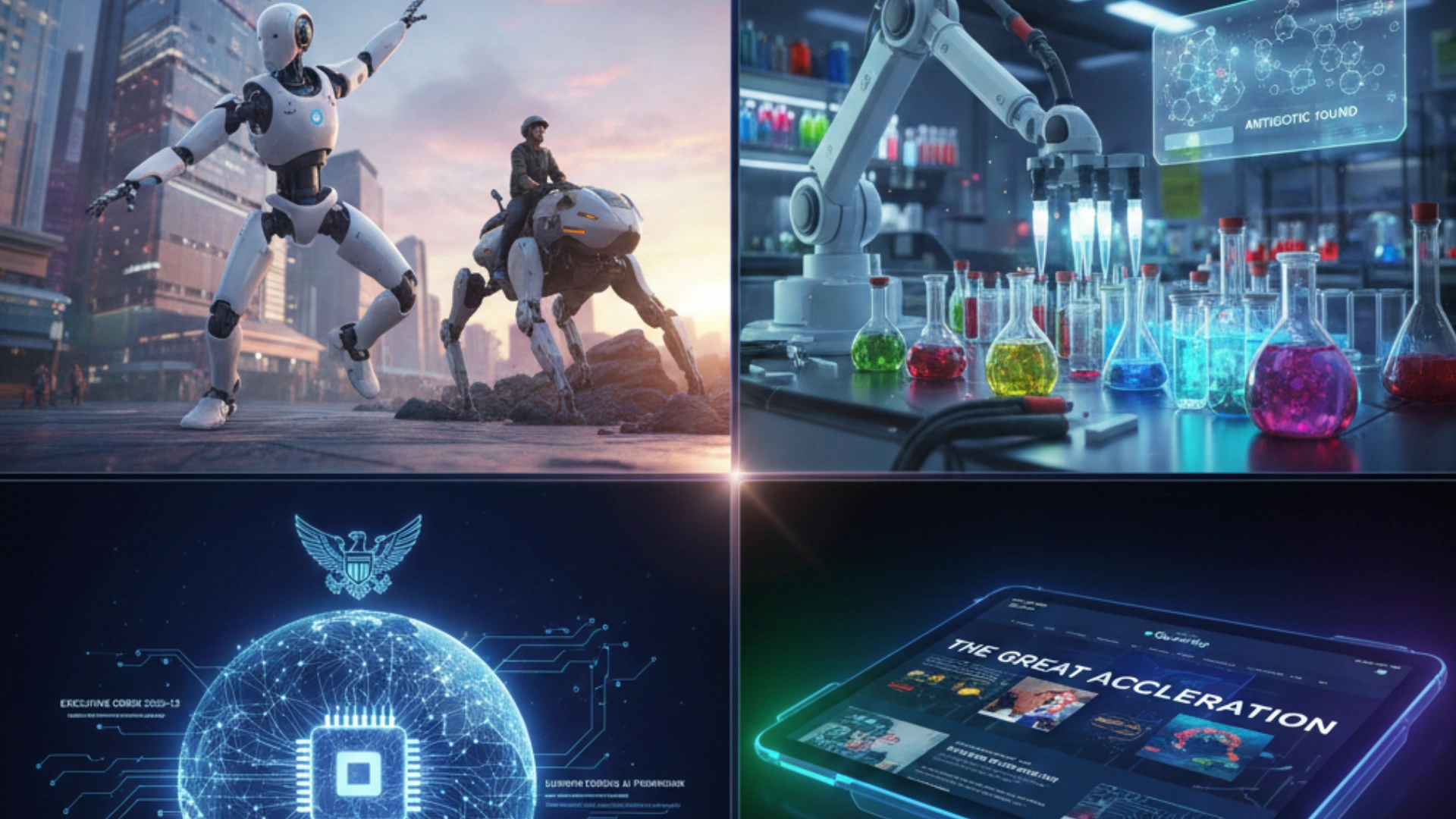
The Robotic Chemist: Solving the Antibiotic Crisis in Seven Days
For decades, the hunt for new antibiotics has been a slow, grueling race against time. But at the University of York, time just lost the lead. Using a high-speed robotic platform, researchers managed to synthesize 700 new metal-based compounds in just one week—a task that would have taken a human chemist years to complete.
This isn’t just about speed; it’s about survival. By identifying an iridium-based complex that kills MRSA without harming human cells, this “robotic chemist” has proven that AI-driven automation is our best shot at winning the war against drug-resistant superbugs. Source: Nature Communications; University of York Research.
The $6,000 Humanoid: Robotics for the Rest of Us
High-end robotics used to be reserved for billionaires and research universities. That era ended this week with the global launch of the Unitree R1. Priced at roughly $5,900, this humanoid robot is effectively the “Model T” of the 2020s.
While it’s agile enough to perform a backflip, its true value lies in its accessibility. Small businesses and developers can now own a platform that interacts with the physical world, handles inventory, or assists in home care. The R1 represents a shift from “experimental tech” to a household utility. Sources: Unitree Official Launch Data; TIME Best Inventions.
The Power Play: Nvidia and Groq Redefine “Real-Time”
In the world of AI, speed is the ultimate currency. Nvidia’s recent $20 billion partnership with Groq (and the subsequent hiring of their core engineering team) is a clear signal: the industry is moving from training AI to running it at the speed of human thought.
By integrating Groq’s ultra-fast Language Processing Units (LPUs) into Nvidia’s hardware stack, the latency that used to plague AI agents is disappearing. For anyone working in AR design or autonomous systems, this means “real-time” finally actually means real-time. Source: Groq Newsroom.
Borderless AI: A New Federal Framework for Innovation
Navigating the legal maze of AI has been a nightmare for developers, with every state passing its own rules. That changed with Executive Order 2025-12. The U.S. government has introduced a “minimally burdensome” federal standard designed to streamline how AI is deployed across state lines.
This move toward a “Borderless AI” ecosystem is intended to keep the West competitive against rapid global expansion. By creating a unified legal blueprint, the goal is simple: let the innovators innovate without being bogged down by a patchwork of conflicting local laws. Source: White House Official Archives; Mayer Brown Analysis.
From Machines to Companions: The Lessons from iREX Tokyo
The International Robot Exhibition (iREX) in Tokyo recently showcased a softer side of the machine age. While industrial efficiency is still key, companies like Kawasaki unveiled robots like the CORLEO—a rideable, four-legged robot designed for navigating rugged terrain or assisting the elderly.
The takeaway from Tokyo is clear: robots are no longer just tools behind a safety fence. They are becoming our companions, designed to coexist in our homes and public spaces with bio-inspired movements and intuitive AI interfaces. Sources: iREX 2025 Tokyo Big Sight; Kawasaki Robotics.



One Comment