

Beyond the Chatbot: Why 2025 is the Year of Agentic AI for Indian Enterprises
With nearly half of Indian firms moving AI projects into production, agentic AI is automating complex workflows — from compliance to customer experience — reshaping the enterprise workforce.
The End of “Pilot Purgatory”
The era of isolated AI experiments in Indian companies is giving way to deployment at scale. According to the EY-CII AI report, 47% of Indian enterprises now have multiple GenAI use cases live in production — a clear shift from pilots to performance.
This is more than chatbots — it signals agentic AI adoption, where AI systems don’t just respond but execute tasks within workflows, collaborate with systems and people, and deliver measurable operational outcomes.
What Makes Agentic AI Different
- Standard Generative AI answers questions; Agentic AI acts on them.
- Tasks like service fulfilment, compliance reporting, or dynamic data reconciliation can be automated end-to-end.
Major Indian IT players — including TCS, Infosys, and Cognizant — are now deploying agent-enabled copilots and systems at scale after Microsoft’s enterprise push this year.
Impact in Numbers
While granular adoption stats (e.g., “80% automation in compliance”) vary by sector and company, key trends include:
- 47% of firms live with multi-AI workflows.
- 76% of business leaders see significant impact from GenAI adoption.
- Adoption focus is increasingly shifting toward agentic architectures rather than isolated GenAI tools.
The Human Side: Skill and Work Shifts
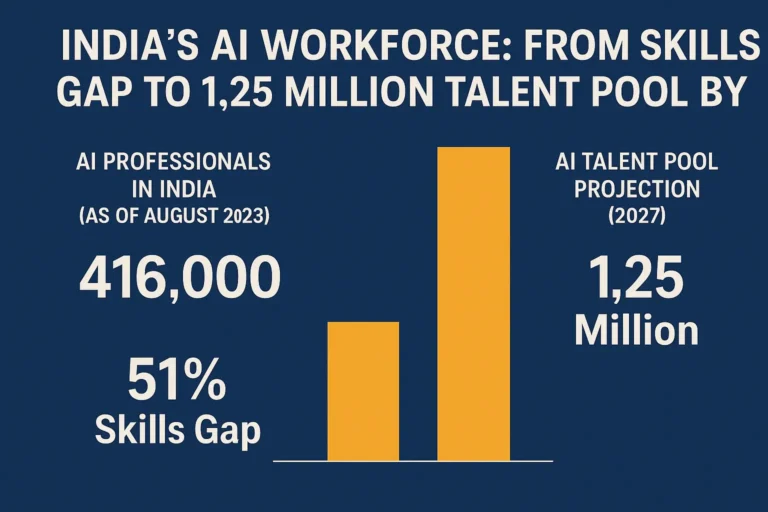
India’s tech workforce exceeds 6 million, yet enterprises consistently report a skills gap around AI operationalization and agent orchestration. While exact percentages vary by survey, the emphasis is on reskilling for agent workflows, data engineering, and AI governance — not just coding.
Takeaway: Agentic AI isn’t about replacing humans — it’s about amplifying human roles, shifting labor from repetitive tasks to oversight, strategy, and creative problem-solving.




One Comment