AISAP Cardiac AI Diagnosis: The Israeli Breakthrough Transforming Global Heart Care
Artificial intelligence is reshaping healthcare.
In cardiology, that shift is already happening at the bedside.
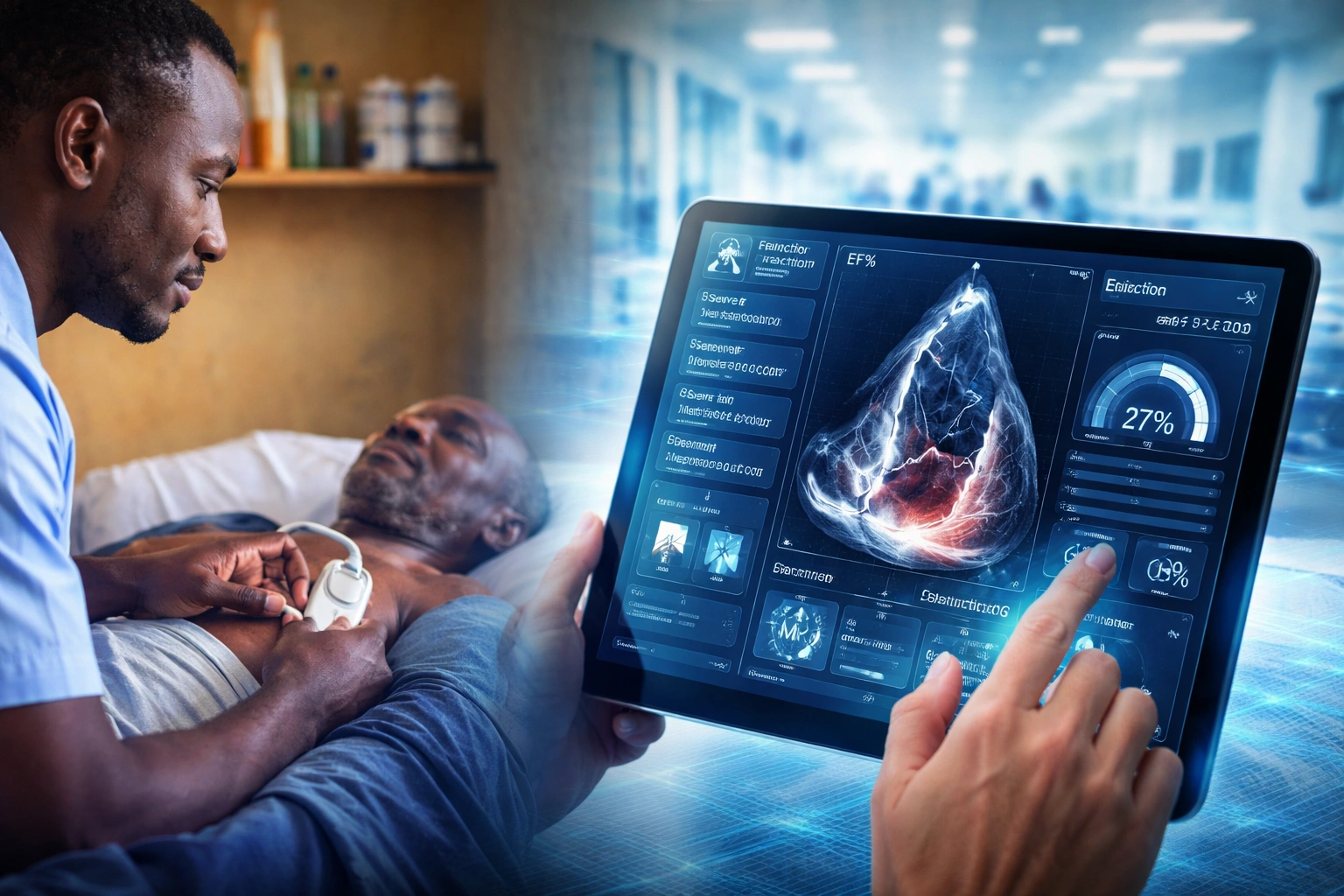
In a rural clinic in Ghana, a physician holds a handheld ultrasound probe. On a tablet nearby, AI software analyzes the patient’s heart in real time. Within minutes, a structured cardiac report appears.
No cardiologist.
No echo lab.
No waiting list.
This is AISAP cardiac AI diagnosis.
Why Cardiac Diagnosis Is a Global Challenge
Cardiovascular disease remains the leading cause of death worldwide. According to the World Health Organization, an estimated 17.9 million people die each year from heart-related conditions.
Heart failure affects millions globally. In the United States, the Centers for Disease Control and Prevention reports that more than six million adults live with heart failure.
However, diagnosis often comes late.
A full echocardiogram requires trained technicians and cardiologist interpretation. In large hospitals, that system works. In smaller towns and rural regions, it slows down.
In parts of sub-Saharan Africa, access to cardiologists is extremely limited.
As a result, physicians often treat cardiac patients without real-time structural insight.
This is the bottleneck AISAP cardiac AI diagnosis aims to solve.
What Is AISAP Cardiac AI Diagnosis?
AISAP cardiac AI diagnosis is an FDA-cleared platform designed for point-of-care ultrasound.
Doctors use handheld ultrasound devices to scan the heart at the bedside. The AI system analyzes heart function, valve abnormalities, and structural indicators within minutes.
If the image quality is poor, the software prompts the doctor to adjust the probe. This improves reliability.
The technology was developed in collaboration with clinicians at Sheba Medical Center.
Importantly, AISAP cardiac AI diagnosis has received clearance from the U.S. Food and Drug Administration. This regulatory approval distinguishes it from experimental AI tools still confined to research environments.
In 2025, Fast Company recognized AISAP as one of the world’s most innovative healthcare companies.
Clinical Impact and Validation
AI in healthcare must prove its value.
Clinical evaluations have shown that AISAP cardiac AI diagnosis can match specialist-level interpretation for defined structural assessments.
In prospective use, the platform reportedly changed patient management decisions in roughly one-third of scanned cases.
That figure is significant.
Earlier diagnosis leads to earlier intervention. Earlier intervention improves outcomes.
In busy emergency departments, immediate cardiac insight can change discharge decisions, admission timing, and treatment pathways.
Real-World Deployment in Ghana
AISAP cardiac AI diagnosis has been deployed in clinical programs in Ghana. Local physicians were trained to use portable ultrasound devices connected to the AI system. Thousands of scans were conducted to detect heart failure and valve disease at earlier stages.
This deployment demonstrates scalability in low-resource settings.
The same FDA-cleared technology used in U.S. hospitals can function in rural clinics. That matters.
Why AISAP Matters for Emerging Healthcare Regions
Many regions face specialist shortages. Northeast India, parts of Southeast Asia, and several African countries share this challenge.
AISAP cardiac AI diagnosis does not replace cardiologists. Instead, it extends their expertise into district hospitals and community clinics.
This reduces referral delays. It speeds up triage. It improves access.
Cardiac expertise becomes portable.
The Bigger Shift in Healthcare
AISAP’s cardiac platform may be only the beginning.
If AI-supported diagnostics expand to other organ systems, healthcare could shift from centralized specialist dependence to distributed intelligence.
The bottleneck that once defined cardiac diagnosis may no longer be permanent.
AISAP cardiac AI diagnosis represents more than innovation.
It represents decentralization.https://thequantiq.com/sunday-brief-3/