Banking on Bharat: How NBFCs and Digital Lenders Are Reacting to RBI’s Rate Cut
When the Reserve Bank of India reduced interest rates, the signal went far beyond bond markets and bank treasuries. It directly impacted how credit flows to India’s real economy — especially through NBFCs and digital lenders, which now sit at the heart of MSME, startup, and consumer financing.
For borrowers, the question is simple: Will credit become easier?
For lenders, the challenge is harder: How to grow without repeating past mistakes?
Why NBFCs Matter More Than Ever
India’s formal banking system does not reach everyone equally. NBFCs and fintech-led lenders fill that gap by serving:
- MSMEs without long credit histories
- Startups in early growth phases
- Self-employed and gig workers
- Tier-2 and Tier-3 city consumers
Over the last decade, NBFCs have become credit multipliers, pushing liquidity into segments that traditional banks approach cautiously.
With a rate cut, their role becomes even more critical.
How Rate Cuts Actually Affect NBFCs
Contrary to popular belief, lower policy rates do not automatically mean higher profits for lenders.
The upside:
- Reduced borrowing costs from banks and bond markets
- Improved borrower affordability
- Potential increase in loan demand
The downside:
- Pressure on net interest margins
- Higher competition from banks
- Increased scrutiny on asset quality
NBFCs must now balance growth ambitions with credit discipline.
Digital Lenders: Growth With Guardrails
Digital lending platforms expanded rapidly in the easy-money years. Many relied on:
- Aggressive customer acquisition
- Algorithm-driven underwriting
- Short-tenure, high-frequency loans
That model is now being stress-tested.
Post rate cut, digital lenders are:
- Tightening credit filters
- Prioritizing repeat customers
- Shifting focus from volume to portfolio quality
The emphasis has moved from loan disbursal speed to loan sustainability.
MSMEs and Startups: Relief, But Not a Free Pass
For MSMEs and startups, lower rates offer breathing room — not blank cheques.
What improves:
- Slightly lower EMIs
- Better working capital access
- Improved refinancing options
What remains difficult:
- Credit approval standards
- Collateral requirements
- Cash flow documentation
Lenders are no longer funding growth narratives alone. They are funding cash visibility.
Asset Quality Is the Real Battleground
After past cycles of stress, NBFCs have learned a hard lesson:
Bad loans erase good growth.
As a result:
- Loan books are being actively rebalanced
- High-risk segments face tighter caps
- Provisioning norms are conservative
Even as rates ease, credit discipline is non-negotiable.
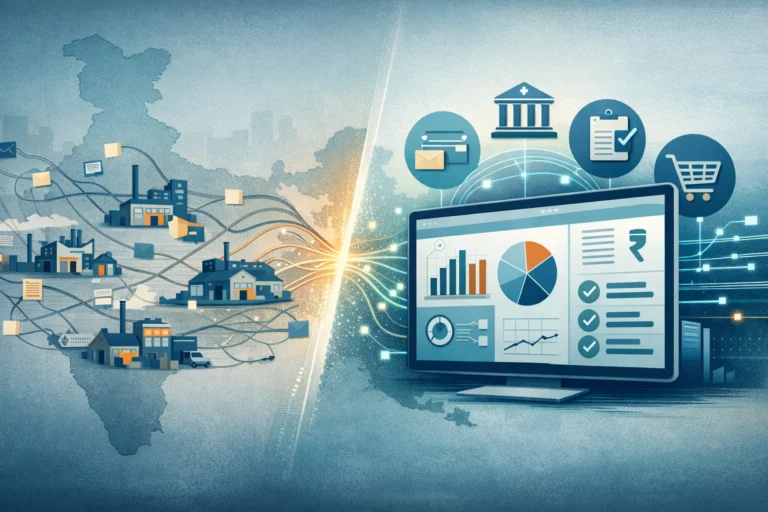
Fintech–NBFC Partnerships Are Deepening
One of the most important post-rate-cut trends is collaboration.
Banks provide capital.
NBFCs provide reach.
Fintechs provide technology.
Together, they are:
- Lowering operational costs
- Improving credit scoring accuracy
- Expanding credit access responsibly
This hybrid model is fast becoming the new credit architecture of India.
Regulatory Oversight Remains Firm
The RBI has made its position clear:
Innovation is welcome, but systemic risk is not.
Key areas under watch:
- Digital lending practices
- Customer consent and data usage
- Transparency in pricing
- Collection methods
For NBFCs and fintechs, regulatory alignment is now a competitive advantage, not a burden.
What This Means for the Indian Economy
Credit is the bloodstream of growth. When it flows responsibly:
- MSMEs expand
- Jobs are created
- Consumption stabilizes
- Startups scale sustainably
The current phase signals a shift from credit expansion at any cost to credit growth with accountability.
The Quantiq View
The RBI’s rate cut has opened a window — not for reckless lending, but for measured confidence.
NBFCs and digital lenders that combine:
- Strong underwriting
- Technology-led efficiency
- Regulatory discipline
will emerge as the true enablers of India’s next growth cycle.
Credit is returning — but this time, it is choosing wisely.