

Beyond Bamboo Products: Why North East India Must Stop Importing Technology and Start Exporting Innovation
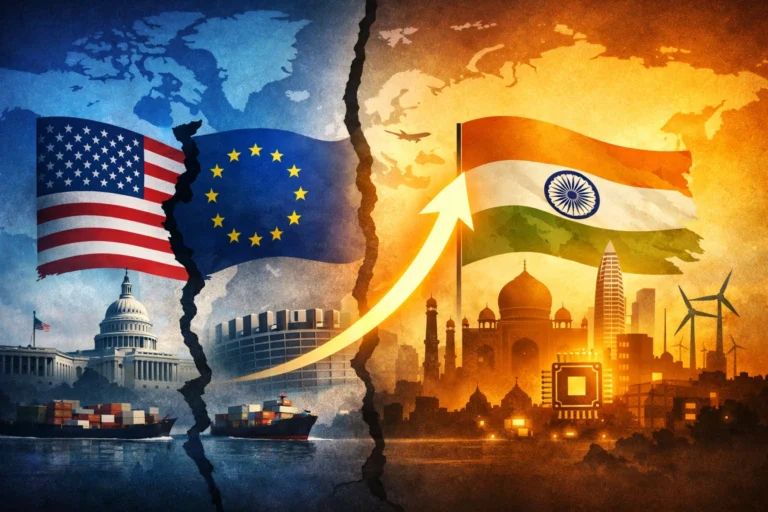
The proposed India–European Union Free Trade Agreement is forcing India to confront an uncomfortable reality. Europe is no longer a market that merely buys products. It buys proof. Proof of compliance. Proof of science. Proof of systems.
For North East India, this trade moment is not about tariffs or access. It is about relevance.
The region must decide whether it wants to enter the global economy as an innovator—or remain trapped as a supplier of raw materials and low-value products, only greener this time.
The Illusion of Value Addition
For decades, development thinking in the North East has rested on a comforting idea: convert what we grow into something we can sell. Bamboo into furniture. Tea into branded packets. Forest produce into handicrafts.
This is value addition, yes—but it is not innovation.
Innovation begins where value addition ends. It starts when raw material becomes knowledge. When biology becomes chemistry. When agriculture becomes science.
Turning bamboo into a chair competes on price. Turning bamboo into a lab-certified industrial input competes on intelligence. Only one of these survives global competition.
The Jugaad Trap We Refuse to Acknowledge
India romanticises jugaad as cleverness. In reality, it has become a convenient way to avoid hard questions about research, patience, and long-term capital.
The prevailing mindset in the North East is simple and deeply flawed. We have resources. Let us import machines. Let us start manufacturing.
This thinking guarantees thin margins. It locks the region into permanent dependence on foreign technology. And it ensures that intellectual property—the real source of economic power—never belongs here.
China did not dominate bamboo, textiles, or materials by being good at manufacturing alone. It dominated by mastering materials science. By controlling standards. By owning the technology behind the product.
Importing Technology Is Not Industrialisation
There is a dangerous belief that importing bamboo processing and manufacturing technology will somehow create an innovation ecosystem in the North East. It will not.
At best, it creates assembly units. At worst, it creates a dependency loop that cannot be exited. Machines depreciate. Knowledge compounds.
Real power does not lie in what comes out of the factory. It lies in what goes into the process—inputs that are lab-tested, certified, and globally trusted.
Innovation Begins With Inputs, Not Products
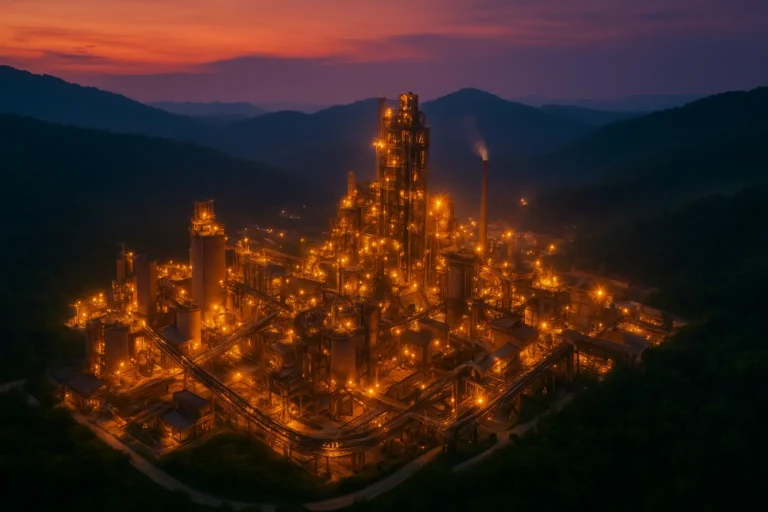
If North East India wants to matter in a post–India–EU trade world, it must stop obsessing over finished goods and start building expertise in high-value inputs.
Europe is not hunting for more furniture makers. It is hunting for sustainable fibres, bio-resins, functional additives, engineered materials, and industrial enzymes. These are the invisible components that modern industries depend on.
Products compete in crowded markets. Inputs shape entire industries.https://thequantiq.com/gi-tagging-northeast-india-economic-transformation/
Bio-Enzymes: The Opportunity Nobody Is Talking About
This is where the silence becomes deafening.
North East India is one of the most biologically rich regions on the planet. Bamboo, forest biomass, agricultural residues, microbial diversity—this is a dream landscape for bio-enzyme research.
And yet, bio-enzymes barely feature in policy discussions, media narratives, or industrial planning.
Bio-enzymes power sustainable textiles, food processing, paper, biofuels, pharmaceuticals, and green construction. They sit at the heart of Europe’s green transition. They are high-margin, IP-heavy, and science-driven.
With the right research ecosystem, North East India could become a global enzyme innovation hub. Instead, it debates whether bamboo boards can be made cheaper.https://thequantiq.com/sikkim-creative-economy-startup-policy-nid/
Two Centuries of Tea, and Still No Breakthrough
Then there is tea—Assam’s pride and economic backbone for over 200 years.
Here is the question nobody dares to ask: what major innovation has the tea industry produced in two centuries?
No disruptive processing technology. No globally dominant biochemical breakthroughs. No tea-based biotech ecosystem. No intellectual property leadership.
What exists instead is plantation economics, auction dependency, and packaging reinvention masquerading as progress.
This is not heritage. It is stagnation preserved by nostalgia.
Industries that do not innovate do not decline loudly. They fade quietly.
The India–EU Deal Will Punish Lazy Thinking
Europe’s trade model is ruthless in one specific way. It rewards discipline, documentation, and science. It punishes shortcuts, informality, and “good enough” thinking.
If North East India continues to chase manufacturing without building research-led ecosystems, it will be excluded—not dramatically, but structurally.
Not because Europe is hostile. But because the world has moved on.
What a Serious Innovation Strategy Would Look Like
A future-ready North East economy would not begin with factories. It would begin with laboratories. With universities linked to industry. With applied science, patient capital, and a willingness to fail before succeeding.
It would focus on exporting knowledge-rich inputs rather than artefacts. On building intellectual property rather than assembling products. On creating platforms, not just enterprises.
This path is slower. It is harder. And it is unavoidable.
The Choice Is Still Ours—for Now
The India–EU trade deal is not just a commercial agreement. It is a mirror held up to India’s economic imagination.
North East India can continue down the familiar path—resource extraction, imported technology, low-value manufacturing. Or it can choose a different future, one rooted in science, research, and intellectual ambition.
Bamboo can remain a chair.
Or it can become chemistry.
Tea can remain a beverage.
Or it can become biotech.
The difference is not resources.
It is vision.
The Quantiq Opinion
Trade deals do not marginalise regions.
Regions marginalise themselves by refusing to innovate.
North East India still has time.
But not much.


One Comment