CES 2026 Marks a Turning Point as AI and Autonomous Driving Eclipse EV Hype
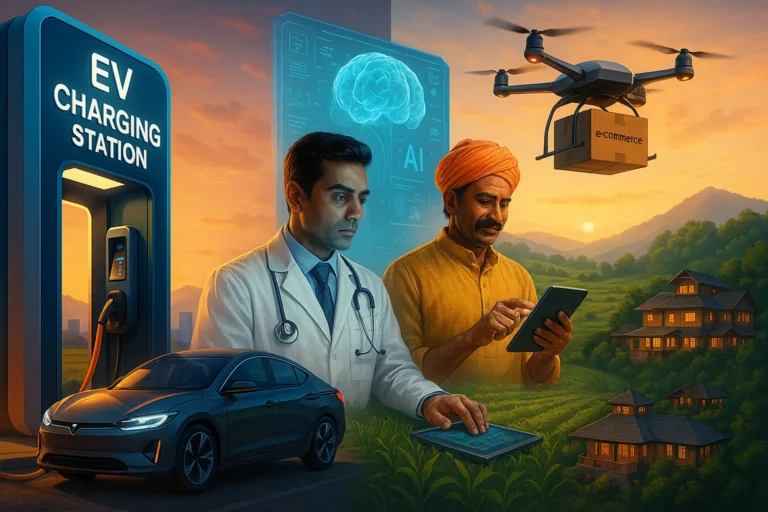
At CES 2026 in Las Vegas, artificial intelligence and autonomous driving technologies emerged as the defining themes of the global tech showcase.
The shift signals a broader recalibration within the automotive industry.
Electric vehicles are no longer the sole centre of attention. Instead, software, AI, and autonomy are taking the lead in shaping the future of mobility.
A Clear Shift in Industry Priorities
For much of the past decade, CES functioned as a launchpad for electric vehicle ambitions. This year felt different.
Automakers and technology suppliers focused heavily on AI-driven driver assistance systems, autonomous platforms, and sensor technologies. EV hardware announcements were fewer and more cautious.
This does not mean EVs are being abandoned.
Rather, companies appear to be reassessing where future value creation lies.
Why Automakers Are Re-prioritising AI
Developing electric vehicles at scale remains capital-intensive.
Battery costs, supply chain dependencies, and policy uncertainty continue to weigh on long-term profitability.
At the same time, AI offers a different value proposition.
Software-led features—such as autonomous navigation, predictive safety systems, and intelligent in-car experiences—promise recurring revenue, differentiation, and higher margins.
As a result, automakers are increasingly positioning themselves as mobility technology companies, not just vehicle manufacturers.
Autonomous Driving Takes Centre Stage
Autonomous driving technologies drew significant attention across the exhibition floor.
Companies showcased advances in:
- AI-based perception systems
- LiDAR and sensor fusion technologies
- Real-time decision-making software
The focus was not on fully driverless cars alone.
Instead, much of the innovation centred on incremental autonomy—systems designed to improve safety, reduce driver fatigue, and prepare the ground for future regulation.
Industry leaders emphasised that solving edge cases and ensuring reliability remain critical challenges before large-scale deployment.
What This Means for the EV Ecosystem
The shift at CES highlights an important reality.
Electric vehicles solved the powertrain problem.
AI and autonomy are now attempting to solve the intelligence problem.
For suppliers, this changes the competitive landscape. Software developers, chipmakers, and AI specialists are becoming as important as traditional automotive component manufacturers.
For policymakers and regulators, it raises fresh questions around safety, liability, and data governance.
Beyond Cars: AI Everywhere at CES
AI’s dominance at CES was not limited to mobility.
Across sectors, companies demonstrated how artificial intelligence is being embedded into:
- Consumer electronics
- Robotics
- Industrial automation
- Smart infrastructure
CES 2026 made one thing clear: AI is no longer a standalone technology category.
It is becoming the underlying layer across industries.
The Bigger Picture
CES 2026 may be remembered as a turning point.
Not because electric vehicles failed—but because the industry realised that the future of mobility will be defined as much by code as by engines.
The race ahead is no longer just about electrification.
It is about intelligence, software, and how machines learn to navigate the real world.