Silicon Ambitions: India’s First “Homegrown” Chips Reach the Tarmac
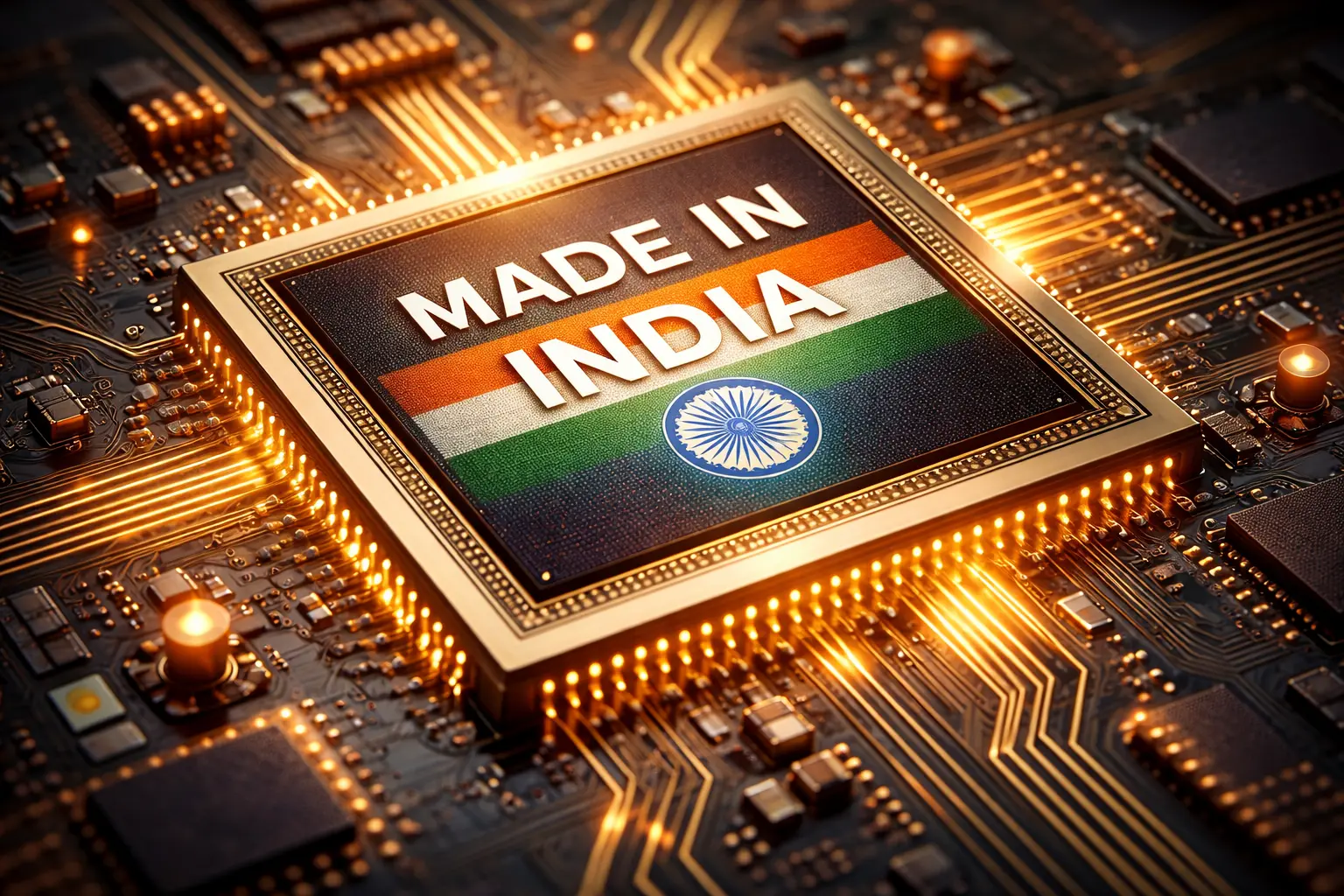
When the first lots of semiconductor packages rolled off a pilot assembly line in Sanand this month, it marked a moment India’s electronics sector has waited decades for. Long discussed in policy papers and boardrooms, India’s semiconductor ambition has finally crossed the line from memoranda to manufacturing reality.
As of December 2025, the India Semiconductor Mission (ISM) has entered its execution phase. With a government-backed incentive outlay of ₹76,000 crore under the Semicon India Programme, the country is now witnessing tangible progress across chip assembly, testing, and design—critical segments of the global semiconductor value chain.
This is not yet the era of advanced-node fabs. But it is the unmistakable beginning of India’s semiconductor-industrial base.
From Policy to Production: What Changed in 2025?
For years, India’s semiconductor story revolved around consumption—smartphones, EVs, telecom equipment—manufactured using imported chips. 2025 marked a structural shift.
Three developments stand out:
- Operational OSAT capacity within India
- Strategic global partnerships moving into execution
- A maturing domestic design ecosystem
Together, they are repositioning India from a passive buyer to an emerging value-adding participant in the global chip supply chain.
First-Mover Advantage: Sanand Enters the Chip Map
A defining milestone this year has been the operationalisation of India’s first end-to-end OSAT (Outsourced Semiconductor Assembly and Test) pilot line by CG Power through its semiconductor arm, CG Semi, in Sanand, Gujarat.
OSAT facilities perform a crucial role—assembling, packaging, and testing chips fabricated elsewhere. Globally, this segment is dominated by East Asian players. India’s entry into OSAT is therefore strategic rather than symbolic.
Why OSAT matters:
- Lower capital intensity compared to wafer fabs
- Faster execution timelines
- Immediate integration with India’s electronics manufacturing ecosystem
- Gateway to higher-value semiconductor manufacturing over time
Sanand’s emergence as a semiconductor cluster builds on Gujarat’s success in automobiles and electronics, offering logistics readiness, industrial utilities, and policy stability.
The Tata–ROHM Alliance: Testing Chips, Testing Resolve
Another significant signal came this week as Tata Electronics commenced test-assembly activities in partnership with Japan’s ROHM.
The collaboration targets chips for:
- Electric vehicles (power electronics, semiconductors (power electronics, semiconductors for drivetrains)
- 5G and advanced telecom equipment
This partnership is strategically important for two reasons:
- Technology credibility: ROHM is a globally respected player in power semiconductors, especially for automotive applications.
- Supply-chain diversification: Japan and India are actively working to reduce overdependence on a single geography in semiconductors.
For Tata Electronics, this represents a decisive move from electronics manufacturing services into semiconductor value addition—a long-term bet aligned with India’s industrial policy.
Design Linked Incentive (DLI): The Quiet Backbone
While assembly plants grab headlines, the Design Linked Incentive (DLI) scheme has been quietly building the intellectual foundation of India’s chip ambitions.
As of end-2025:
- 15+ semiconductor design startups are supported under DLI
- Focus areas include automotive chips, IoT, power management ICs, and industrial electronicMosChip Technologiesindian seKaynes Technology”indian electronics manufacturer”]** have benefited from rising domestic demand and policy tailwinds. Their strong market performance this year reflects growing investor confidence in India’s electronics and semiconductor ecosystem.
The DLI programme addresses a critical gap: without design ownership, manufacturing alone cannot create sustainable semiconductor leadership.
Market Size and Economic Impact: Why This Matters
India’s semiconductor market—valued at approximately $53.2 billion in 2024—is projected to grow to around $160 billion by 2033, driven by:
- EV adoption
- 5G and future telecom networks
- Consumer electronics
- Industrial automation
- Defence and aerospace
This growth trajectory aligns directly with India’s $5 trillion economy aspiration. Semiconductors function as a multiplier industry, catalysing value across manufacturing, exports, skilled employment, and technology sovereignty.
Every incremental percentage of domestic value addition reduces import dependence and strengthens India’s balance of payments over the long term.
What India Is—and Isn’t—Doing Yet
It is important to separate momentum from hype.
What India has achieved:
- Entry into OSAT and advanced packaging
- Execution-stage global partnerships
- Policy-backed design ecosystem
- Early cluster formation in states like Gujarat and Tamil Nadu
What remains aspirational:
- Advanced-node wafer fabrication
- End-to-end semiconductor self-sufficiency
- Large-scale export dominance
The current phase should be seen as foundation-building, not finish-line crossing.
The Road Ahead: Small Chips, Big Consequences
Semiconductors rarely announce their arrival loudly. They arrive in power modules, telecom boxes, EV drivetrains, and industrial controllers. India’s first domestically assembled chips reaching commercial testing lines may not dominate headlines—but they fundamentally alter the country’s industrial trajectory.
In geopolitics and economics alike, chips are no longer just components. They are instruments of power.
And in 2025, India has finally put its foot on the semiconductor tarmac—ready for take-off, even if the runway is still under construction.
To understand how regional industrialization is supporting the national semiconductor mission, see our feature on https://thequantiq.com/assams-chip-leap-tata-leads-tokyo-electron-adds-the-spark/.