A Landmark Moment: NITI Aayog Officially Declares Mizoram the Ginger Capital of India
On 24 November 2025, at a high-level Stakeholders’ Consultation in New Delhi, organised jointly by NITI Aayog and the Government of Mizoram, the state crossed a historic milestone. In the presence of officials from multiple central ministries and more than 60 investors in ginger trading, processing, and value-addition, NITI Aayog formally declared Mizoram as the Ginger Capital of India.
The meeting, described as one of the largest ever held in the national capital for a Mizoram-specific agenda, highlighted:
- Mizoram’s rapid rise in ginger production
- Its reputation for high-quality organic ginger
- The growing national and international demand for medicinal-grade and GI-tagged ginger
- The potential for Mizoram to anchor India’s spice and nutraceutical value chain
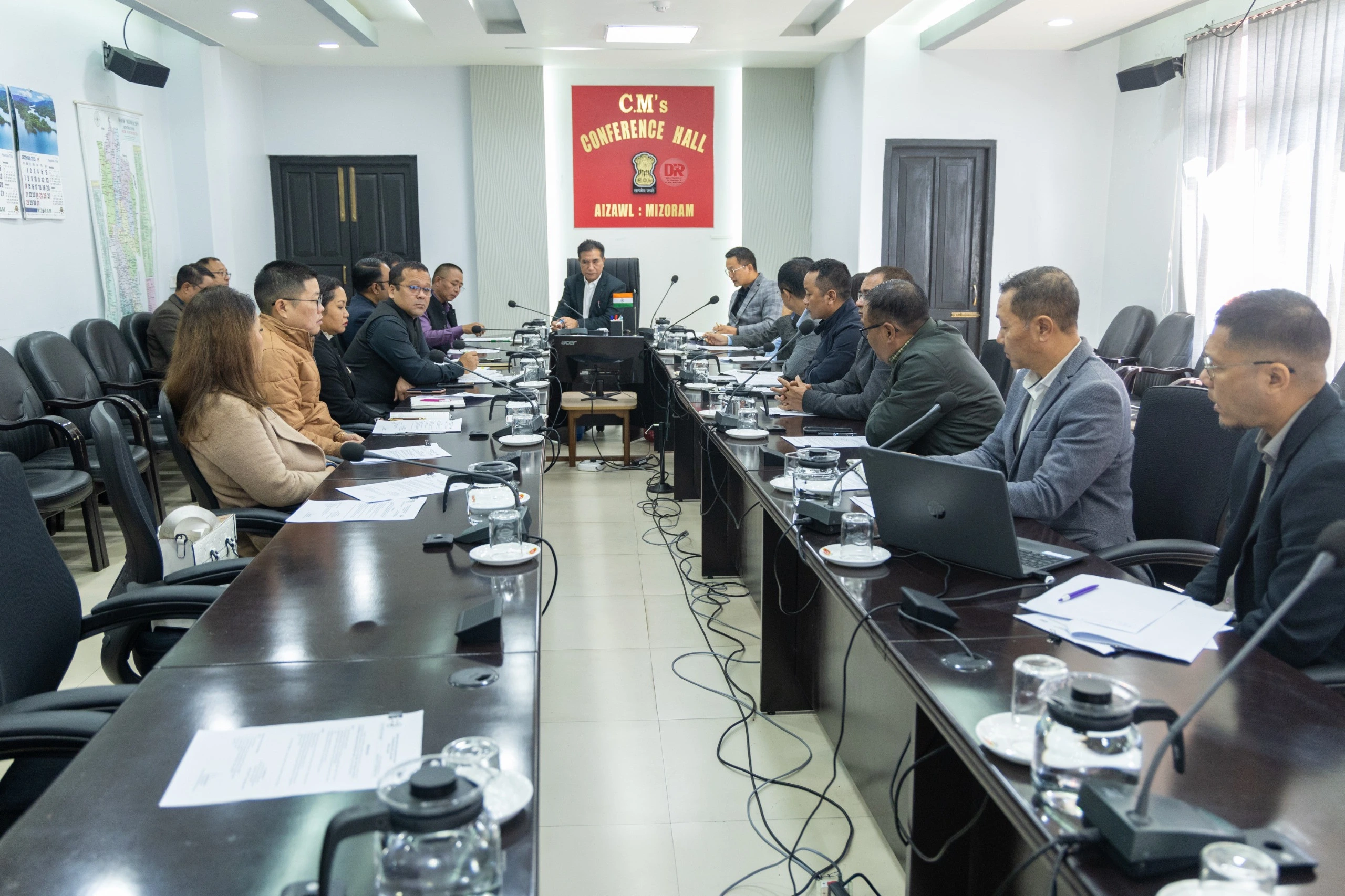
On 1 December 2025, during a review meeting chaired by Chief Minister Pu Lalduhoma, the Mizoram Agricultural Marketing Board (MAMB) formally expressed its gratitude to NITI Aayog for this recognition. The official declaration has now cemented ginger as the centrepiece of Mizoram’s agricultural identity and policy framework.
Massive Procurement & Unprecedented Financial Commitment
Mizoram has backed its ginger push with the strongest financial commitment in its agricultural history.
Under the state’s flagship Bana Kaih (Handholding) Scheme, the government introduced a Minimum Support Price (MSP) of ₹50 per kg for ginger and launched a robust procurement system across all districts.
Latest Official Data
- Total ginger purchased in 2025:
3,38,35,182 kg (≈ 3.38 lakh quintals) - Total support price disbursed:
₹137,72,04,477.50 (≈ ₹137.72 crore)
These numbers far exceed previous reporting from mid-2025, which placed expenditures around ₹95 crore. The updated data confirms heavy procurement rounds continued well into late 2025.
This scale of procurement demonstrates:
- Strong state commitment to stabilising farmer incomes
- Effective implementation of MSP
- A foundation for building a processing-led ginger economy
The next major ginger procurement season has already been scheduled from February 2 to May 31, 2026, indicating continuity and predictability for farmers.
Why Ginger? Understanding Mizoram’s Strategic Crop Choice
Ginger is not new to Mizoram. But the scale, branding, and industrial vision around it are unprecedented. The reasons are clear:
A. Natural Agro-Climatic Strength
The North East is India’s organic spice belt, and Mizoram stands out for:
- High natural productivity (up to 8.4 tonnes/ha in suitable areas)
- Low chemical input use
- Favourable altitude, rainfall, and soil conditions
B. GI-Tagged, Medicinal-Grade Ginger
Mizoram’s ginger has earned a Geographical Indication (GI) status, giving it a premium identity.
The Ministry of Ayush has noted its potential for:
- Herbal and Ayurvedic formulations
- Medicinal extracts
- Nutraceuticals
- Wellness products
This positions ginger as a high-value commodity beyond mere raw trade.
C. Surplus Production + Market Gap
Despite large internal production, India often imports ginger seasonally.
Mizoram’s surplus capacity gives it an opportunity to reduce dependency on imports while expanding its export footprint.
Building a Ginger Industry: Processing Units, Technology & Buyers’ Meet
To prevent over-reliance on raw procurement, the state is now building a full ginger industrial ecosystem.
A. Ginger Processing Unit at Sairang
A new processing facility at Sairang is scheduled for inauguration on January 12 next year.
This marks a vital step toward:
- Reducing procurement burden
- Supporting sliced-dry, powdered, and extract production
- Creating export-grade processed ginger
B. Adoption of Mizo-Made Drying & Curing Technology
To meet rising demand for sliced-dry ginger, the government has approved the purchase of Rapchung Technology and Tapchhak Technology units under the Handholding Scheme. These indigenous technologies will:
- Enhance processing efficiency
- Maintain organic quality standards
- Increase local employment in value-addition
C. Ginger Buyer–Seller Meet
MAMB will host a large Buyer–Seller Meet at Aijal Club on December 5–6, with participants from across India.
The event aims to:
- Forge new trade partnerships
- Push Mizoram ginger into national retail and export pipelines
- Secure better price realisation for farmers
National Backing & Multi-Ministry Alignment
Few crops in India enjoy coordinated attention from diverse national bodies. Mizoram’s ginger strategy is now supported by:
- NITI Aayog — formal recognition + policy guidance
- Ministry of DoNER — marketing and regional development support
- Ministry of Ayush — medicinal value chain integration
- APEDA & agri-export stakeholders — interest in market linkages
This rare vertical alignment gives Mizoram a powerful institutional foundation.
The Challenge Side: Market Volatility & Structural Risks
Despite the progress, ginger remains prone to external shocks.
Border Closure Impact
Early in 2025, the sealing of the India–Bangladesh border disrupted export flows, triggering severe price drops:
- Prices fell to ₹28/kg in Delhi
- Down to ₹17/kg in markets like Silchar and Siliguri
This exposed the vulnerability of Mizoram’s farmers to geopolitical events.
Financial Stress on MSP System
With procurement now surpassing ₹137 crore, the state faces challenges:
- Storing large volumes
- Disposing or processing procured ginger profitably
- Preventing leakages and misuse (such as cross-border ginger being sold under MSP)
The rapid expansion of processing units and structured demand is therefore not optional — it is essential.
The Road Ahead: Mizoram’s 2030 Ginger Vision
Based on current announcements, the state appears to be targeting:
- Global recognition of Mizo Ginger as a premium brand
- Processing capacity of 50,000+ tonnes/year across slicing, drying, powdering, and extraction
- Stabilised farm incomes through MSP + buyer linkage + export channels
- Integration with Ayush research and herbal product pipelines
- Regular procurement cycles across ginger, turmeric, chillies, and paddy
With formal recognition as India’s Ginger Capital, Mizoram has gained a unique national identity that could redefine its rural economy.
A High-Reward Bet Backed by Strong Data
Mizoram’s ginger strategy is no longer a policy experiment — it is now an officially endorsed national story. With procurement exceeding 3.38 lakh quintals, financial support crossing ₹137 crore, and the inauguration of new processing capacity and technology adoption, the state has laid the foundations of a ginger-centric economic model.
If execution matches ambition, ginger could become to Mizoram what tea is to Assam or apples are to Himachal Pradesh — a defining economic signature with global reach.