Manufacturing Without Mega Factories: How MSMEs Are Redefining Industrial Growth
The New Face of Indian Manufacturing
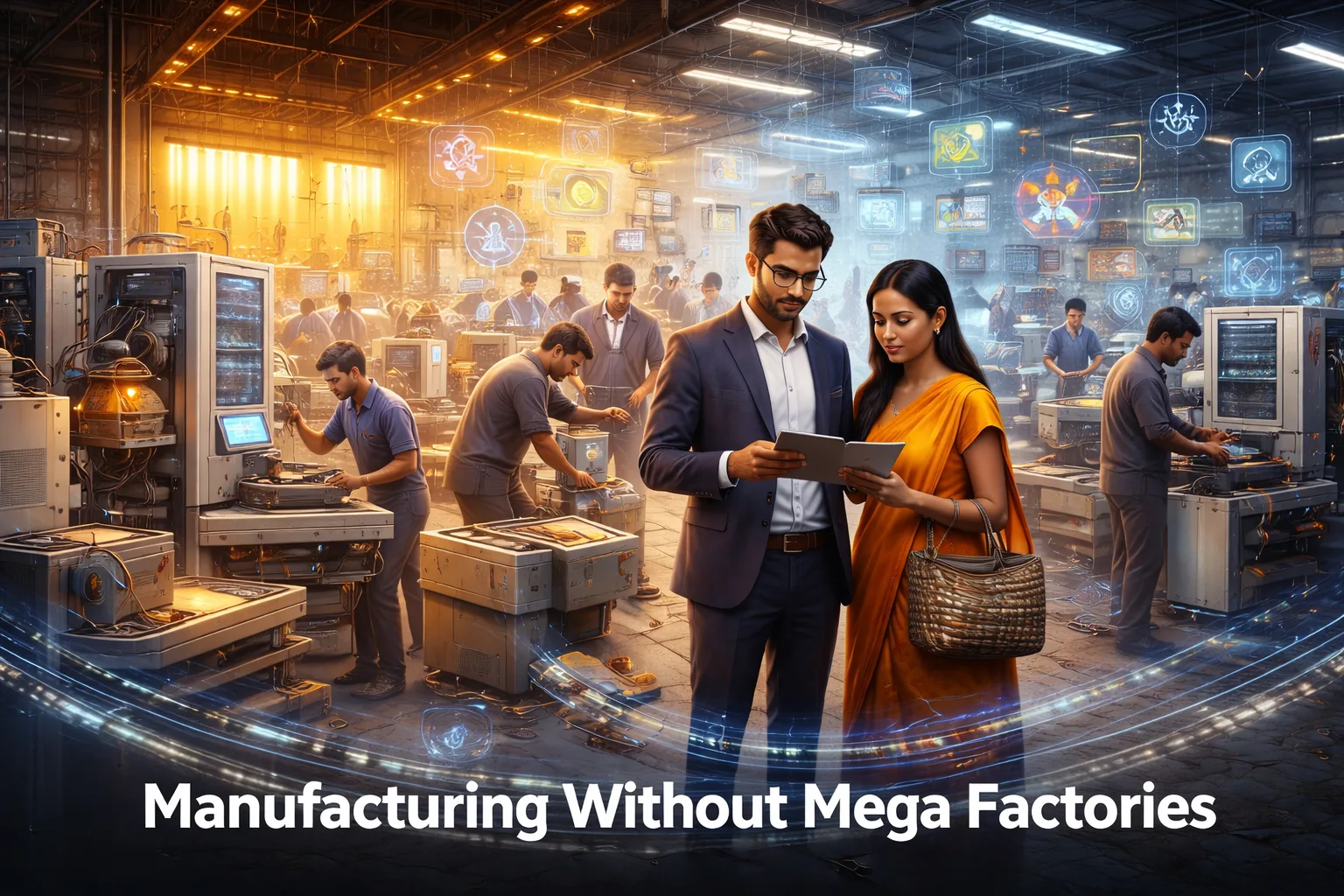
India’s manufacturing story is undergoing a quiet but decisive transformation. The age of mega factories dominating industrial output is giving way to a more distributed, agile, and technology-driven ecosystem. At the heart of this shift are Micro, Small, and Medium Enterprises (MSMEs), which are redefining how manufacturing is organized, scaled, and integrated into global value chains.
This new model is not about scale alone—it is about flexibility, resilience, and intelligent integration.
The Rise of Distributed Manufacturing
Unlike traditional factory-centric models, India’s manufacturing growth is increasingly spread across clusters of small and mid-sized units. These clusters—often located in Tier-2 and Tier-3 cities—specialize in specific components or processes, forming interconnected production networks.
From auto components in Coimbatore to textiles in Tiruppur and engineering goods in Rajkot, these clusters operate as decentralized manufacturing ecosystems. Each unit focuses on its strength while contributing to a larger supply chain, reducing dependence on single mega facilities.
This decentralization improves risk management, reduces logistics bottlenecks, and allows faster response to market changes.
Technology as the Great Enabler
Digital tools have fundamentally changed what small manufacturers can achieve. Cloud platforms, ERP systems, and digital marketplaces allow MSMEs to coordinate production, manage inventories, and reach buyers without heavy capital investment.
E-commerce, B2B platforms, and government-backed digital infrastructure have further reduced entry barriers. A small workshop can now service national and even global clients with efficiency once reserved for large corporations.
Technology has turned scale from a physical constraint into a digital capability.
MSMEs as Export Engines
India’s export profile is steadily evolving, with MSMEs playing a larger role in sectors such as:
- Auto components
- Engineering goods
- Electronics and electricals
- Specialty chemicals and textiles
These firms are increasingly integrated into global value chains, supplying intermediate goods to multinational manufacturers. Government initiatives like export facilitation schemes and logistics reforms have strengthened their global competitiveness.
Rather than chasing volume alone, many MSMEs are moving toward specialization and quality-driven exports.
Why This Model Is More Resilient
Decentralized manufacturing reduces systemic risk. When production is spread across regions and enterprises, disruptions—whether from logistics, geopolitics, or natural events—are easier to absorb.
This model also:
- Encourages regional employment
- Reduces urban migration pressure
- Enables faster innovation cycles
In many ways, it represents a more sustainable and inclusive form of industrialisation.
India’s manufacturing future will not be built solely on massive industrial parks. It will be shaped by thousands of interconnected enterprises, digitally enabled and globally integrated.
This is not a step backward—it is a smarter evolution.