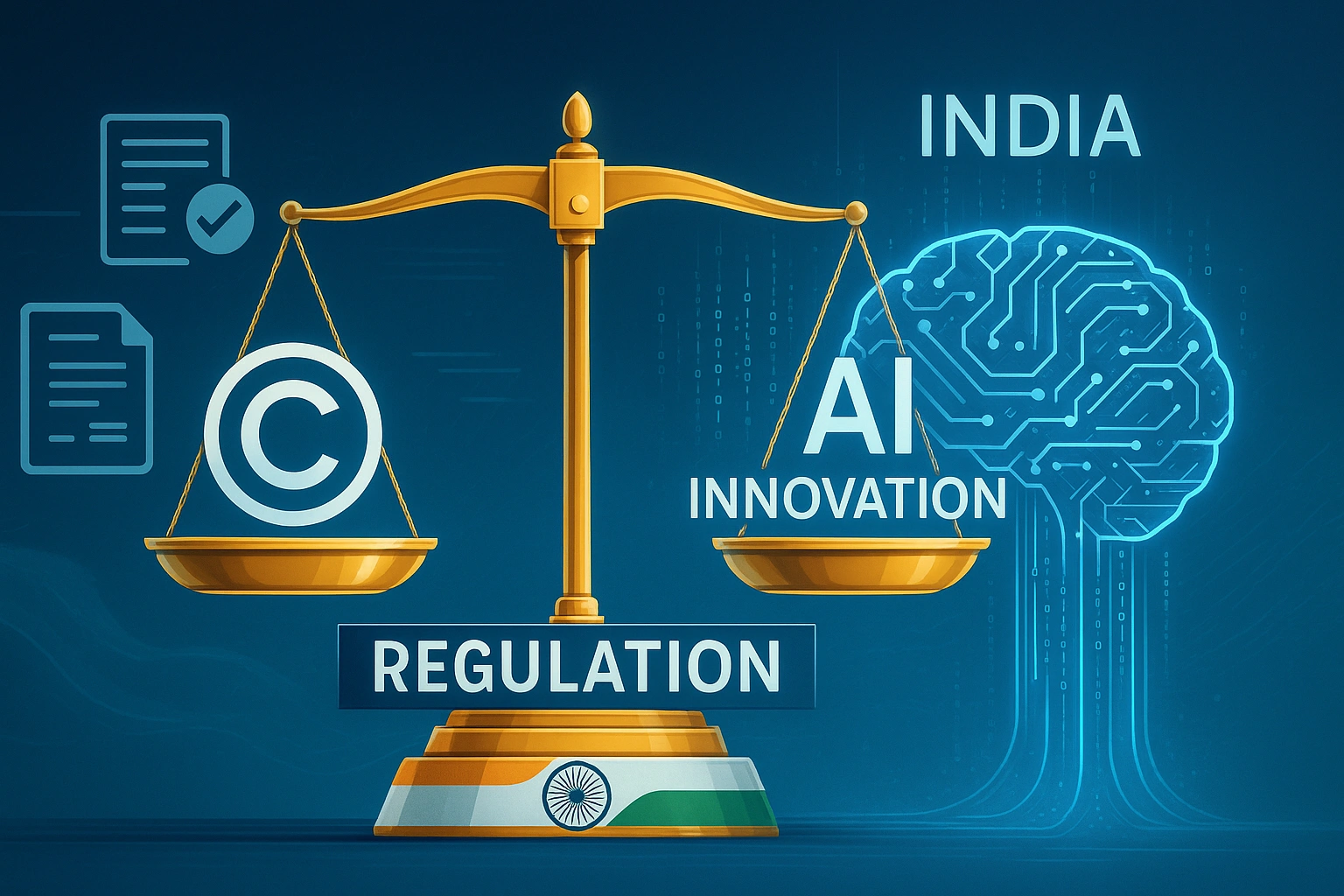
One Nation, One License, One Payment: How India Plans to Regulate AI Training
The AI Boom Has Created a Copyright Vacuum
AI systems like ChatGPT, Gemini, and Claude rely on massive amounts of human-created content—books, news stories, blogs, social media posts, images, videos, and research papers.
But for years, this data was collected and used for training without compensation to the people who created it.
As content creators, publishers, and rights holders around the world push back — and as global lawsuits pile up — India has stepped forward with one of the world’s most ambitious and sweeping proposals on AI copyright.
The Department for Promotion of Industry and Internal Trade (DPIIT) recently released a working paper titled:
“One Nation, One License, One Payment: Balancing AI Innovation and Copyright.”
If implemented, this could redefine how AI models are trained — not just in India, but globally.
What Exactly Is India Proposing?
The DPIIT working paper recommends a new regulatory architecture for AI systems trained on copyrighted content. The core pillars are:
1) A Mandatory Blanket Licence for AI Training
In simple terms, no AI company—Indian or global—can use copyrighted Indian content for training unless they pay for a government-approved licence.
This is similar to the music industry’s approach where broadcasters and OTT platforms obtain blanket licences instead of negotiating individually with every artist.
This moves India closer to a structured, accountable AI ecosystem.
2) Royalties Based on Global Revenue, Not Indian Revenue
The boldest part of the proposal.
AI companies would pay royalties based on worldwide revenue, irrespective of how much they earn in India.
Why?
Because Indian datasets, languages, and user-generated content are heavily used in AI training. But revenue generated in India is a fraction of their global turnover.
This approach ensures Big Tech cannot underpay simply because its India operations are small.
3) A Government-Appointed Expert Panel to Fix Royalty Rates
To avoid endless negotiations between creators and AI firms, DPIIT proposes a specialised panel that would:
- Set standard royalty percentages
- Periodically revise rates
- Resolve disputes
- Ensure smooth implementation
This model is similar to tariff boards used in broadcasting and publishing.
4) Direct Royalty Payments to Creators and Rights Holders
Royalties would flow to:
- Authors
- Journalists
- News publishers
- Photographers
- Filmmakers
- Musicians
- Artists
- Independent digital creators
This could create a new revenue pipeline for India’s creative economy.
Why Is India Doing This?
Protecting Creators from Unauthorised Data Use
AI models today scrape the internet indiscriminately. Creators get zero compensation even if their work becomes part of an AI model’s intelligence.
India wants to correct this imbalance.
Positioning India as a Thought Leader in Global AI Governance
Globally, copyright and AI remain a grey zone.
With this proposal, India sends a clear signal that it intends to shape the rules, not merely react to them.
Supporting India’s Digital Economy
The framework could:
- Boost journalism and publishing
- Support independent creators
- Strengthen India’s bargaining power in AI trade discussions
- Encourage creation of licensed, India-specific datasets
How Does India’s Proposal Compare Globally?
| Country/Region | Current Approach |
|---|---|
| EU | Transparency + negotiations; strong copyright protections. |
| US | Major lawsuits underway; no comprehensive legislation yet. |
| UK | Tried to allow broad AI exemptions; faced backlash. |
| Japan | Allows AI training on copyrighted works without permission. |
| India | Mandatory blanket licence + global revenue royalty + government oversight. |
India lands squarely on the side of creators, more aggressively than the EU.
Impact on AI Companies and Startups
1) Increased Compliance Costs
Big AI developers may have to pay significant royalties.
For startups, DPIIT may offer exemptions or lower rates to avoid stifling innovation.
2) Need for Transparent Training Data Pipelines
AI companies may need to document:
- Which datasets they used
- How much copyrighted content was included
- How models were fine-tuned
This improves accountability but requires major operational changes.
3) Shift Toward Licensed and Synthetic Data
Companies may start building:
- Licensed Indian datasets
- Their own proprietary content pools
- Synthetic (AI-generated) datasets
India could become a major player in AI-grade data markets.
Impact on Creators, Publishers, and Media Houses
1) New Royalty Income Stream
This can significantly benefit:
- Journalists
- Authors
- Regional language writers
- Newsrooms
- Digital media startups
- Photographers and filmmakers
In an era where traditional media business models struggle, this may provide a lifeline.
2) Better Recognition and Transparency
Creators would have the right to know:
- If their content was used in AI training
- How it contributed
- What compensation they are owed
3) But Challenges Remain
- How will contributions be measured fairly?
- How do you track usage in trillion-token datasets?
- How will micro-creators be included?
These questions will require technological and policy innovations
Can This Actually Be Implemented?
1) Enforcing the Framework on Global AI Giants
Unless tied to market access or trade rules, compliance may be tricky.
2) Auditing AI Training Pipelines
AI models are complex; disentangling copyrighted content is not simple.
3) Setting the “Right” Royalty Rate
Too high → slows innovation
Too low → creators still lose out
Finding the balance is crucial.
4) Preventing Data Flight
AI companies shouldn’t move training outside India to avoid regulations.
This needs international coordination.
Why This Policy Could Be a Turning Point for India
If executed well, India could:
- Influence global AI governance
- Create a creator-centric digital economy
- Build new markets in AI data licensing
- Strengthen the media and content sectors
- Position itself as a champion of equitable AI
This move could shift the future of global AI negotiations.
Is India Writing the World’s New AI Rulebook?
The DPIIT’s “One Nation, One License, One Payment” proposal may become one of the most influential AI policy moves of the decade.
It acknowledges a simple reality:
AI is built on human creativity — and creators deserve compensation.
India’s attempt to build a structured royalty system, pegged to global revenues and governed by a central authority, is radical, timely, and potentially transformative.
If the proposal matures into law, India will not just regulate AI —
it will reshape how AI systems worldwide treat creators, content, and copyright.