The New Geography of Growth: Why India’s Tier-2 and Tier-3 Cities Are Rising
Beyond the Metro-Centric Model
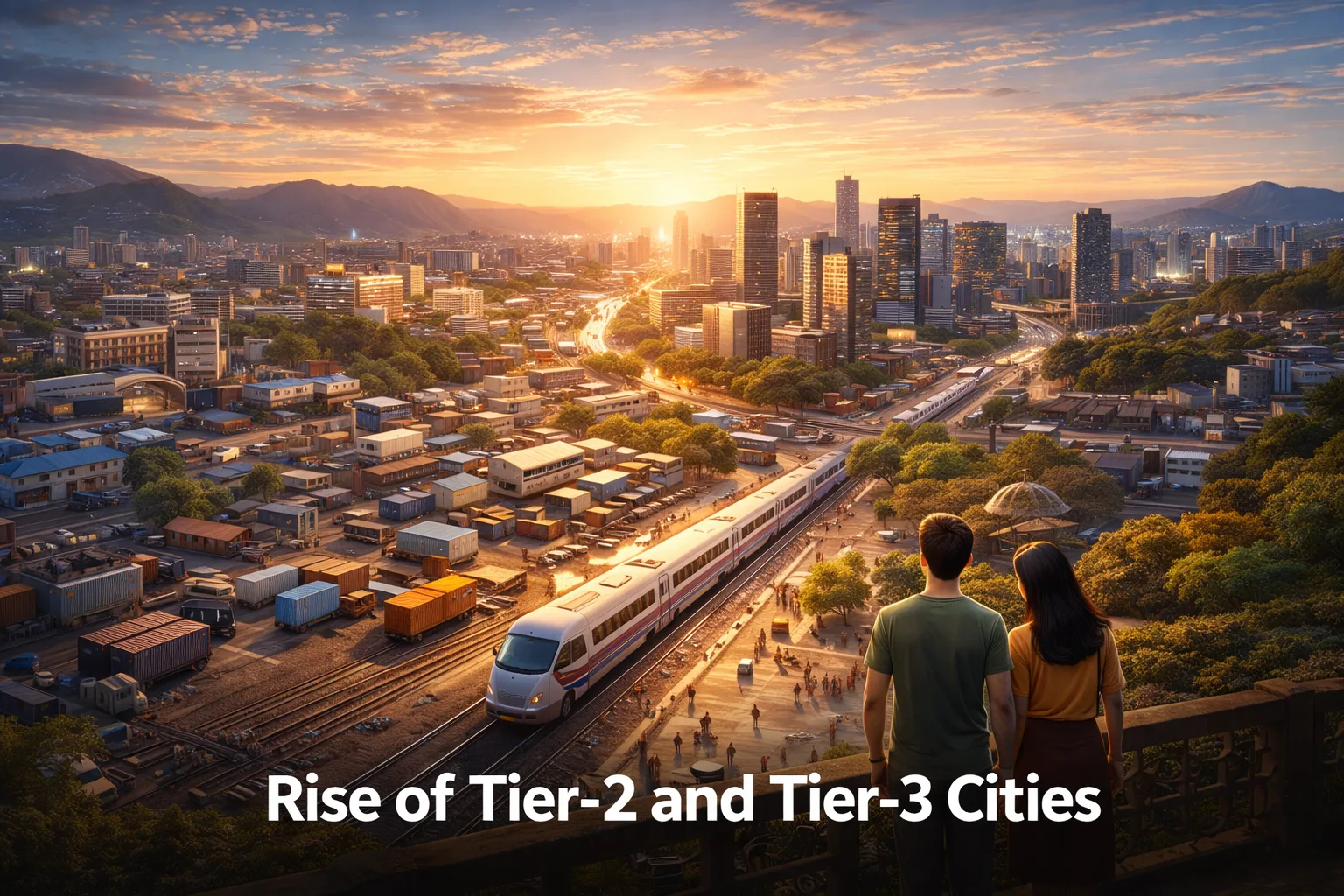
For decades, India’s economic narrative revolved around a handful of large metros. Today, that story is changing. Growth is increasingly shifting to Tier-2 and Tier-3 cities, reshaping the country’s economic map.
Push Factors from Overcrowded Metros
Major cities are facing mounting pressure:
- Rising real estate costs
- Traffic congestion and infrastructure strain
- High cost of living and operational expenses
For both businesses and professionals, metros are becoming less sustainable.
The Pull of Emerging Cities
Smaller cities offer compelling advantages:
- Affordable housing and land
- Lower operating costs
- Growing talent pools
- Better quality of life
Improved highways, digital connectivity, and airport expansion have dramatically reduced the disadvantages once associated with non-metro locations.
New Urban Growth Clusters
Cities such as Indore, Coimbatore, Bhubaneswar, Kochi, and Guwahati are emerging as specialized economic hubs—hosting manufacturing units, IT services, logistics parks, and educational institutions.
These cities benefit from proactive state policies, better governance, and expanding infrastructure.
Socio-Economic Impact
Decentralized growth is reducing regional inequality, creating local employment, and easing pressure on megacities. It also allows talent to remain closer to home, strengthening regional economies.
India’s future will not be shaped by a few megacities alone. A network of dynamic, well-connected Tier-2 and Tier-3 cities will drive the next chapter of national growth.