Why Indian Cities Cannot Solve Traffic Without Rethinking Mobility
Traffic congestion has become a daily reality in most Indian cities. Flyovers are built, roads are widened, and traffic signals are optimized—yet congestion continues to worsen.
The reason is simple: traffic is being treated as an engineering problem, when it is actually a mobility problem.
More Roads, Same Problem
Urban India has largely followed a predictable pattern. As vehicle numbers increase, cities respond by expanding road infrastructure. While this provides temporary relief, it rarely solves congestion in the long run.
This phenomenon, known globally as induced demand, means that increasing road capacity often encourages more vehicle usage. The result is a return to congestion, sometimes worse than before.
Traffic Is a Symptom, Not the Disease
Congestion reflects deeper structural issues:
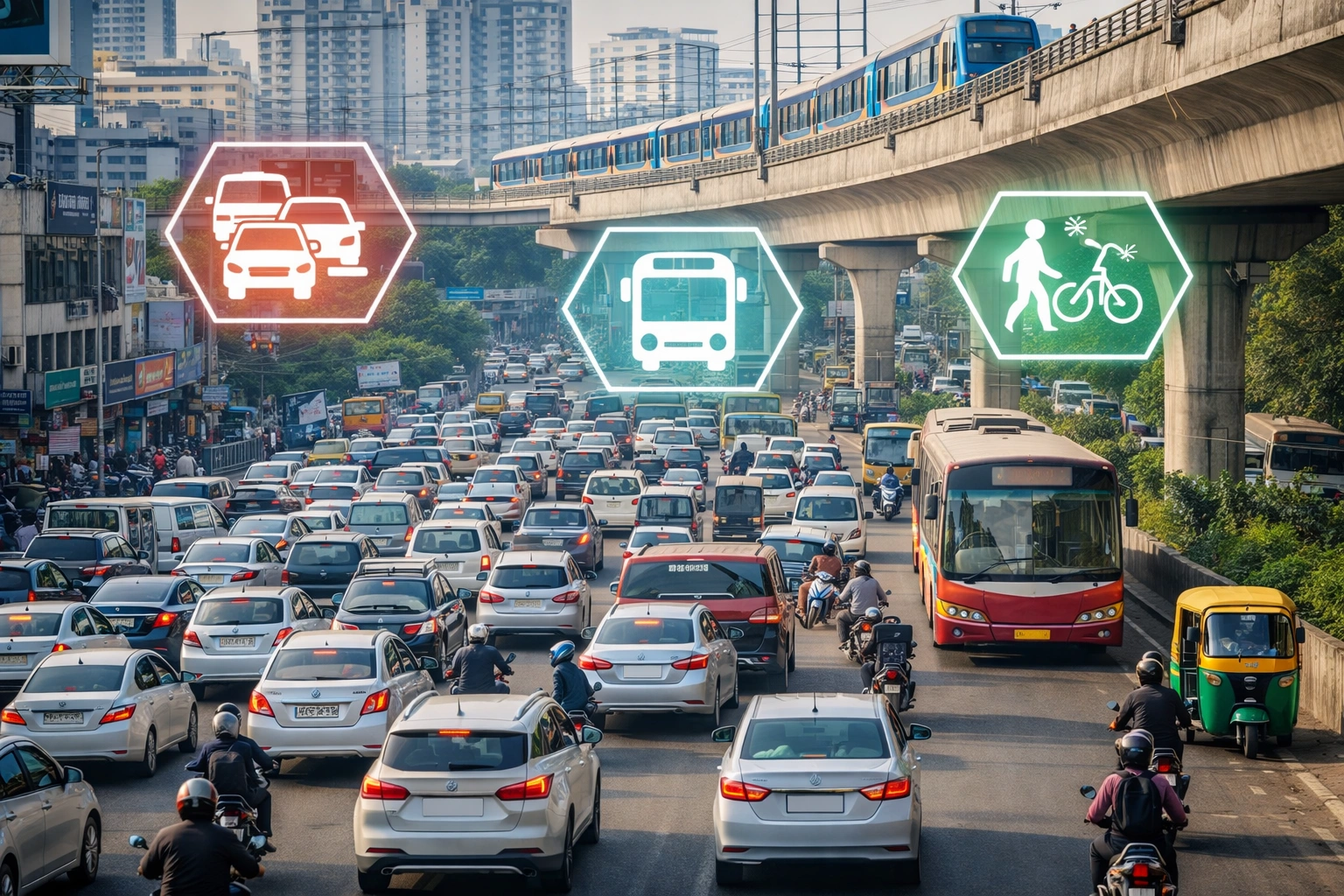
- Overdependence on private vehicles
- Inefficient public transport
- Poor last-mile connectivity
- Urban sprawl without mobility planning
Without addressing these root causes, traffic management remains a reactive exercise.
The Need for Integrated Mobility Planning
Effective mobility solutions prioritize movement of people, not vehicles.
This requires:
- Reliable and accessible public transport
- Safe pedestrian and cycling infrastructure
- Seamless first-mile and last-mile connectivity
- Integration between buses, metro systems, and shared mobility
Cities that focus on accessibility rather than speed tend to reduce congestion organically.
Technology Can Enable Smarter Mobility
Technology is beginning to reshape how cities understand and manage movement.
- Real-time traffic data
- AI-based signal optimization
- Smart public transport scheduling
- Data-driven urban planning
However, technology alone cannot compensate for poor planning. It must be paired with policy reforms and behavioral change.
Rethinking Urban Movement
Solving traffic requires shifting the conversation from vehicles to mobility systems. This means questioning long-held assumptions about ownership, convenience, and urban design.
Indian cities will not solve congestion by adding more lanes. They will solve it by redesigning how people move, connect, and access opportunities.
This article forms part of The Quantiq’s Auto & Mobility Intelligence coverage. A detailed Mobility Dossier exploring long-term urban transport strategies and policy frameworks is in development.https://thequantiq.com/after-lithium-what-a-battery-free-french-bicycle-tells-us-about-the-future-of-clean-mobility/