EV Boom in India: The Road to a Cleaner, Stronger Economy
With record-breaking EV sales, robust policy backing, and global investors rushing in, India is accelerating toward a green mobility revolution.
India’s electric vehicle (EV) landscape is experiencing an unprecedented surge. Once considered a futuristic idea, EVs are now at the center of India’s transport and climate strategy, supported by a powerful blend of policy push, market demand, and technological advancement.
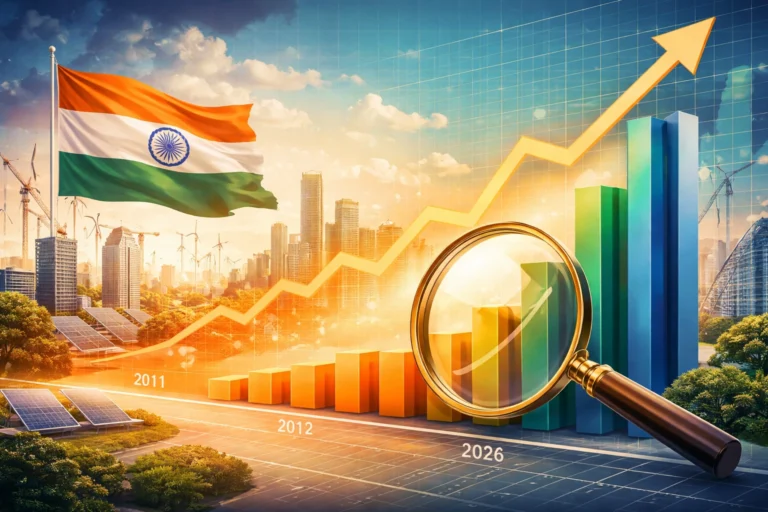
In FY 2024–25, India recorded over 2.3 million EV sales, a 68% year-on-year growth, according to Society of Manufacturers of Electric Vehicles. Two-wheelers accounted for nearly 60% of this surge, followed by passenger vehicles and commercial fleets. Analysts project that EVs could make up 30% of total vehicle sales by 2030, positioning India among the top three EV markets globally.
🚀 Policy as the Accelerator
Much of this boom is being fueled by a strong policy framework. The government’s Faster Adoption and Manufacturing of Hybrid and Electric Vehicles (FAME) scheme has been a game-changer, providing incentives for both consumers and manufacturers.
- ₹10,000 crore allocated under FAME II.
- Over 1 million EV buyers benefited from subsidies.
- 1,800+ charging stations set up under the program.
Meanwhile, state EV policies from Maharashtra, Delhi, Tamil Nadu, and Gujarat have added local incentives, creating a multi-layered support ecosystem.
The recently announced Battery Swapping Policy and Production Linked Incentives (PLI) for advanced cell chemistry are making the supply chain more competitive and resilient.
This is also attracting foreign investment — over $8 billion in EV and battery manufacturing commitments have been announced in the last 18 months.
🏭 A Made-in-India EV Revolution
Unlike earlier industrial booms, the EV movement is not just import-led. India is building its own EV ecosystem across the value chain — from vehicle assembly to battery manufacturing and charging infrastructure.
Major players like Tata Motors, Ola Electric, and Mahindra & Mahindra are leading the charge in passenger and two-wheeler segments, while startups are innovating in logistics and last-mile connectivity.
The PLI scheme for advanced cell chemistry has already drawn interest from global battery giants from Japan, Korea, and Europe to set up gigafactories in India.
This indigenization of EV manufacturing is crucial for:
- Cutting import dependence on crude oil
- Creating high-value jobs in manufacturing
- Boosting India’s export competitiveness in clean mobility tech.
🔋 Charging Ahead: Infrastructure on the Rise
One of the most critical factors in EV adoption is charging infrastructure — and India is finally catching up fast.
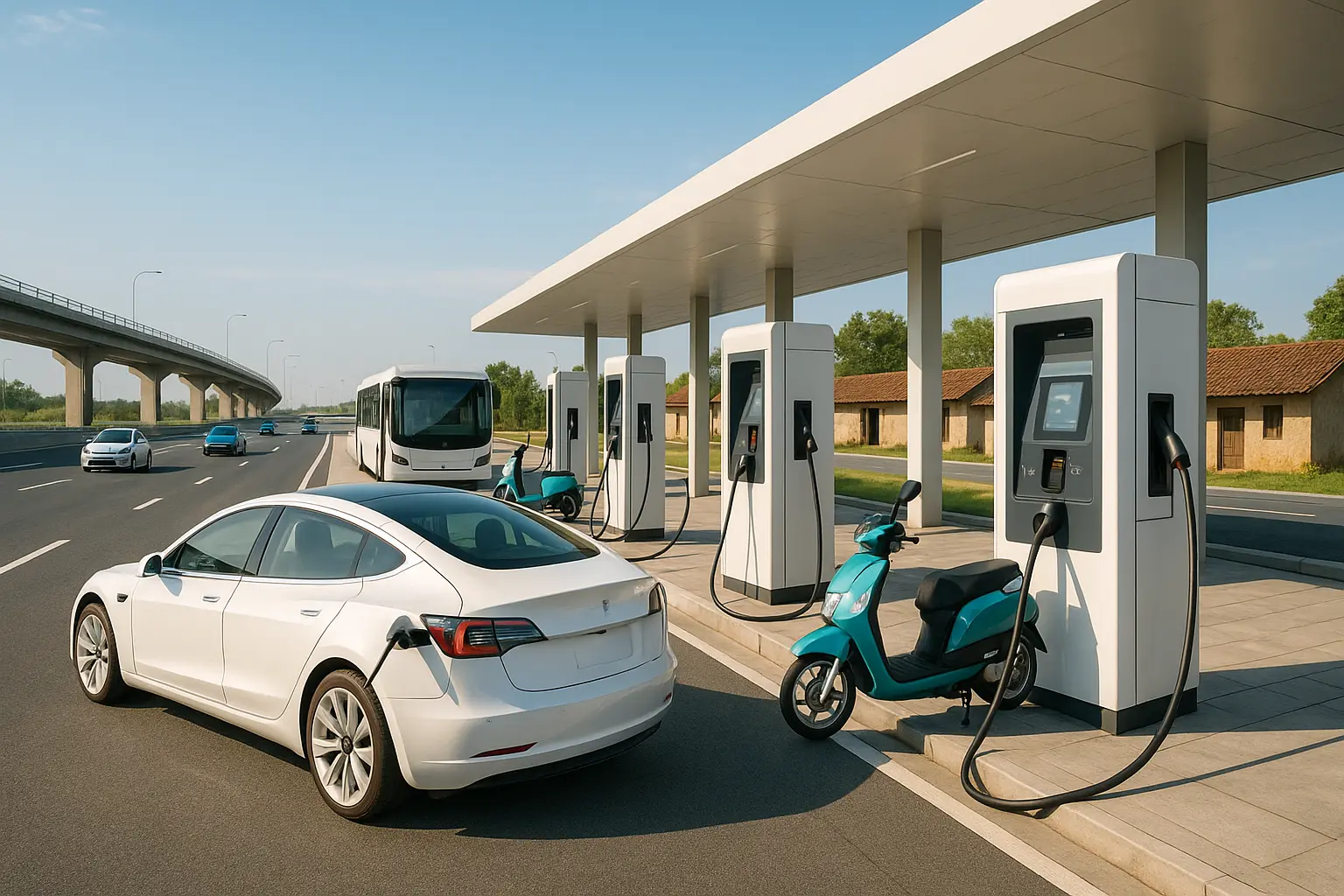
In 2020, India had fewer than 1,000 public charging stations. In 2025, that number has crossed 12,000, and is expected to hit 100,000 by 2030, thanks to aggressive investments by public and private players.
Companies like Tata Power, BPCL, and Fortum India are expanding charging networks along highways, urban centers, and even rural corridors. Meanwhile, startups are experimenting with battery swapping, ultra-fast chargers, and smart grid integration, reducing range anxiety for consumers.
🌍 Climate and Economy: A Win-Win
India spends over $160 billion annually on crude oil imports, a figure that significantly impacts the trade deficit. A successful EV transition could save the country $90 billion annually by 2030, according to NITI Aayog.
Beyond economics, EVs are also central to India’s net-zero target for 2070. Urban air pollution is responsible for nearly 1.2 million deaths annually, and clean mobility is one of the fastest ways to bring down particulate emissions. By 2030, India’s EV transition could help reduce CO₂ emissions by 200 million tonnes annually, making it a pillar of climate leadership in the Global South.
🧠 Innovation Powering the Future
India’s EV boom is not just about vehicles. It’s spawning an entire innovation ecosystem:
- Battery recycling startups building circular models.
- AI-enabled fleet management for e-logistics.
- Smart grid integration between EVs and renewables.
- Advanced chemistry R&D happening in Indian labs.
This innovation wave is drawing venture capital and private equity interest, with over $2 billion invested in EV startups in 2024 alone.
⚡ Road Ahead
While the trajectory is strong, challenges remain — high upfront costs, charging gaps in rural areas, and battery supply chain dependencies. But if policy momentum, infrastructure, and innovation continue at the current pace, India could become a global EV powerhouse by 2030, creating jobs, boosting energy security, and driving climate action.
As the world searches for scalable climate solutions, India’s EV story is more than just mobility — it’s about economic sovereignty, environmental leadership, and technological independence.