
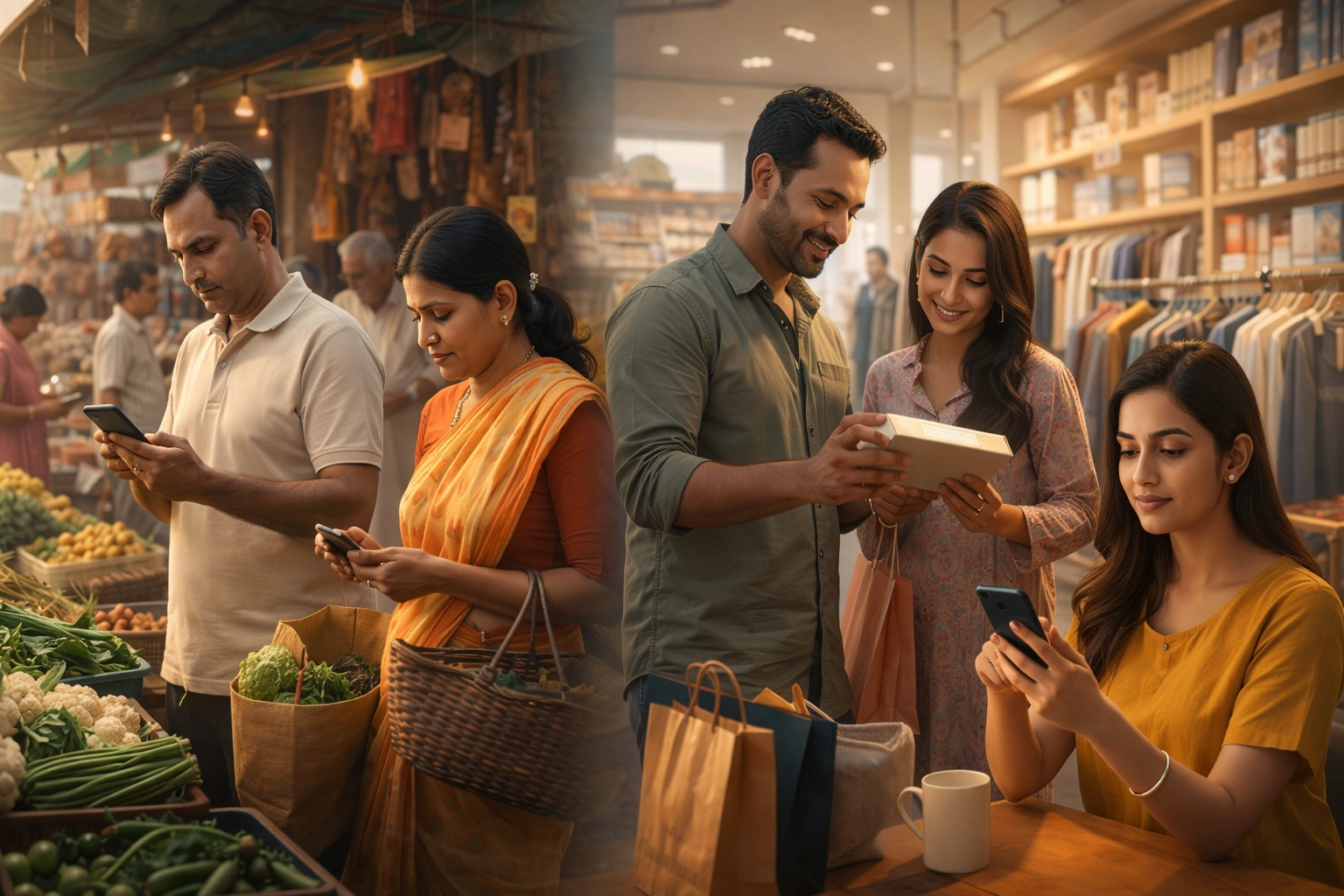
The Great Consumption Reset: How Indian Households Are Redefining Spending
India’s consumer economy is undergoing a profound behavioural shift. Consumption is not slowing—but it is becoming more deliberate, more informed, and more value-conscious.
This transformation is reshaping business models, retail strategies, and the very definition of demand in the Indian market.
From Aspiration to Assessment
For years, India’s consumption boom was powered by aspiration — owning more, upgrading faster, and displaying success. That phase is now maturing.
Today’s Indian consumer is asking different questions:
- Is this purchase necessary?
- Does it offer long-term value?
- Is it durable, reliable, and useful?
This change is visible across sectors—from electronics and automobiles to fashion and home goods.
The Rise of the Value-Conscious Consumer
Rising awareness, digital literacy, and easy access to price comparisons have created a more discerning buyer.
Consumers now:
- Compare features and durability, not just brands
- Prefer products with longer life cycles
- Demand transparency in pricing and service
This shift has forced companies to focus on quality, after-sales support, and trust rather than aggressive discounting.
Tier-2 and Tier-3 Cities Drive the Next Wave
Much of India’s consumption growth is now coming from non-metro regions.
Factors driving this trend include:
- Improved infrastructure and logistics
- Higher rural incomes and urban migration
- Expansion of organised retail and e-commerce
- Digital payments penetration
These regions are no longer “emerging markets” — they are active engines of demand
Experience Over Ownership
Another defining trend is the preference for experiences over possessions.
Spending on:
- Travel and tourism
- Wellness and healthcare
- Education and skill development
is rising faster than spending on traditional discretionary goods.
This reflects a generational shift in priorities, especially among younger consumers.
This shift in consumer behaviour is closely tied to a deeper structural change in India’s economy, driven by rising domestic investment and long-term capital formation explored in our analysis on India’s evolving growth model.https://thequantiq.com/india-domestic-capital-growth/
What This Means for Businesses
Companies that succeed in this new environment will be those that:
- Understand regional and cultural nuances
- Build trust and long-term relationships
- Offer real value rather than superficial discounts
The age of mass consumption is giving way to the era of mindful consumption.
A More Mature Consumer Economy
India’s consumption story is not weakening — it is evolving.
The next phase of growth will be led by informed, value-conscious consumers who reward quality, transparency, and relevance. Businesses that adapt to this reality will thrive; those that don’t will struggle to stay relevant.


One Comment