
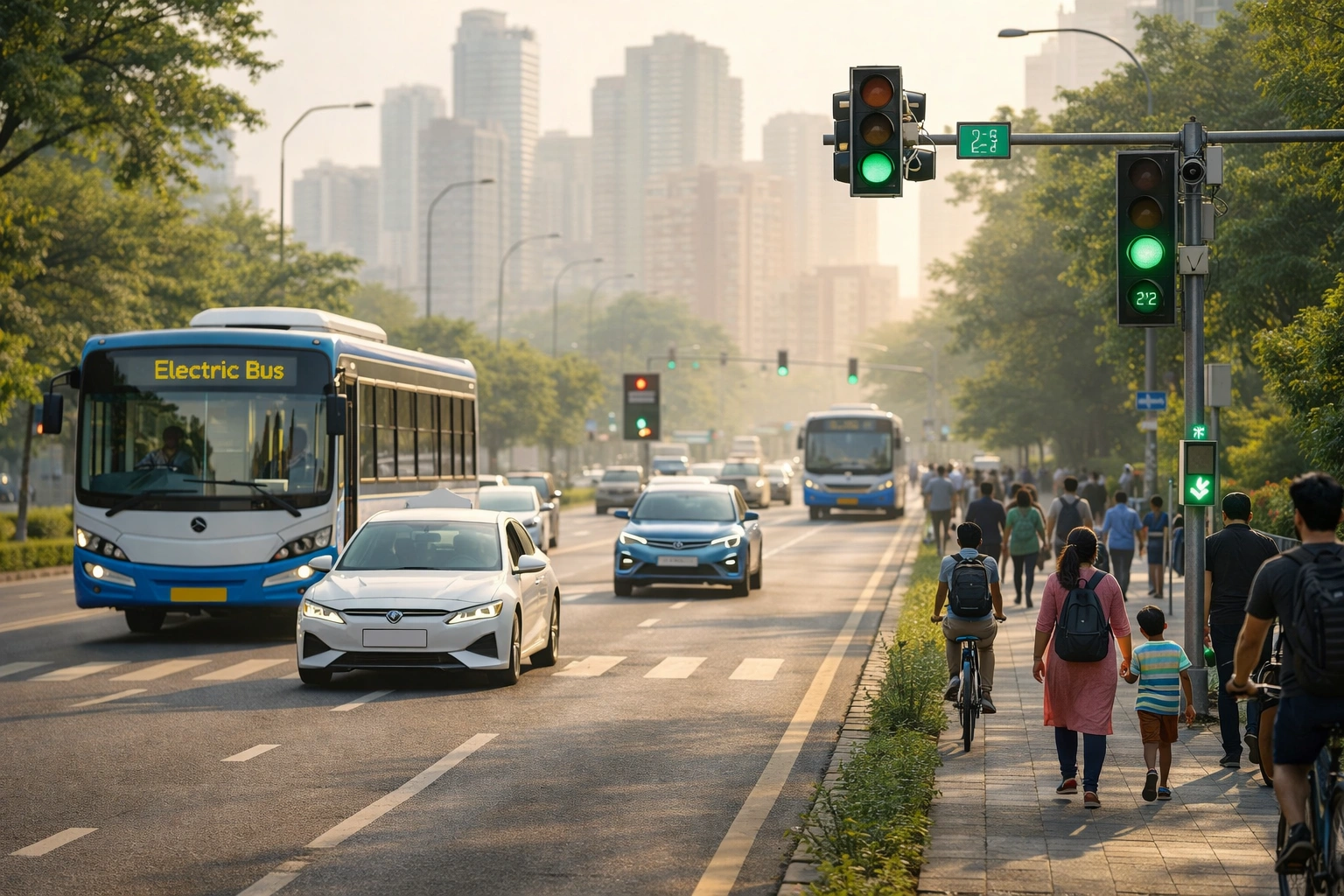
India’s Mobility Transition Is Bigger Than EVs: Understanding the Real Future of Transportation
Electric Vehicles dominate headlines, policy discussions, and public debates around India’s transportation future. While EVs are undoubtedly a critical piece of the puzzle, focusing on them alone risks oversimplifying a far more complex transformation.
India’s mobility transition is not just about changing engines—it is about redesigning systems.
Why EVs Alone Cannot Solve India’s Mobility Challenges
Electric vehicles offer clear benefits: lower emissions, reduced dependence on fossil fuels, and long-term cost savings. However, they are not a standalone solution.
India continues to face challenges such as:
- Uneven charging infrastructure
- Grid capacity constraints
- High upfront vehicle costs
- Limited urban space
- Traffic congestion unrelated to fuel type
Replacing every internal combustion vehicle with an electric one would still leave cities congested, inefficient, and unequal in access.
Mobility must be reimagined beyond vehicle ownership.
From Vehicles to Mobility Systems
The future of transportation lies in mobility as a service, not just personal vehicles.
This includes:
- Efficient public transport networks
- Shared mobility and ride aggregation
- Micro-mobility solutions for short distances
- Integrated first-mile and last-mile connectivity
In dense Indian cities, the real gains come from reducing dependency on private vehicles rather than merely electrifying them.
The Role of Policy and Urban Planning
Mobility outcomes are shaped as much by governance as by technology.
Urban planning decisions determine:
- Road capacity
- Public transport accessibility
- Pedestrian and cycling infrastructure
- Zoning and transit-oriented development
Forward-looking mobility policies must align transport planning with housing, employment hubs, and environmental goals. Without this integration, technological adoption alone cannot deliver meaningful change.
Technology Is Quietly Redefining Mobility
Beyond EVs, several technologies are reshaping transportation ecosystems:
- AI-based traffic management systems
- Connected and sensor-driven vehicles
- Smart logistics and fleet optimization
- Data-driven urban transport planning
- Autonomous and semi-autonomous mobility trials
Together, these innovations are pushing mobility toward being more efficient, predictable, and sustainable.
Rethinking the Way India Moves
India’s mobility future will be defined by how intelligently it integrates technology, policy, infrastructure, and human behavior. The transition is already underway—but its success depends on systems thinking rather than isolated solutions.
EVs are important, but they are only one chapter in a much larger story.https://thequantiq.com/the-silent-health-crisis-of-modern-india-why-preventive-healthcare-can-no-longer-be-ignored/
This article forms part of The Quantiq’s Auto & Mobility intelligence coverage. A comprehensive Mobility Dossier examining long-term trends, policy frameworks, and emerging technologies will follow.



2 Comments