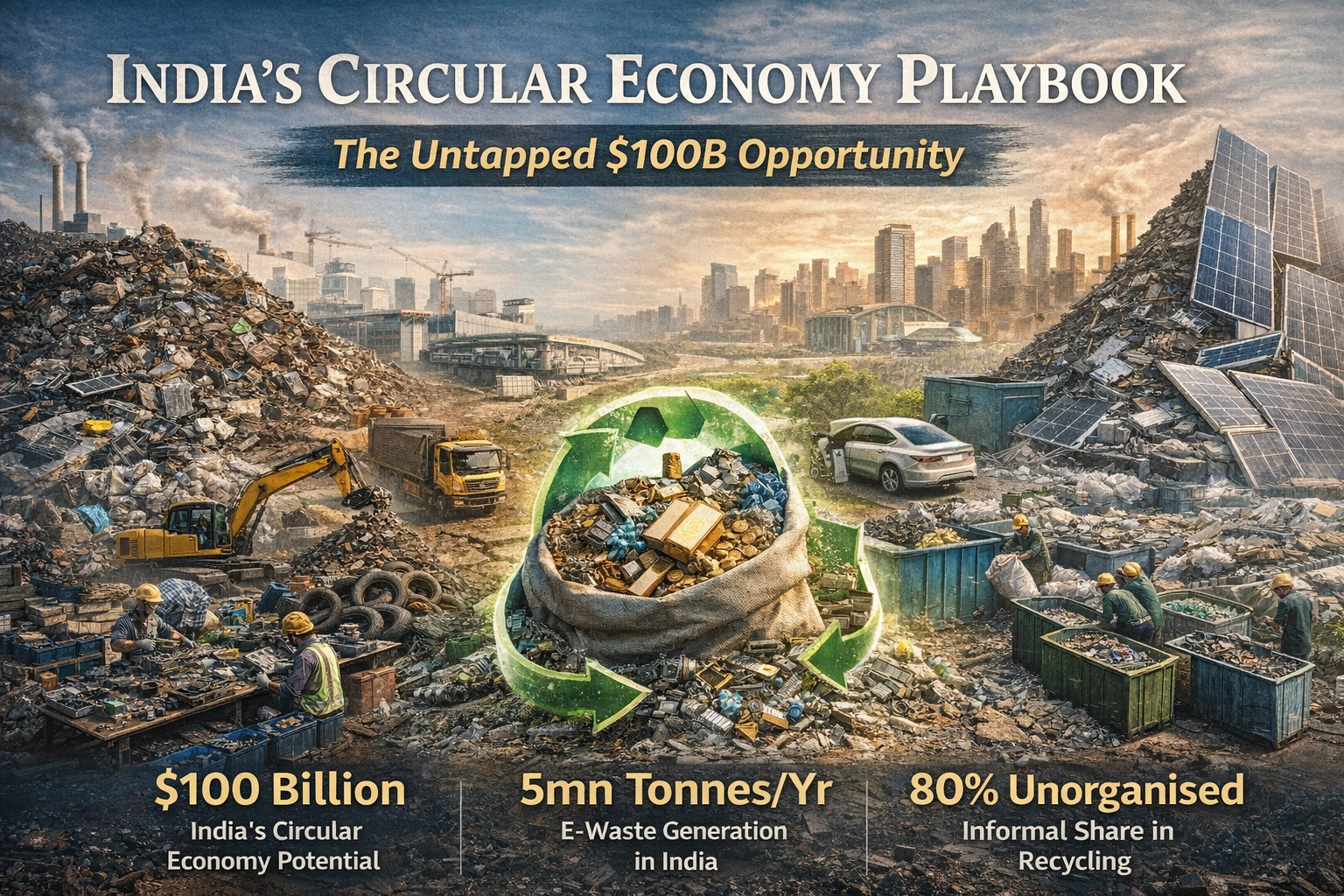
India’s Circular Economy Playbook — The Untapped $100 Billion Opportunity
Waste Is Not the Problem
India’s waste problem is visible everywhere. Landfills are growing. Cities are struggling. Systems are under pressure. But scale is not the real story.
India generates over 60 million tonnes of municipal waste every year. Along with this, e-waste and plastic waste are rising fast. These numbers are not just environmental warnings. They are economic signals.
They show how much value is being lost. The circular economy begins at this exact point. It asks a simple question:
What if waste is not the end, but the beginning?
From Linear Growth to Circular Value
For years, growth followed a straight line. We extracted resources. We produced goods. We consumed them. Then we discarded them.
This model worked in the past. But it no longer fits today’s reality. Resources are limited. Costs are rising. Climate pressure is real. The circular economy changes the logic. It keeps materials in use. It reduces waste. It creates value from what already exists. Products are reused. Materials are recovered. Systems become more efficient. Growth becomes smarter.
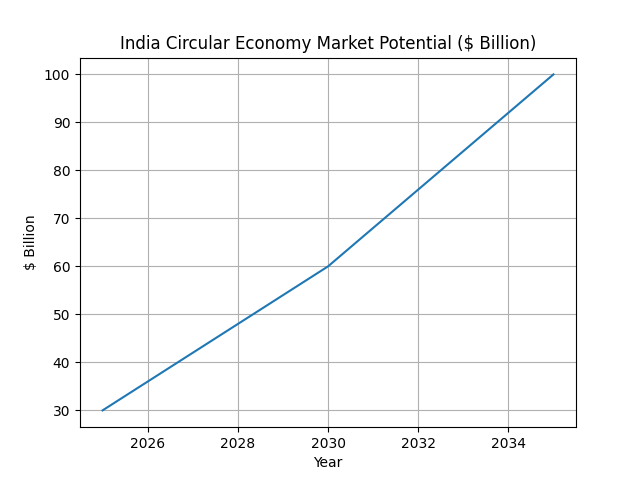
(Source: Industry estimates; visualised by The Quantiq)
The Numbers Tell a Bigger Story
India’s waste streams are growing. But they are also becoming valuable.
The country generates about 1.7 million tonnes of e-waste each year. This number will increase as digital usage expands.
Plastic waste adds another layer. It is both a problem and an opportunity. A bigger shift is coming.
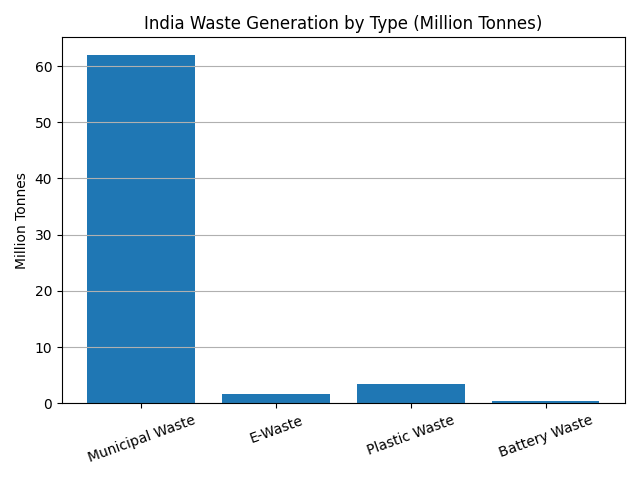
(Source: CPCB, NITI Aayog, industry estimates; visualised by The Quantiq)
Electric vehicles are rising. With them comes battery waste. Lithium-ion batteries contain valuable materials like lithium and cobalt. These materials are critical for the future. This means waste is no longer just waste.
It is a resource in disguise.
Urban Mining: A New Way to Extract Value
Mining once meant digging into the earth. That idea is changing.
Today, valuable materials are found in cities. They exist in discarded electronics, scrap metal, and used products. This is called urban mining.
E-waste can contain more precious metals than natural ores. This changes how we think about resources. India does not lack raw materials. It lacks systems to recover it efficiently.
The Informal System That Already Works
India already has a circular system. It just does not look formal.
Across the country, waste pickers and scrap dealers recover materials daily. They sort, collect, and resell waste. This system handles a large share of recycling.
It is efficient. It is local. It works. But it is also invisible. It lacks funding. It lacks recognition. It operates outside formal structures. The future does not lie in replacing this system. It lies in strengthening and integrating it.
The Battery Economy Is Coming
India’s EV growth will create a new kind of waste. At first, this may seem like a challenge. But it is also an opportunity.
Used batteries contain high-value materials. Recovering them can reduce imports. It can also create new industries. Battery recycling will become a key sector. It will connect energy, manufacturing, and sustainability. This is not just about waste.
It is about control over future resources.
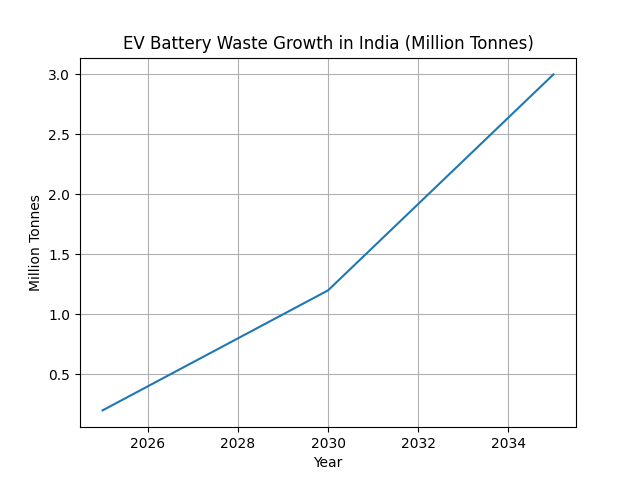
(Source: Industry projections; visualised by The Quantiq)
Innovation Will Drive the Shift
The circular economy needs new thinking. Startups are already entering this space. They are working on recycling, recovery, and reuse. But this is not easy work. It requires infrastructure. It needs capital. It depends on policy support. These are not digital-only businesses.
They operate in the real world. That is what makes them powerful. They do not just create services. They reshape systems.
The Quantiq Lens: Where Sustainability Meets Strategy
For The Quantiq, this story goes beyond recycling. It connects with India’s larger transformation. It links to Net Zero goals. It connects with manufacturing. It aligns with climate entrepreneurship.
It also connects with natural resources. Take bamboo. Bamboo grows fast. It is renewable. It can replace many materials. It fits perfectly into a circular economy. This is where India has an edge.
It can build a model that blends technology with nature.
Policy Is Slowly Catching Up
There is a shift in policy thinking. Regulations are moving from waste disposal to resource recovery. E-waste rules are evolving. Battery policies are emerging. Producer responsibility is expanding. NITI Aayog has also highlighted circular economy pathways across sectors. This signals a deeper change. Waste is no longer seen as a burden. It is being seen as a resource system.
The Next Unicorn May Come from Waste
India’s startup story has been digital so far. The next wave may be different. It may come from recycling plants. From battery recovery units. From material innovation labs. Because in a circular economy:
Value comes from using resources better. Not just using more. India is at the beginning of this shift. If it gets this right, the circular economy will do more than solve a problem. It will define a new way of growth. https://thequantiq.com/the-carbon-economy-the-new-oil-of-the-21st-century/