
After the Surge: Can Northeast India Become Asia’s Most Responsible Tourism Destination?
No beaches. No dunes. Yet everything that makes travel meaningful.
India’s tourism has rebounded sharply after COVID-19, driven largely by domestic travel. But in Northeast India, the real question is no longer growth—it is direction.
India’s Post-COVID Tourism Comeback: A Domestic-Led Revival
India’s tourism recovery after the pandemic has been nothing short of remarkable—and notably different from many global peers.
By 2023, domestic tourist visits touched 2.5 billion, recording nearly 45% growth over 2022. This surge did more than compensate for the collapse of international travel during COVID; it reshaped the very foundation of India’s tourism economy. Domestic travellers are now the undisputed engine of growth.
International tourism, too, has rebounded strongly. International Tourist Arrivals crossed 18.89 million, surpassing pre-pandemic levels, while Foreign Tourist Arrivals reached nearly 87% of 2019 numbers. The financial outcome is equally encouraging: foreign exchange earnings rose to over US$28 billion, marking a 31% year-on-year increase.
Yet hidden within this success story is a structural shift that deserves closer attention: high-volume domestic travel is now exerting unprecedented pressure on infrastructure, destinations, and ecosystems, especially in regions that were never designed for mass tourism.
Northeast India: Low Share, High Strategic Importance
Within India’s booming tourism landscape, the Northeastern Region (NER) remains a paradox.
Despite its extraordinary biodiversity, cultural diversity, and scenic wealth, the region accounts for less than 5% of India’s total tourist arrivals. On the surface, this suggests underperformance. In reality, it may also indicate latent strength and strategic restraint.
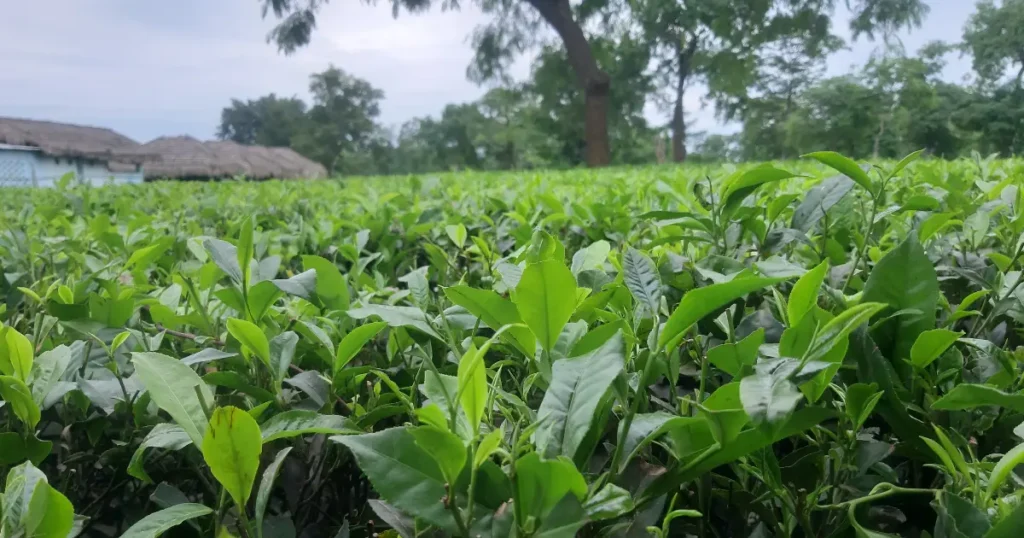
Tourism in the Northeast is predominantly domestic-led, with Assam and Meghalaya emerging as volume leaders. Connectivity is improving rapidly—air traffic is growing, highways are expanding, and branded hotel capacity is expected to nearly double by 2030, driven mainly by Assam and Sikkim. These trends signal rising private-sector confidence.
At the same time, the region has already produced some of India’s most respected responsible tourism models. Meghalaya’s community-driven villages and Sikkim’s conservation-led tourism policies are now referenced globally as examples of how tourism can coexist with nature and local livelihoods.
This dual reality—rising demand and fragile capacity—defines the Northeast’s tourism crossroads.
The Sustainability Paradox: Growth vs. Guardianship
The Northeast sits within one of the world’s most ecologically sensitive and biologically rich regions. Here, tourism growth brings both opportunity and risk.
Where the Tensions Lie
- Mass Tourism vs. Fragile Ecosystems
High-volume, low-cost tourism models—effective elsewhere—are fundamentally misaligned with biodiversity hotspots. Forests, wetlands, tribal landscapes, and wildlife corridors cannot absorb unchecked footfall without long-term damage. - Infrastructure Expansion vs. Ecological Balance
Roads, hotels, and airports are necessary for access, but without careful zoning and regulation, they can fragment habitats, strain water resources, and overwhelm waste-management systems. - Revenue Without Retention
In many destinations, tourism revenue does not sufficiently reach local communities. When livelihoods are not directly linked to conservation outcomes, the incentive to protect ecosystems weakens. - Fragmented Regulation
Tourism governance across the eight Northeastern states varies widely. While innovation thrives locally, the absence of harmonised sustainability standards can discourage responsible investors and allow environmentally harmful practices to slip through.
Importantly, these are not failures—they are growing pains of a region transitioning from isolation to global attention

A Region Perfectly Suited for High-Value Tourism
If mass tourism poses risks, the Northeast simultaneously holds a rare advantage: it is naturally designed for high-value, low-volume experiences.
Post-COVID travellers—both Indian and global—are seeking:
- wellness and mental rejuvenation
- authentic cultural encounters
- nature-based, low-impact travel
- destinations with ethical and environmental credibility
These preferences align almost perfectly with the Northeast’s strengths.
With over 220 distinct ethnic groups, living traditions, unique cuisines, and community-managed landscapes, the region offers depth rather than scale—an asset that cannot be replicated.

National policy is also moving in the right direction. Initiatives such as the National Strategy for Sustainable Tourism (2022) and Swadesh Darshan 2.0 explicitly prioritise sustainability, destination stewardship, and experiential tourism—creating a strong policy backbone for the region’s next phase.
Reimagining the Northeast: From “Unexplored” to “Bio-Reserve Exclusive”
What the Northeast needs now is not more footfall—but clear positioning.
A Strategic Rebrand
Instead of being marketed as merely “unexplored” or “adventurous,” the region could be positioned as:
“Asia’s Last Authentic Bio-Cultural Sanctuary”
Marketing Ethos: Where Travel Protects.
This shift reframes tourism not as consumption, but as participation in preservation—appealing to conscious, high-spending travellers who value meaning over numbers.
From Vision to Practice: Building a No-Compromise Tourism Model
1. Bio-Reserve Certification for Sensitive Zones
A mandatory sustainability certification for operators near protected areas could ensure:
- zero single-use plastics
- robust waste-to-resource systems
- minimal visual pollution
- strong local employment mandates
Such a standard would reward compliance with credibility and pricing power.
2. Community Conservation Homestays
Rather than expanding large hotels in ecologically sensitive zones, certified homestays can:
- keep tourism income within villages
- channel a defined share of revenue into conservation
- offer deeper cultural exchange for travellers
This transforms tourism into a shared economic and ecological contract.
3. High-Value Experiential Niches
The Northeast is ideally positioned for specialised, low-impact experiences:
- guided birding and biodiversity trails
- tea estate and indigenous cuisine journeys
- cultural immersion programs with tribal artisans
- conservation-linked volunteering experiences
Such offerings limit numbers while maximising value per visitor.
Marketing the Proof, Not the Promise
The next phase of tourism promotion must move beyond postcard imagery.
- Impact-driven storytelling that shows how tourism directly funds conservation and livelihoods
- Digital precision targeting of travellers already aligned with sustainable destinations
- AR/VR previews that educate visitors on respectful engagement before they arrive
Strategic partnerships with conservation organisations and international wellness networks can further enhance credibility and reach.
The Way Forward: Choosing Value Over Volume
The Northeast does not need to compete with mass tourism destinations. Its strength lies in selectivity, stewardship, and authenticity.
By deliberately sacrificing volume for value, the region can build a tourism economy that:
- protects biodiversity
- strengthens local communities
- attracts global respect
- delivers long-term economic resilience
In an era where travellers increasingly ask where their money goes, Northeast India has the opportunity to offer a powerful answer.
Not just a destination—but a model for the future of responsible tourism in Asia.