AI Is Not Your Meme Generator: It’s the Great Capability Equalizer
As policymakers, technologists, and industry leaders gather in New Delhi this week for the IndiaAI Summit, the conversation around artificial intelligence is no longer just about technology. It is about direction. The world is watching how India — one of the largest digital societies on the planet — chooses to understand, deploy, and shape this transformative force.
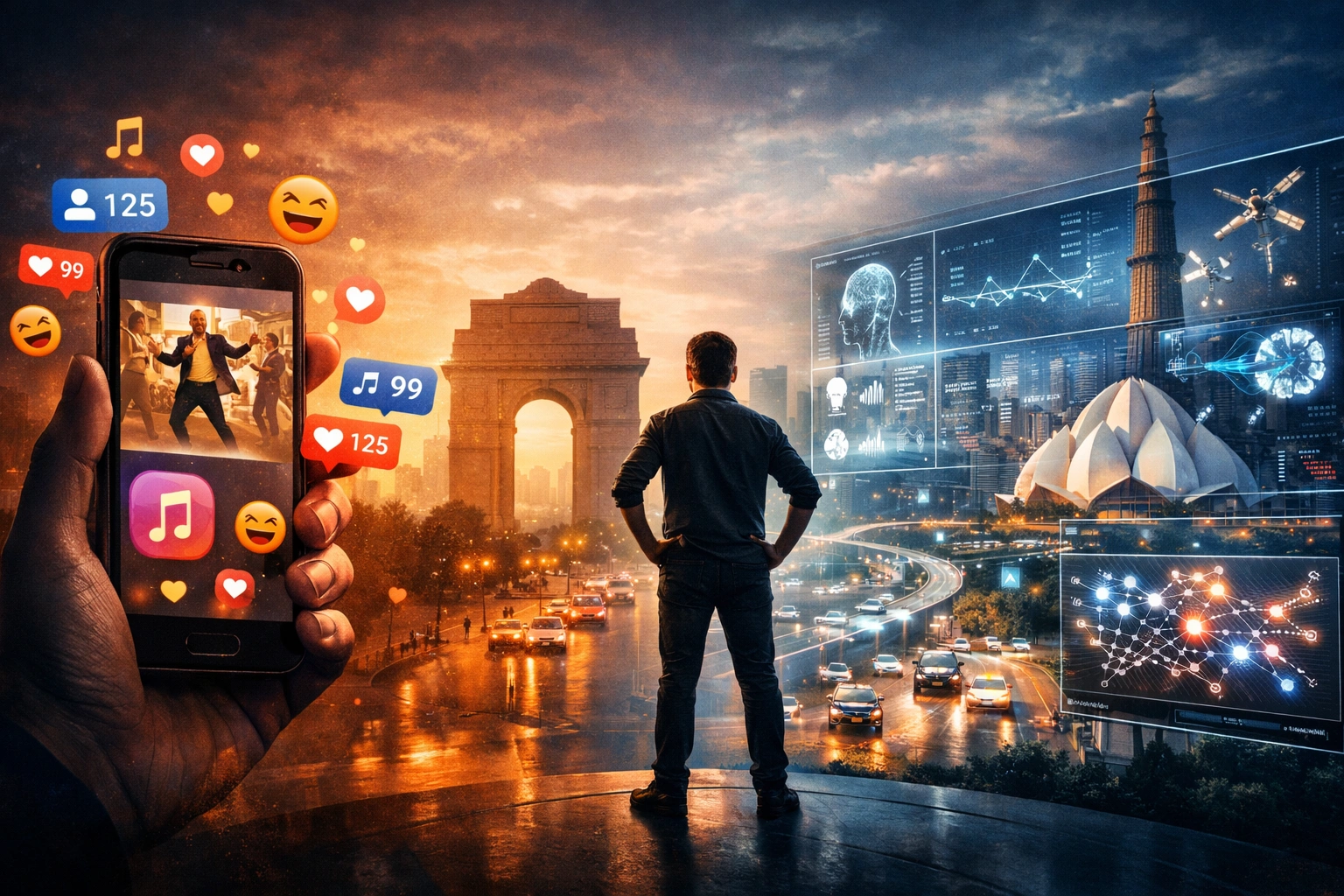
Yet, while global forums debate strategy, scroll through social media and you will see a very different picture of AI in action.
Someone has generated a Bollywood-style song using AI.
Someone else has turned a political leader into a dancing meme.
Another proudly uploads a small AI-generated artwork and waits for reactions.
This growing flood of novelty content has earned its own informal label online: AI slop — output created less from imagination and more from curiosity about what a tool can do.
Experimentation is natural. Every technological revolution begins with play. But confusing these early amusements with the true power of artificial intelligence is like believing the internet’s greatest achievement was forwarding jokes over email in the 1990s.
To grasp what AI really represents, familiarity with a few tools is not enough. What matters is AI literacy — understanding AI not as a shortcut for content creation, but as a system that expands what human beings can attempt.
As a global tech stalwart once observed, AI is not about coding faster; it is about doing something unprecedented — something you never thought you would be able to do. That idea captures the essence of this moment.
From Productivity Tool to Possibility Engine
Much of today’s public conversation still treats AI as a productivity enhancer: drafting emails more quickly, summarizing documents instantly, or generating code in seconds. These are useful improvements, but they are not the real story.
The deeper transformation lies in how AI reduces the distance between imagination and execution.
For generations, innovation followed a predictable chain: an idea required specialist knowledge, which required a team, which required institutional backing, funding, and long development cycles. That chain is now compressing.
An individual today can learn advanced concepts faster than ever, simulate designs, build working prototypes, create professional presentations, and test ideas with global reach — often within weeks rather than years.
This shift is not merely about efficiency. It represents a fundamental expansion of human capability.
The Collapse of the Technical Divide
Industrial society conditioned us to believe in two separate worlds: the technical and the non-technical. Engineers built systems, managers directed them, designers shaped them, and marketers communicated them.
AI is steadily dissolving these boundaries.
A non-programmer can now develop functional software prototypes. A small entrepreneur can run sophisticated data analysis once reserved for large corporations. Students can simulate scientific models without laboratory access. Independent creators can design, publish, and distribute work globally.
We may be entering the early phase of what could be called the Capability Economy, where formal specialization matters less than the ability to combine curiosity, judgment, and intelligent tools.
Experts will remain essential, but AI-enabled generalists are gaining unprecedented power.
Democratizing the Start — Not the Finish
There is a growing belief that AI allows anyone to achieve anything instantly. Reality is more nuanced, and more meaningful.
AI democratizes the beginning of the journey: learning becomes faster, experimentation cheaper, prototyping easier, and knowledge more accessible. What it does not remove are the real-world demands of execution — infrastructure, regulation, resources, leadership, and persistence.
A school dropout dreaming of building a rocket still needs materials, testing environments, and compliance with physical and safety laws. What AI changes is not the existence of those requirements, but the speed at which that person can understand the science, explore designs, and begin the path toward competence.
AI does not replace effort. It multiplies the value of effort.
From Tools to Systems: The Agentic Shift
The next stage of AI’s evolution will push this transformation even further. We are moving beyond isolated tools toward agentic systems — interconnected intelligence layers capable of coordinating tasks, analyzing information, and assisting decisions across domains.
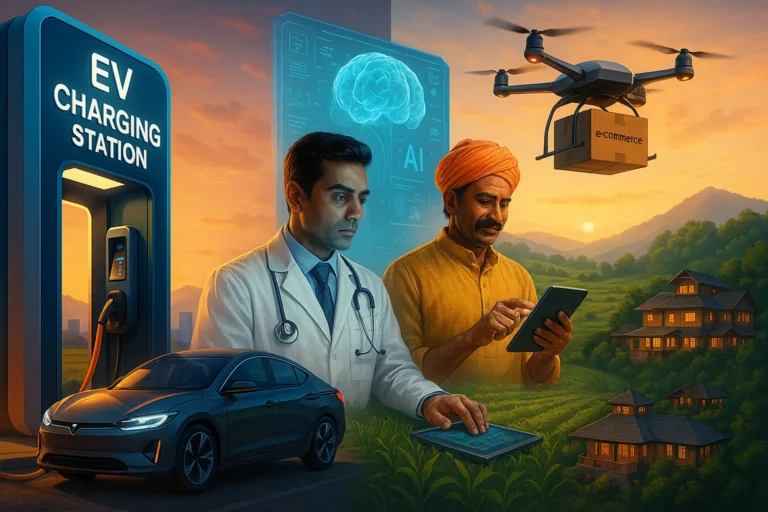
In healthcare, such systems already help doctors interpret scans, accelerate drug research, automate documentation, and monitor patients predictively. In mobility and logistics, AI optimizes traffic patterns, supports autonomous transport, forecasts supply chains, and coordinates large networks in real time.
These developments signal a profound change. The future hospital may be defined less by its physical infrastructure and more by the intelligence network surrounding each patient. Transport systems, similarly, may be shaped less by vehicles themselves and more by algorithms determining how movement should occur.
The Real Divide Ahead
The next decade will not separate society into coders and non-coders. Instead, it will distinguish between those who treat AI as a novelty and those who treat it as a capability multiplier.
Some will use AI primarily to generate content faster. Others will use it to attempt problems that previously required entire institutions.
AI literacy is therefore not about mastering prompts or collecting apps. It is about understanding how intelligence systems can amplify human intent, creativity, and ambition.
Those who understand this shift early will not simply work more efficiently. They will attempt projects, ventures, and innovations that once seemed out of reach.
Beyond the Meme
Every technological revolution passes through a trivial phase. The printing press produced gossip before it enabled scientific progress. The internet hosted chat rooms before it transformed global commerce. AI, too, is currently moving through its meme phase.
But beneath the noise, a deeper transformation is unfolding.
For the first time in modern history, access to knowledge is no longer the primary constraint on ambitious ideas. Increasingly, the real limits are clarity of vision and strength of execution.
AI is not your meme generator.
It is the great capability equalizer.
And as India steps onto the global stage this week to shape the future of artificial intelligence, the real question is no longer what AI can produce for us — but what we are prepared to attempt with it.https://thequantiq.com/why-most-enterprise-ai-pilots-fail-and-how-mit-aligned-leaders-are-building-the-agentic-enterprise-in-2026/

One Comment