The Future of Farming: How AI and Vertical Farms Are Revolutionizing Sustainable Food Production
Feeding a growing world without exhausting the planet’s resources is one of the defining challenges of our time. Agriculture accounts for up to 70–80% of global freshwater use, drives deforestation, and contributes nearly a quarter of greenhouse gas emissions. The system that sustained the 20th century is already cracking under the pressures of the 21st century. But a quiet revolution is underway. From vertical towers in cities to AI-powered fields, technology is rewriting the rules of farming — growing more food in less space, with fewer inputs, and lower environmental costs.
Vertical Farming: Efficiency in Every Layer
Vertical farming reimagines agriculture by stacking crops in climate-controlled facilities, often in urban centers. These systems use up to 95% less water than conventional farms, require no pesticides, and produce consistent harvests year-round. The advantages are obvious: resilience against droughts, extreme weather, and supply chain shocks.
The industry is scaling rapidly. Valued at $5.6 billion in 2024, the global vertical farming market is projected to reach $13.7 billion by 2029, expanding at a CAGR of nearly 20%. Companies like AeroFarms and Bowery Farming in the U.S. have proven the commercial model, while Singapore’s “30 by 30” plan and Dubai’s desert GigaFarm show how vertical agriculture is shaping food security strategies in resource-scarce regions. India, too, is witnessing early adoption, with urban startups experimenting with hydroponics and controlled-environment agriculture.
Precision Agriculture: Data as the New Fertilizer
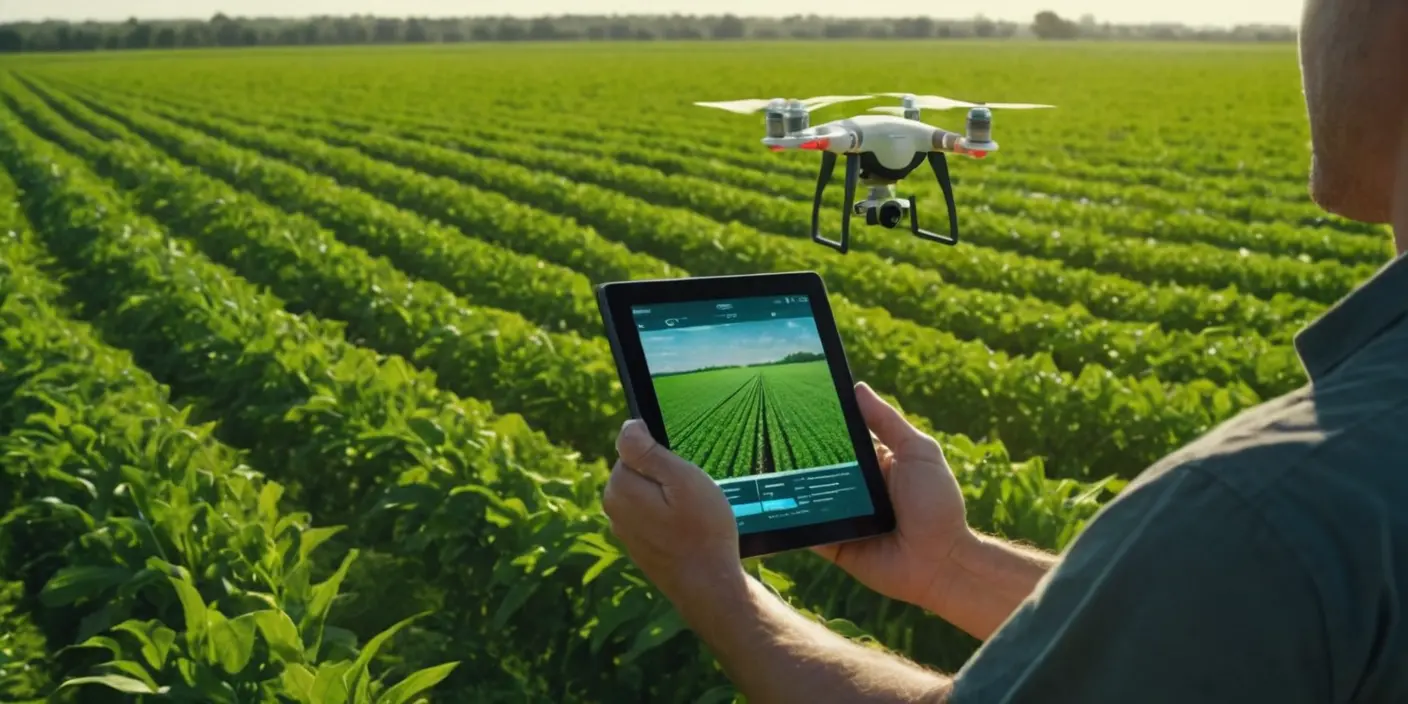
While vertical farming dominates the urban narrative, the vast bulk of global food still comes from open fields. Here, precision agriculture is transforming traditional practices into data-driven science. Drones, satellites, and IoT sensors generate real-time intelligence on soil moisture, nutrient levels, and crop health. GPS-enabled machinery applies water and fertilizers with pinpoint accuracy, reducing waste and runoff into rivers.
This shift is not just sustainable — it’s profitable. Farmers save costs, optimize yields, and reduce environmental risks. In a world where agriculture consumes most of our freshwater, precision farming represents one of the fastest ways to align food production with climate resilience.
AI and Robotics: Intelligence in the Field
Artificial Intelligence is moving beyond monitoring to prediction. Algorithms trained on climate, soil, and historical yield data can forecast harvests, recommend planting schedules, and even detect early signs of crop disease. Platforms like Cropin Sage are already using generative AI to help farmers in Europe optimize regenerative farming practices.
Robotics adds muscle to intelligence. From autonomous tractors to AI-powered robots that weed, prune, or harvest with surgical precision, automation is reducing labor dependence while boosting efficiency. The result is a system where human decision-making is augmented by machine precision — an essential shift as farm labor shortages intensify worldwide.
The Farm-to-Fork Revolution
Sustainability doesn’t end at the farm gate. How food travels from seed to plate is also being disrupted. Blockchain-enabled traceability is building consumer trust and reducing inefficiencies across the supply chain. Localized production from vertical farms slashes food miles, cutting both costs and carbon emissions.
What emerges is a farm-to-fork ecosystem that is transparent, efficient, and climate-conscious — qualities that global consumers are increasingly demanding.
The convergence of vertical farming, precision agriculture, AI, and robotics signals more than incremental progress — it’s a structural reset of how humanity grows and consumes food. These technologies are not just tools for efficiency; they are instruments of resilience in a climate-stressed world.
The future of farming will not be decided solely by yields, but by the speed at which these innovations scale. The real question is no longer if we can build a sustainable food system, but how quickly we must — before resource pressures make the transition unavoidable.