
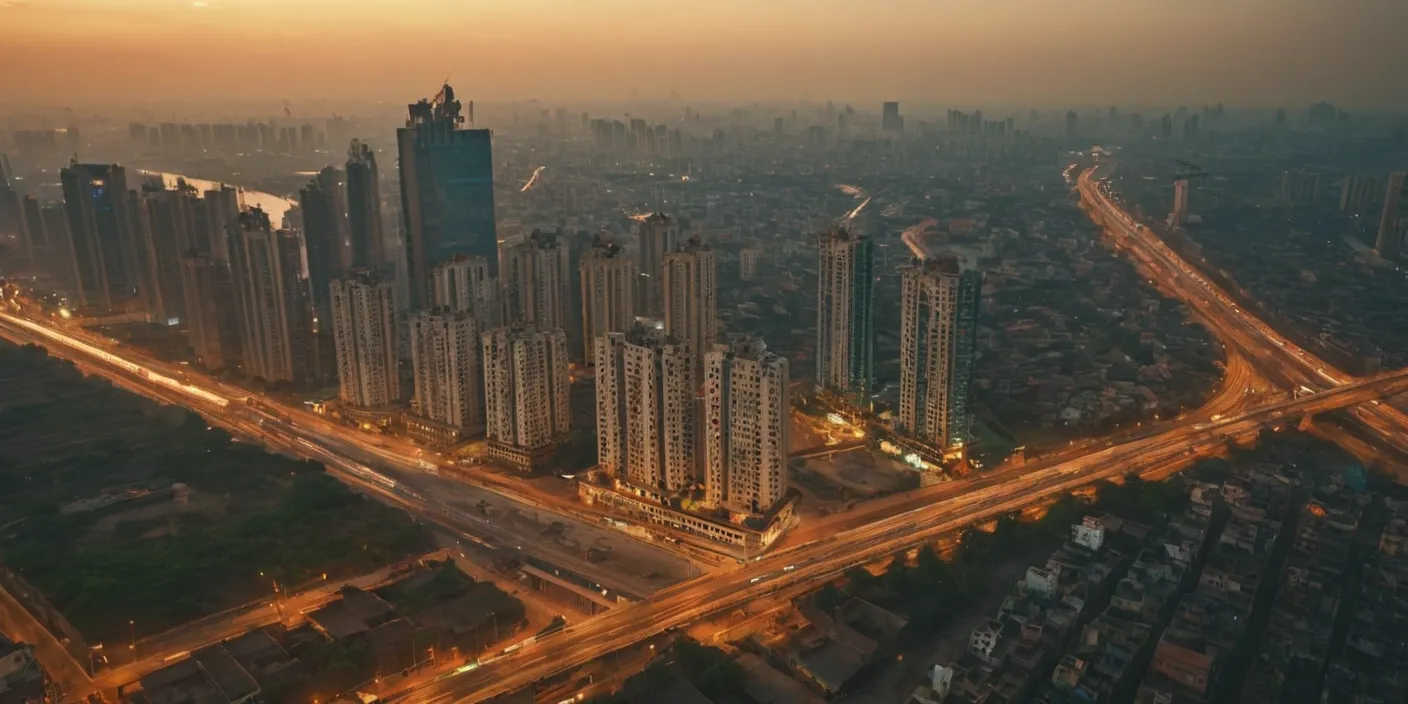
India’s Economic Momentum: A New Global Growth Engine Emerges
With rising domestic demand, infrastructure push, and strong FDI inflows, India is positioning itself as the world’s next economic powerhouse.
India’s economic landscape in 2025 is characterized by robust domestic consumption, a rapidly expanding middle class, and sustained government capital expenditure. According to International Monetary Fund (IMF), India is projected to grow at 6.8% in FY 2025, making it the fastest-growing major economy in the world.
This growth is not just statistical—it reflects deep structural shifts in India’s economic fundamentals. Over the past five years, the government has invested heavily in infrastructure development, with initiatives like National Infrastructure Pipeline targeting $1.4 trillion investment through 2025. Projects under Bharatmala Pariyojana and Sagarmala Programme are transforming logistics, highways, ports, and connectivity, lowering transaction costs for businesses and boosting export competitiveness.
India’s domestic demand—a market of 1.4 billion people—is a magnet for global investors. United Nations Conference on Trade and Development ranked India among the top 5 global FDI destinations in 2024, attracting over $70 billion in FDI inflows despite global slowdown.
The digital economy has also become a powerful growth driver. Digital payments crossed $4 trillion in value in 2024, driven by Unified Payments Interface (UPI), setting the stage for seamless commerce.
India’s growth story is also underpinned by geopolitical tailwinds. As global supply chains diversify from China, India is emerging as a preferred manufacturing destination under Production Linked Incentive Scheme. Electronics, EVs, semiconductors, and pharmaceuticals are leading sectors.
Yet, challenges remain—particularly in job creation and inequality. The top 1% holds 40% of wealth. Policies encouraging MSME growth, ease of doing business, and inclusive digital access are crucial to sustain momentum.
If India can balance growth with inclusion and reforms, it could contribute 15% to global GDP growth by 2030, according to Morgan Stanley.