
From Dead Capital to Credit Engine: India’s “Silver Revolution” Boosts Rural MSME Lending
India’s long-standing practice of treating gold as informal collateral is about to get a powerful companion: silver. While gold has been widely accepted by banks as a security asset, silver – held in large quantities by many households in rural and semi-urban India – has largely remained “dead capital” outside the formal credit system. Now, the Reserve Bank of India’s new guidelines for lending against precious-metal collateral are poised to change that.
Unlocking a Massive Household Asset
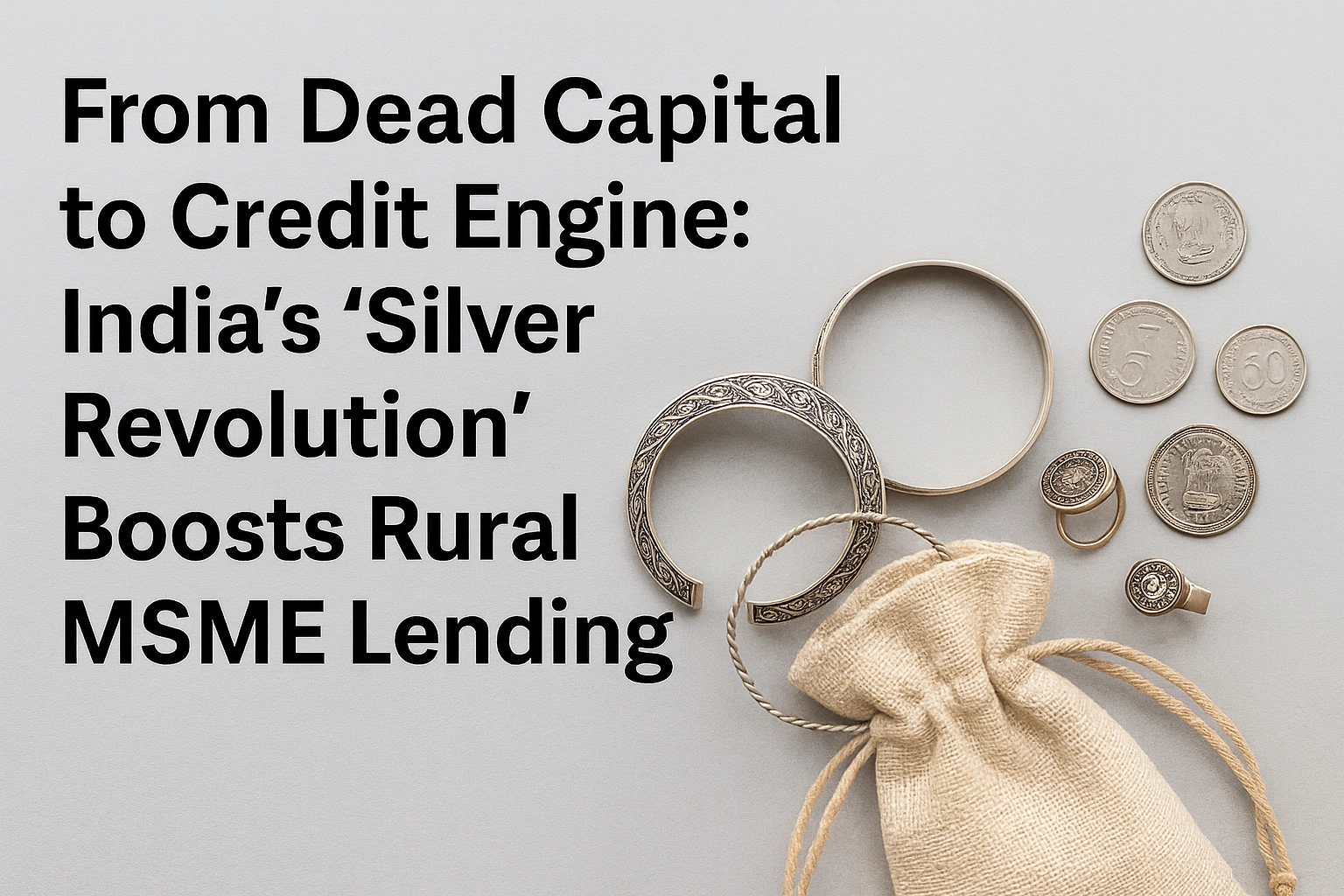
Recent reforms under the “Reserve Bank of India (Lending Against Gold & Silver Collateral) Directions, 2025” allow regulated lenders to accept silver jewellery, ornaments and coins (but not silver bullion) as collateral for loans, effective from 1 April 2026. The framework specifies limits of up to 10 kg of silver ornaments and 500 g of silver coins per borrower.
By transforming previously untapped household holdings of silver into a formal credit source, this reform offers small businesses access to working capital they often could not get.
Rural MSMEs Poised to Benefit
For micro, small and medium enterprises (MSMEs) in rural and semi-rural India, this is a game-changer. These enterprises often operate without land, fixed assets or formal credit history — but many have access to household silver.
- Credit Engine: Loans against silver can provide quick, short-term funding for inventory, working capital or seasonal demand.
- Financial Inclusion: By integrating more households into regulated banking via silver-backed credit, the reform can reduce reliance on informal money-lenders.
- Credit History Building: A small silver-pledge loan can help a borrower build a formal credit record, enabling access to larger, unsecured loans later.
Standardisation & Safeguards
The RBI’s guidelines emphasise rigorous standards for valuation, purity testing, storage, documentation and borrower protection. For example:
- The valuation of silver is tied to the lower of the previous day’s closing price or the 30-day average, as published by recognised sources.
- Loans must adhere to tiered Loan-to-Value (LTV) ratios: up to 85% for loans ≤ ₹2.5 lakh, 80% for loans > ₹2.5 lakh ≤ ₹5 lakh, and 75% above ₹5 lakh.
- Borrowers must have their collateral assessed and documented; lenders must release pledged silver within seven working days of full repayment, with compensation for delay.
A Note of Caution
While the opportunity is significant, the actual impact will depend on smooth implementation. Rural lenders and small businesses may need to upgrade systems, work through logistical issues (e.g., verifying ownership, handling bulky silver items, storing collateral securely) and ensure borrowers understand terms clearly. The reform is not a magic bullet — but it is a strong enabler.
Final Word
India’s “Silver Revolution” turns a neglected household asset into a powerful engine for formal credit. For rural MSMEs and entrepreneurs, this means access to capital in places where traditional collateral is scarce. As the RBI framework takes effect in April 2026, the transformation of silver from “dead capital” to working capital could help unlock new growth across India’s hinterlands.