
The Bamboo Orchid: Guwahati’s ₹4,000 Crore Gateway to the East
As the sun sets over the Brahmaputra, Guwahati is preparing for a once-in-a-generation transformation.
As 2025 draws to a close, the skyline of Northeast India is set to gain a defining new landmark, with the Prime Minister scheduled to inaugurate the New Integrated Terminal Building (Terminal 2) at Lokpriya Gopinath Bordoloi International Airport (LGBI) tomorrow.
The terminal is scheduled to be inaugurated on December 20, 2025, during Prime Minister Narendra Modi’s proposed visit to Assam, marking a major milestone in India’s Act East vision.
For The Quantiq, we decode the data, design philosophy, and geopolitical significance behind Guwahati’s most ambitious infrastructure project to date.
The Vision: Vernacular Architecture Meets Global Design
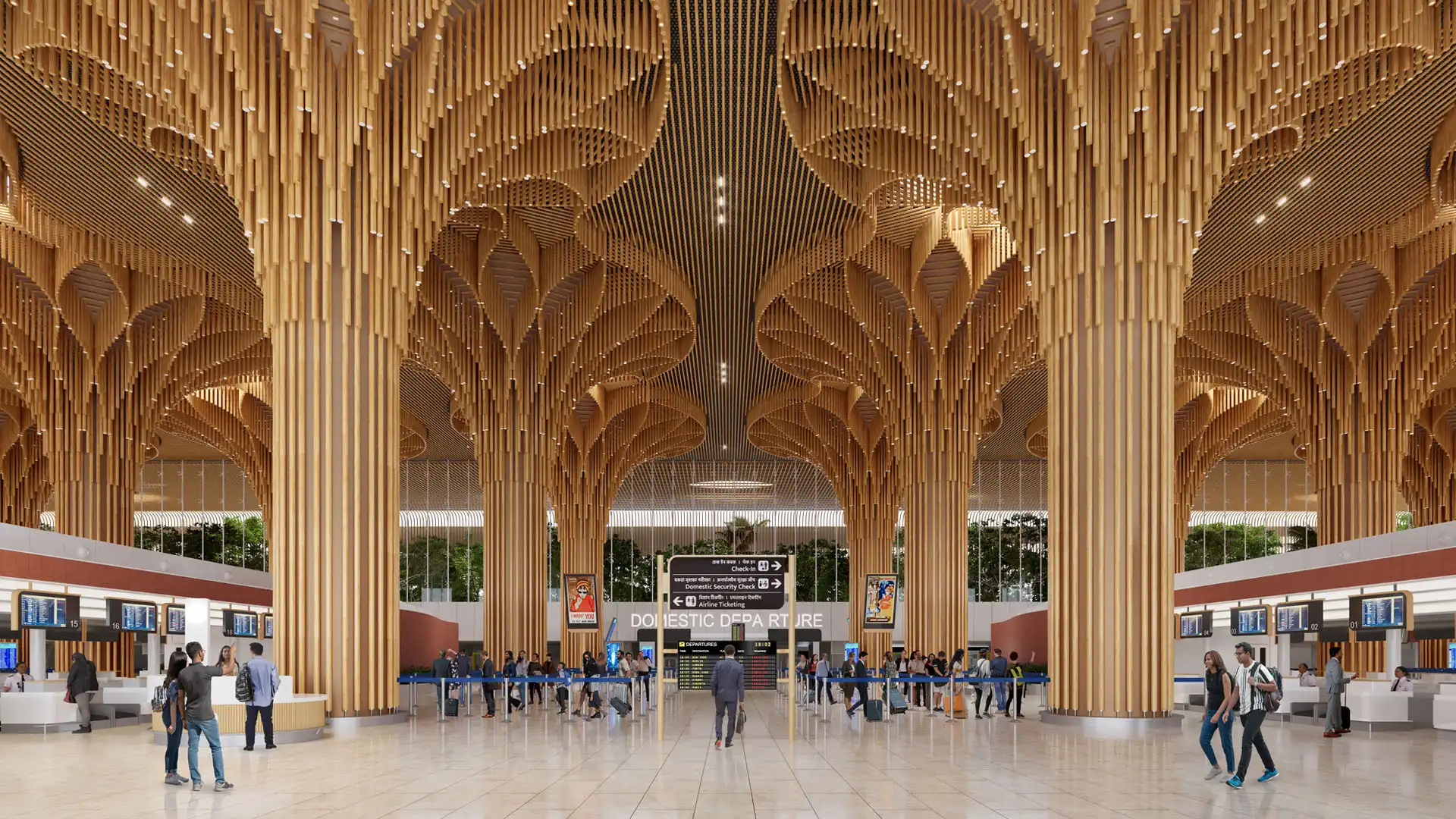
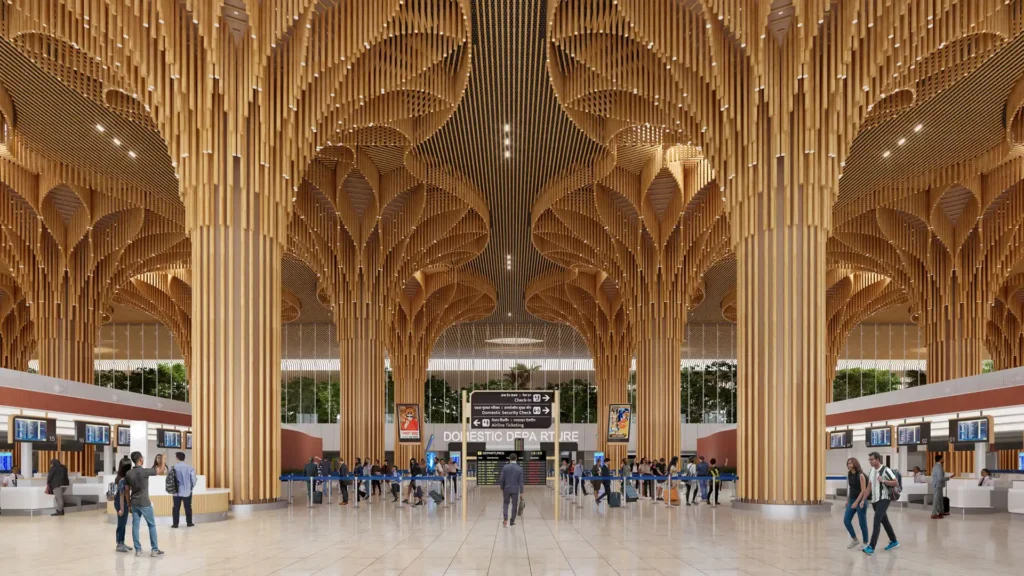
Designed by NUDES in collaboration with Design Forum International (DFI), Terminal 2 departs decisively from the generic glass-and-steel airport template. Instead, it draws deeply from the natural forms, cultural symbols, and material traditions of Northeast India.
The design concept — “The Bamboo Orchid” — has already earned global recognition, including the International Architecture Award 2025, positioning Guwahati alongside some of the world’s most thoughtfully designed transport hubs.
Signature Design Elements
The Sky Forest
The arrival hall is anchored by a dramatic 90-foot-high indoor forest, transforming the terminal into a “breathing space” rather than a transactional transit zone.
Origami-Inspired Facade
The roof structure and baggage claim walls feature origami-folded aluminium panels, evoking the region’s undulating hills while subtly referencing Japanese paper-folding art — a symbolic nod to East Asia.
Cultural Motifs
Design cues are inspired by the Iravati elephant, Kopou Phool (foxtail orchid), and the Gamosa, embedding Assamese identity into a globally legible architectural language.
Why Terminal 2 Was an Economic Necessity
Passenger Traffic Trends (FY 2020–FY 2025)
Despite the disruption caused by COVID-19, LGBI Airport has recorded one of the strongest V-shaped recoveries among Indian airports, crossing its earlier design capacity of 6 million passengers.
| Financial Year | Domestic | International | Total Traffic | YoY Growth |
|---|---|---|---|---|
| 2020–21 | 2,130,000 | 8,235 | 2,138,235 | –58.2% |
| 2021–22 | 3,420,000 | 12,450 | 3,432,450 | +60.5% |
| 2022–23 | 4,950,000 | 28,600 | 4,978,600 | +45.0% |
| 2023–24 | 6,292,400 | 37,600 | 6,330,000 | +27.1% |
| 2024–25 | 6,478,406 | 91,594 | 6,570,000 | +7.7% |
Source: Airports Authority of India (AAI) / Adani Airport Holdings
Key Insight
International passenger traffic surged over 140% in FY 2024–25, reaching a historic high of 91,594 travellers.
On December 12, 2024, LGBI reportedly handled 21,444 passengers in a single day, underscoring how severely the existing infrastructure had been stretched — and why Terminal 2 became unavoidable rather than optional.
Guwahati’s New Role: Gateway to ASEAN and Beyond
With Terminal 2 operational, Guwahati is being repositioned from a regional hub to a strategic eastern gateway for India.
Current International Connectivity
- Bangkok – Thai AirAsia
- Paro (Bhutan) – Drukair
- Singapore – Air India Expres
On the Horizon
Under India’s UDAN and Act East frameworks, aviation planners are exploring expanded connectivity to Kuala Lumpur, Hanoi, and Dhaka, with regular services expected to materialise progressively from 2026 onwards, subject to bilateral clearances and commercial viability.
This expansion places Guwahati at the centre of a fast-emerging India–ASEAN aviation corridor.
Materials, Engineering & Sustainability
The terminal has been executed by Shapoorji Pallonji, with engineering choices carefully adapted to the region’s climate, seismic conditions, and sustainability goals.
Notable Engineering Features
- Bamboo Poly-Composite Columns
Used extensively in the Sky Forest, combining aesthetic warmth with structural resilience. - GFRC (Glass Fibre Reinforced Concrete)
Enables the terminal’s sweeping curves and fluid exterior form. - Sustainability Credentials
- 4-Star GRIHA Rating
- Zero Liquid Discharge (ZLD) system
- Solar-powered parking infrastructure
Together, these features position Terminal 2 as one of the most environmentally responsive airport terminals in Eastern India
The Bigger Picture
The Bamboo Orchid is not just an airport terminal. It is:
- A statement of confidence in Northeast India’s growth trajectory
- A symbolic bridge between India and Southeast Asia
- A platform infrastructure for tourism, trade, and talent mobility
For Guwahati, Terminal 2 signals a decisive shift — from being India’s gateway to the Northeast, to becoming the Northeast’s gateway to the world.