SkillTheNation: How India Is Rewriting the Rules of the AI Age
India has begun 2026 with a clear message to the world: the future belongs to skilled minds, not just smart machines.
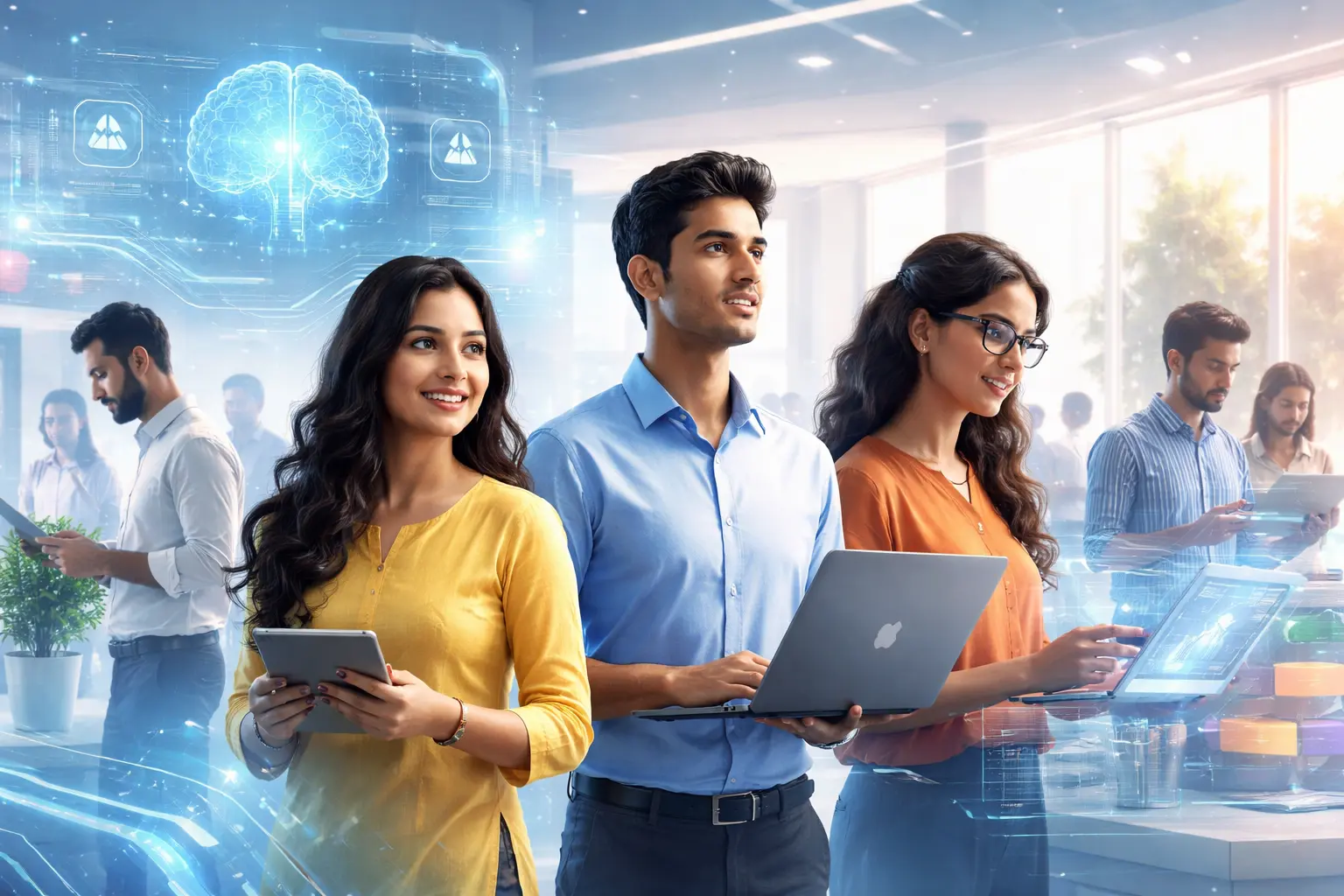
In a significant New Year move, President Droupadi Murmu launched the #SkillTheNation AI Challenge, reinforcing India’s commitment to preparing its people for an AI-driven economy. The announcement follows the remarkable success of the SOAR (Skilling for AI Readiness) initiative, which recorded over 1.59 lakh enrollments in just six months — a strong signal that India’s appetite for AI literacy is no longer theoretical, but real and growing.
Why #SkillTheNation Matters Right Now
Artificial Intelligence is no longer a futuristic concept. It is already reshaping how businesses operate, how governments deliver services, and how individuals work and earn.
Yet India stands at a critical junction.
- Over 65% of the population is under the age of 35
- Millions are entering the workforce every year
- Traditional degrees alone are no longer enough to stay relevant
The #SkillTheNation initiative addresses this gap head-on — shifting the national focus from qualifications to capabilities.
What the #SkillTheNation AI Challenge Is Really About
At its core, the program aims to democratize AI knowledge and make it accessible beyond elite institutions or urban tech hubs.
Key focus areas include:
- Foundational AI literacy – understanding how AI works, its limitations, and ethical use
- Applied AI skills – prompt engineering, data interpretation, automation tools
- Sector-specific learning paths – healthcare, agriculture, manufacturing, education, governance
- Industry-aligned certifications – designed to improve real-world employability
Unlike many short-term skilling drives, SOAR places strong emphasis on practical application, ensuring learners can immediately apply what they learn.
From Elite Skill to Everyday Capability
What makes this initiative especially powerful is its inclusive vision.
AI is no longer positioned as a domain reserved for coders, engineers, or tech startups. Instead, it is being framed as a foundational skill — much like digital literacy was a decade ago.
This approach aligns with India’s broader development goals:
- Bridging the urban–rural digital divide
- Enabling MSMEs and local entrepreneurs to adopt AI tools
- Preparing youth for AI-assisted jobs rather than jobs replaced by AI
In essence, India is attempting something few countries have achieved — mainstreaming artificial intelligence at scale.
Why This Matters for India’s Global Standing
As countries compete for technological leadership, the real differentiator is no longer just innovation — it is human readiness.
By focusing on skill development at scale, India is positioning itself as:
- A global hub for AI-ready talent
- A preferred destination for future-tech investments
- A nation capable of exporting not just software, but skilled human capital
If implemented effectively, #SkillTheNation could redefine India’s role in the global AI economy — from a service provider to a knowledge powerhouse.
The Real Test Lies Ahead
The ambition is clear. The intent is strong. But the success of #SkillTheNation will ultimately depend on:
- Accessibility in rural and semi-urban regions
- Quality and continuous updating of course content
- Strong industry participation and real employment linkages
If these elements align, this initiative could mark a turning point in India’s human capital story.
The Quantiq View
At The Quantiq, we see #SkillTheNation not just as a government program, but as a national mindset shift — from job-seeking to skill-building, from passive learning to intelligent adaptation.
In the age of AI, the true competitive advantage will not be machines — but humans who know how to work with them.
And India, it seems, has decided to lead that change.