India’s AI Moment Has Arrived — Leadership Will Depend on What Happens After the Summit
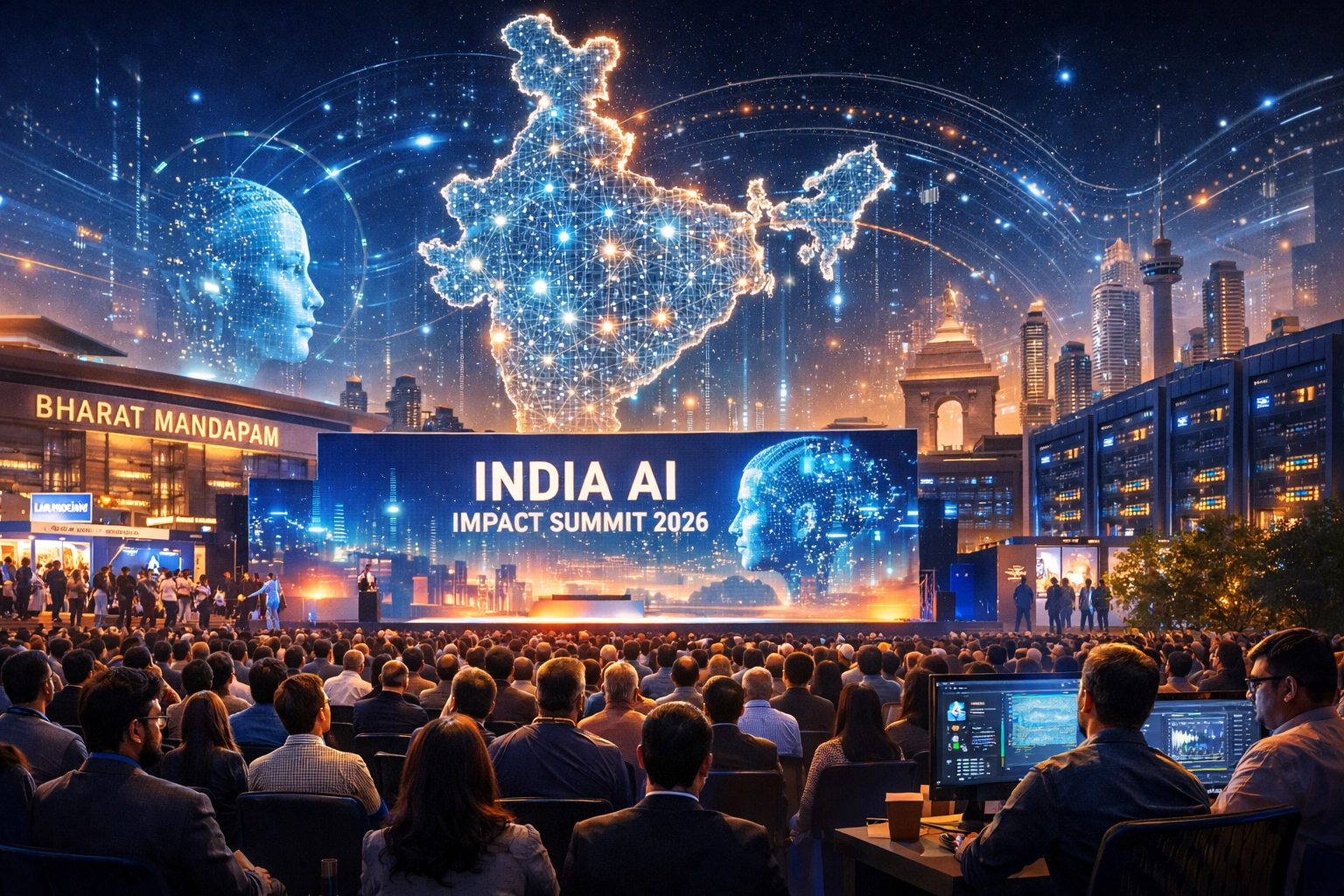
The India AI Impact Summit 2026 in New Delhi is not merely another technology gathering. It is a strategic signal that the world’s largest democracy intends to shape — not just adopt — the artificial intelligence revolution.
For five days at Bharat Mandapam, global technology leaders, policymakers, investors, and startups have converged to discuss AI’s future. The symbolism is powerful. A summit of this scale being hosted in a Global South nation reflects a changing technological order. AI governance, innovation, and markets are no longer confined to Silicon Valley or Europe. India wants a decisive voice in defining how the AI century unfolds.
But beyond the speeches and exhibition halls, the summit reflects something deeper: India’s attempt to transform its technological identity.
From Back Office to Builder
For decades, India’s reputation in global technology rested on services — coding, outsourcing, and IT-enabled operations supporting companies worldwide. Artificial intelligence offers a different opportunity: to move from execution to creation.
Discussions around the summit highlight this shift. The focus is not only on AI applications but on the ecosystem needed to sustain them — data infrastructure, computing capacity, policy frameworks, semiconductor access, and responsible governance. AI is no longer viewed as a software layer; it is being treated as foundational national infrastructure.
Private investment signals reinforce this momentum. Large-scale commitments in cloud infrastructure and hyperscale data centres suggest India is preparing for the computing demands of the AI era. The economic implications are enormous. AI could influence productivity across manufacturing, healthcare, agriculture, logistics, and financial services, shaping India’s next growth cycle.
Scale as India’s Strategic Advantage
India’s greatest strength in the AI race is scale — of population, digital adoption, and talent.
The country combines one of the world’s largest developer pools with expanding digital public infrastructure and vast real-world datasets across languages, industries, and demographics. This creates a unique testing ground for AI solutions designed not only for advanced economies but for diverse, resource-constrained environments worldwide.
The summit’s emphasis on human-centric AI reinforces this positioning. India is framing itself as a bridge between advanced nations and the developing world, advocating AI that improves healthcare access, agricultural productivity, financial inclusion, and education delivery.
If successful, this approach could allow India to export not just AI technology, but a governance model rooted in inclusivity and scale.
The Infrastructure Test
Yet ambition alone does not produce leadership. Artificial intelligence is capital-intensive and energy-hungry. Data centres require stable electricity, cooling capacity, high-speed connectivity, and regulatory clarity. Advanced AI development also depends on sustained research funding and semiconductor supply chains — areas where global competition is intense.
Even early logistical challenges at the summit venue serve as a subtle reminder: India’s ambitions are global, but execution must match the scale of its vision.
The real test will begin after the summit ends. Announcements must translate into policy continuity, investment pipelines, research incentives, and startup-friendly procurement systems.
Startups and the Global Narrative
For India’s AI startups, the summit provides visibility and validation. Solutions showcased across healthcare diagnostics, language AI, agriculture intelligence, and automation tools reveal a rapidly maturing innovation ecosystem.
But exposure alone is not enough. Startups need access to computing resources, patient capital, predictable regulation, and domestic market opportunities. If government demand, academic research, and private investment align, India could replicate in AI what earlier reforms achieved for the software export boom.
Internationally, the summit also strengthens India’s diplomatic positioning. As global debates intensify over AI safety, ethics, and regulation, hosting such a forum allows India to influence the narrative — projecting itself as a responsible technology power advocating balanced innovation and safeguards.
Beyond the Headlines
Most summits generate headlines that fade within weeks. A few mark the beginning of structural shifts.
The India AI Impact Summit 2026 could become one of those moments — not because of the size of its expo halls or the prominence of its speakers, but because it signals India’s readiness to claim a larger role in shaping the AI-driven global economy.
Whether that claim becomes reality will depend on what follows: infrastructure expansion, research investment, regulatory clarity, and the ability to convert India’s vast human capital into globally competitive AI products.
For now, the message is clear. India has stepped onto the global AI stage.
The next act will be judged not by announcements, but by execution.https://thequantiq.com/north-east-indias-data-centre-moment-how-the-2047-tax-holiday-and-agartala-gateway-can-attract-global-cloud-giants/