
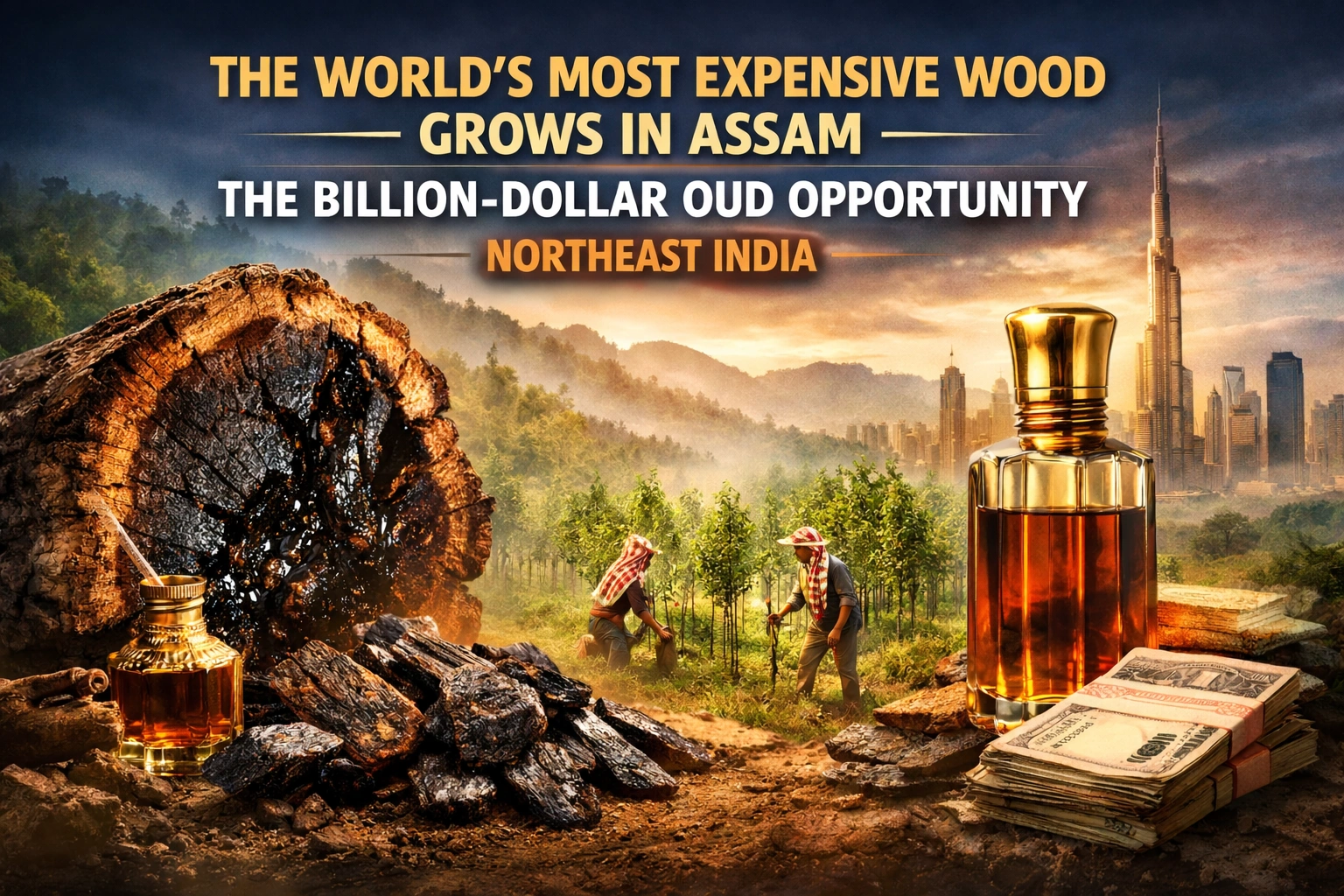
The World’s Most Expensive Wood Grows in Assam — And Most People Still Don’t Know It
How a rice farmer from Hojai built a global perfume empire — and why Northeast India is sitting on a billion-dollar opportunity
A Global Luxury Secret Rooted in Assam
When you spray a luxury perfume from brands like Tom Ford, Dior, or Gucci, there’s a high probability that the deepest, richest note in that fragrance — oud — has its origins in Assam.
Not Paris. Not Dubai. Assam.
And yet, this truth remains largely invisible, even to people within the state.
That’s the paradox. Assam sits on one of the most valuable natural aromatic resources in the world, while much of its value continues to be realised elsewhere.
Two globally recognised oud perfume brands — Ajmal Perfumes and Oudh Al Anfar — both trace their roots back to Hojai, a quiet district in Assam.
Same tree. Same jungle. Same origin story. The difference? They saw the value — and scaled it globally.
What Exactly Is Agarwood — And Why Is It Called “Liquid Gold”?
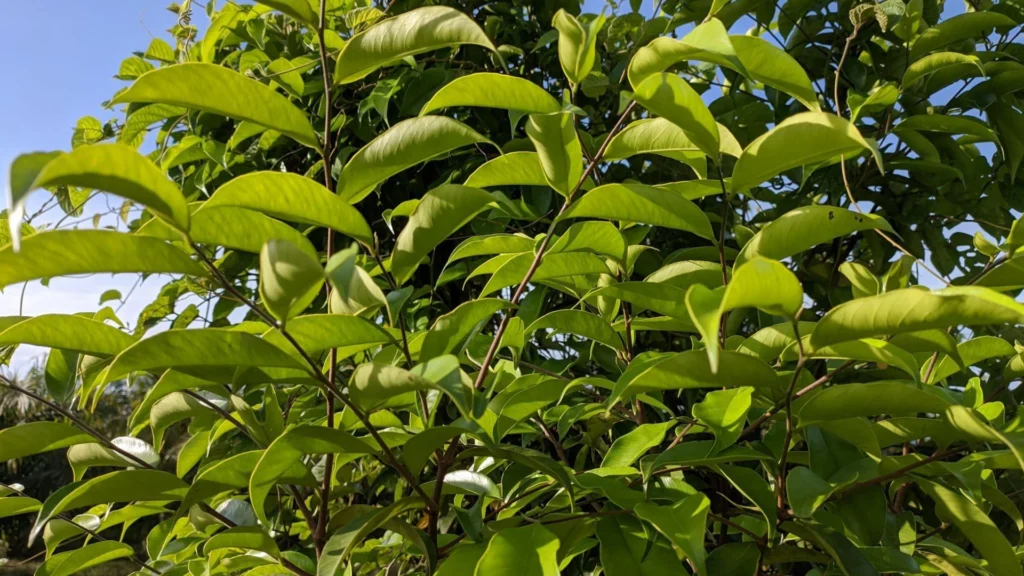
The tree itself — Aquilaria malaccensis — looks ordinary. Pale wood. No fragrance. No commercial value.
Until something goes wrong.
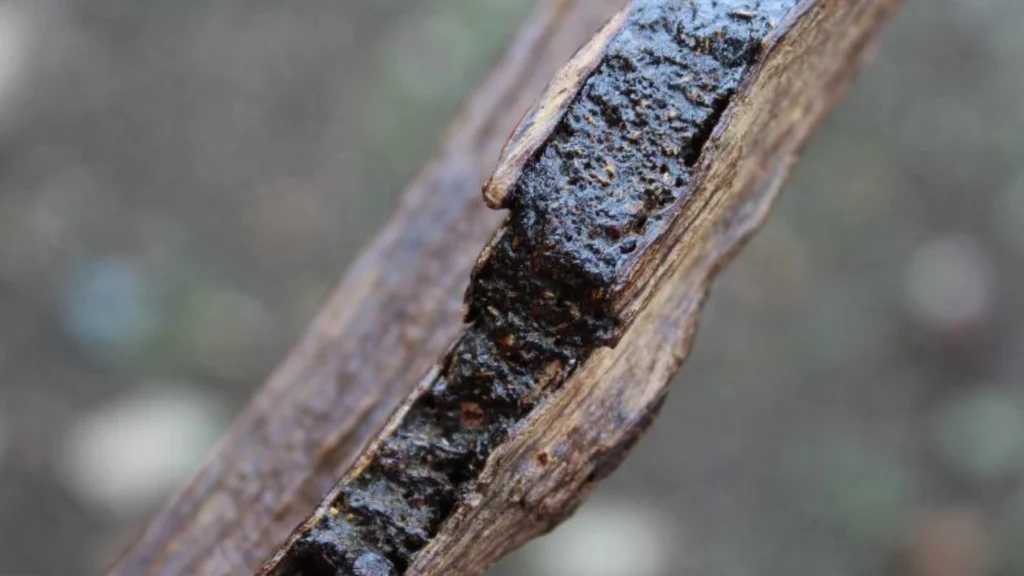
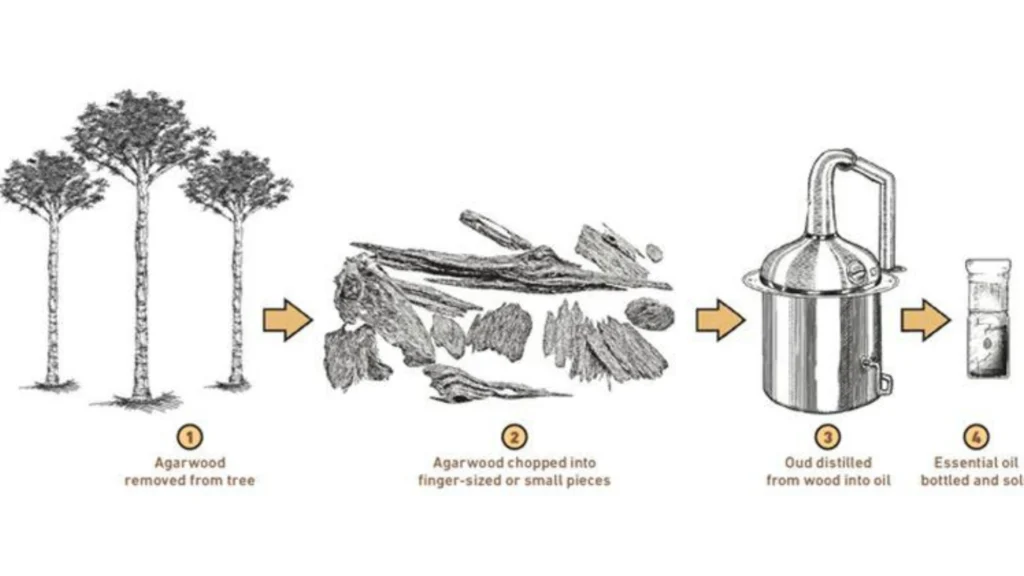
When the tree is injured or infected, it produces a dark, aromatic resin as a defence mechanism. That resin transforms the wood into agarwood — and when distilled, it becomes oud oil, one of the most expensive natural substances on Earth.
- Pure Indian oud oil: USD 32,000 – 40,000 per kg
- Premium agarwood chips: ₹5 lakh – ₹10 lakh+ per kg
- Resin-bearing tree value: Several lakhs per tree
Less than 2% of trees naturally produce resin. Even with modern techniques, it takes years of cultivation, inoculation, and processing.
Scarcity isn’t accidental. It’s biological. That’s what makes it “liquid gold.”
From Hojai to the World: Two Empires That Began in Assam
The story begins with a farmer.
Haji Ajmal Ali, born in a small village near Hojai, started collecting agarwood from forests and selling it locally.
In 1951, with just ₹500, he founded Ajmal Perfumes.
Today, the company operates in 45 countries with 280+ stores and manages over 10 million agarwood trees in Assam.
Similarly, Haji Mohammed Anfar Ali built another global brand from the same soil, now present across the Middle East, Asia, and beyond.
Two global brands.
One district.
And yet, Hojai is not celebrated as the birthplace of a global fragrance industry.
That silence itself is a story.
The Forgotten Past, The Rising Present
There was a time when agar (locally known as Sachi) trees grew almost everywhere in Upper Assam. People planted them casually — especially in districts like Golaghat and Jorhat — often without fully understanding their economic value.
It was just another tree in the backyard.
That era is gone.
Today, awareness is rising — and with it, intent. Farmers, entrepreneurs, and investors are now recognising agarwood not as a forest byproduct, but as a strategic asset.
Large-scale plantations are quietly expanding across Assam.
What was once overlooked is now being rediscovered — this time, with purpose.
The Numbers That Change Everything
The global market is not small. It is massive — and growing.
The agarwood chip market is valued at USD 10.06 billion in 2024 and is projected to reach USD 17.61 billion by 2033. The oud extracts segment is expected to grow from USD 1.89 billion to USD 3.73 billion. Meanwhile, the global luxury perfume market is expanding from USD 24 billion to USD 45.8 billion over the same period.
Oud is no longer niche.
Since Tom Ford Oud Wood brought it into the global spotlight, it has become a defining note in luxury perfumery.
Demand today is being shaped by multiple converging forces — the global shift toward natural fragrances, the deep-rooted cultural demand in the Middle East, the rapid premiumisation of the Indian market, and the emergence of China as a new consumer base.
And through all of this, Assam remains at the top of the global quality hierarchy.
The Policy Shift That Changed the Game
For decades, agarwood operated in a grey zone — restricted by regulations under international conventions like CITES.
That changed with the Assam Agarwood Promotion Policy 2020.
Key shifts:
- Legalised cultivation and trade on private land
- No permission needed for plantations up to 5 hectares
- Free saplings and financial incentives
- Support for oil extraction units
- Research backing via Rain Forest Research Institute
- Upcoming International Agar Trade Centre in Golaghat
The projection?
A ₹50,000 crore annual industry.
Where the Real Opportunity Lies
This is not just a farming story. It’s a value-chain story.
The biggest opportunity isn’t in growing trees — it’s in capturing value.
The agarwood value chain presents multiple entry points for entrepreneurs at different scales. Plantation development remains the simplest entry point, though it requires patience, as returns come over the long term. Oil extraction, already widespread in Assam, offers scope for differentiation through quality, traceability, and certification, which can significantly increase value.
The real high-margin opportunity lies in branded oud products — from chips and attars to incense and skincare — where Northeast India still remains underrepresented despite its authentic origin advantage. Beyond this, agarwood is steadily finding a place in wellness and aromatherapy, opening up premium global markets.
There is also a growing potential in agro-tourism, where curated plantation experiences can connect visitors directly with the source of luxury fragrances. Scientific expertise is creating another layer of opportunity through inoculation services, while nursery and sapling supply provide steady, lower-risk business models.
At the highest strategic level, export-oriented processing and GI branding could redefine Assam’s position in the global market.
Right now, Northeast India largely participates at the raw material level.
That’s where the gap is.
And that’s where the opportunity sits.https://thequantiq.com/north-east-india-medicinal-plants-bio-economy/
Why This Is Truly an Eco-Business
Agarwood has a complicated past — driven by overharvesting in the wild.
But the future is different.
- Plantation-based cultivation reduces pressure on forests
- Trees improve green cover and soil quality
- Traceability aligns with global sustainability demand
Institutions like CSIR-NEIST see this as a transformation story — much like Kashmir’s lavender revolution.
This isn’t just business.
It’s ecological restoration with economic upside.
The Question That Remains
Haji Ajmal Ali left Assam to build a global empire.
Today, that may no longer be necessary.
The policy support exists.
The market is ready.
The infrastructure is coming.
For the first time, the value can be created within Assam — not outside it.
The resource has always been here.
The question is simple — and urgent:
Will Northeast India finally claim what has always been its own?https://thequantiq.com/north-east-india-medicinal-plants-bio-economy/



2 Comments