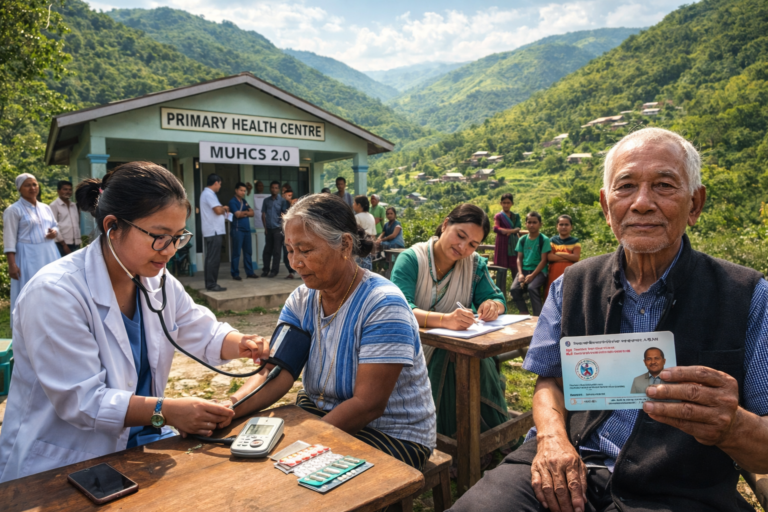

India records 38% decline in TB mortality, with treatment success reaching 94%
Healthcare Intelligence
India has recorded a 38% reduction in tuberculosis (TB) mortality since 2015, outperforming the global reduction of 35%, according to the World Health Organization‘s Global Tuberculosis Report 2026.
The estimated TB mortality rate in India declined from 28 deaths per lakh population in 2015 to 18 in 2025. The country also reported a 94% treatment success rate among patients with drug-susceptible TB.
The findings point to the importance of combining early detection, accessible diagnostics and sustained patient support.
India’s National TB Elimination Programme has increasingly adopted technology-enabled screening. These interventions include AI-assisted chest X-rays, rapid molecular diagnostic tests and digital tools for identifying high-risk populations.
The scale of screening is significant. Between 7 December 2024 and 8 November 2026, the TB Mukt Bharat Abhiyaan brought more than 25 crore people within its screening activities. More than 11 crore chest X-rays and over three crore molecular tests were conducted.
The campaign identified 48.64 lakh new TB cases, including 14.97 lakh asymptomatic cases. The latter figure highlights the importance of screening people who may not show obvious symptoms. Press Information Bureau
India also meets approximately 96% of its TB programme funding requirements through domestic resources, according to the Ministry of Health.
The Quantiq Analysis
India’s progress offers an important lesson for healthcare systems: disease control requires more than treatment infrastructure. It needs an integrated approach combining surveillance, technology, community participation and continuity of care.
AI-assisted screening is particularly relevant because it can help extend diagnostic capacity to underserved areas. However, its value ultimately depends on accessible confirmatory testing, timely treatment and reliable follow-up.
The 38% reduction is encouraging, but it should not be mistaken for the completion of India’s TB elimination journey. Sustaining the gains and reaching populations that remain underserved will be critical.
Assam allocates ₹200 crore to Ayushman Asom, reinforcing health insurance coverage for over 40 lakh families
The Assam government has allocated ₹200 crore for the implementation of its Ayushman Asom health insurance scheme, a move intended to ensure continuity of healthcare benefits for more than 40 lakh families across the state.
Chief Minister Himanta Biswa Sarma announced the decision following a Cabinet meeting on 10 November 2026. The allocation is intended to strengthen the state’s healthcare financial protection framework and maintain uninterrupted coverage for eligible families. The Week
The announcement comes at a time when healthcare affordability remains a major concern for households, particularly those dependent on public healthcare facilities and government-supported insurance programmes.
For a geographically diverse state such as Assam, financial protection is only one part of the healthcare access challenge. Patients in remote districts may also face difficulties reaching hospitals, accessing specialists and obtaining timely diagnostic services.
The effectiveness of insurance programmes therefore depends on the availability of empanelled hospitals, efficient claims processing, awareness among beneficiaries and the ability of patients to access appropriate treatment without unnecessary delays.
The Quantiq Analysis
The ₹200 crore allocation is a significant public financing commitment, but its real impact will depend on implementation.
Three questions deserve attention: whether beneficiaries can access cashless treatment without procedural difficulties, whether participating hospitals have sufficient capacity, and whether the scheme can improve access beyond major urban centres.
For Northeast India, the relationship between health insurance and healthcare infrastructure is especially important. Financial coverage cannot fully address access barriers where hospitals, specialists and diagnostic facilities are limited.
Assam’s next challenge is to translate financial allocations into measurable improvements in patient access and healthcare outcomes.
The Quantiq Perspective
Healthcare transformation cannot be measured by financial allocations, hospital buildings or technology adoption alone.
It must ultimately be measured by whether people receive timely, affordable and appropriate care.
India’s TB programme demonstrates the potential of combining technology with community-level public health interventions. Assam’s insurance allocation highlights the importance of financial protection in making healthcare accessible.
Together, these developments point towards three interconnected priorities for the future of healthcare in India:
- Early detection: Taking diagnostic capabilities closer to communities.
- Financial protection: Reducing the financial burden of accessing treatment.
- Healthcare delivery: Building the infrastructure and workforce needed to convert policy commitments into actual patient outcomes.
For Northeast India, these priorities are particularly important. The region needs not just more healthcare investment, but better integration of technology, institutions, financing and last-mile delivery.
The future of healthcare will be determined not simply by how much we invest, but by how effectively that investment reaches the patient.