India’s Shifting Trade Dynamics in 2025: Opportunities Amid U.S. Tariffs
Global trade is undergoing one of its most significant transformations in decades. Geopolitical shifts, supply chain disruptions, and changing tariff regimes are rewriting the rules of international commerce. For India, this is not just a challenge—it’s also an opportunity. Emerging businesses and startups are uniquely positioned to benefit if they can adapt quickly to the new landscape.
The Global Context
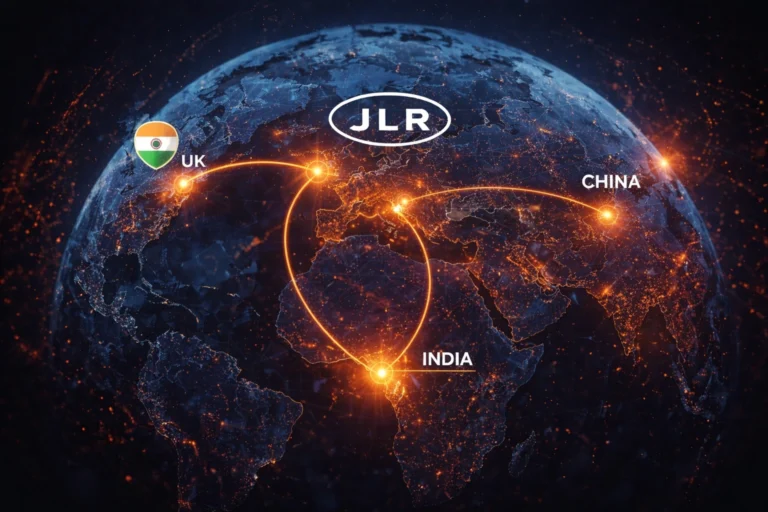
Over the past five years, the world has seen increasing trade fragmentation. The U.S.–China tariff war, the pandemic, and rising protectionist policies disrupted long-standing supply chains. Multinational companies have since been seeking to diversify their sourcing and manufacturing bases.
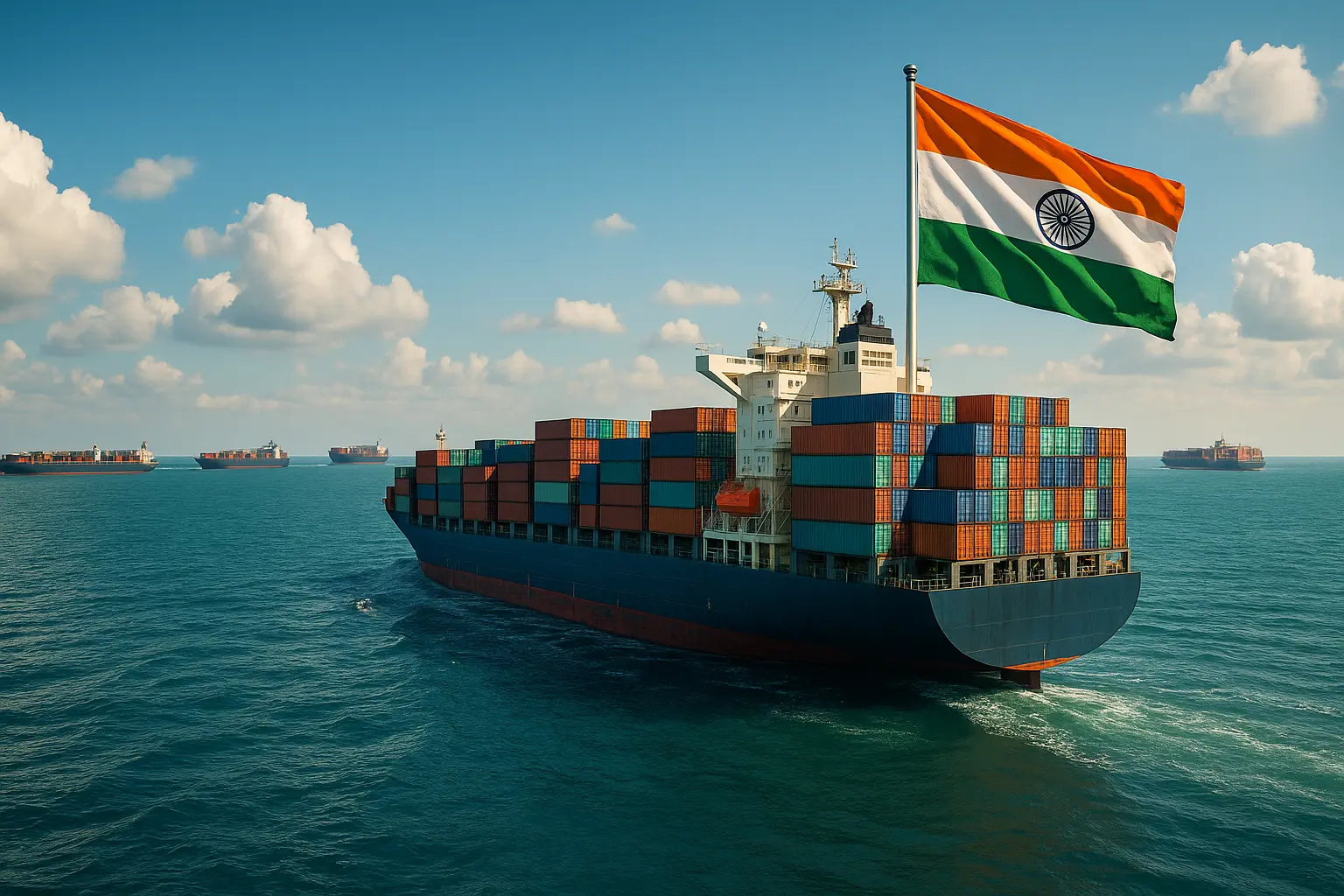
This realignment put India on the radar as a competitive alternative to China. In FY2024–25, India’s total exports reached US$ 820.9 billion, with goods exports at US$ 437.4 billion and services exports at ~US$ 383.5 billion—a strong sign of resilience despite global headwinds.
The India Advantage
- Demographics – With a median age of 28 years, India has one of the youngest workforces globally, offering a competitive edge in manufacturing, IT, and services.
- Policy Push – Programs like Gati Shakti (infrastructure), PLI (manufacturing incentives), and Digital India are making the ecosystem more competitive.
- Strategic Location – India’s geography allows it to cater to both East and West markets efficiently.
- Trade Partnerships – Under the India–UAE CEPA, duties were removed on ~80% of product lines. Gems and jewellery exports to the UAE rose from ~US$ 4.9B to ~US$ 8B in FY2024, showing the tangible impact of FTAs.
- Digital Rails – With UPI processing ~19.47 billion transactions in July 2025, small exporters can plug into global e-commerce platforms with reduced friction.
- Sustainability Edge – India’s renewable energy capacity touched ~220 GW by March 2025, positioning the country as a hub for sustainable sourcing.
The Tariff Shock: U.S. Escalates Duties
The optimism, however, was tempered in August 2025, when the U.S. announced steep tariffs on Indian goods. Effective immediately, tariffs on several Indian exports—including garments, gems & jewellery, furniture, and chemicals—were doubled to 50%. The U.S. cited India’s continued import of Russian oil as the trigger.
The implications are serious:
- 70% of India’s exports to the U.S. (≈US$ 55B) are now under threat.
- Barclays estimates India’s GDP growth could fall by up to 1% as a direct result.
- U.S.-bound exports could shrink from US$ 86.5B to about US$ 50B in the next year.
This development underscores the volatility of global trade—and the need for Indian businesses to diversify and adapt quickly.
What This Means for Emerging Businesses
1. Export Diversification Is Urgent
Reliance on a single market is risky. The U.S. shock makes agreements like the India–UAE CEPA and ongoing EU/UK negotiations critical. SMEs must actively explore alternative geographies in Asia, the Middle East, and Africa.
2. Opportunities in Supply Chain Localization
Even as exports face hurdles, multinational companies continue to diversify away from China. This creates opportunities for Indian MSMEs to become suppliers in localized, de-risked global supply chains.
3. Tech and AI as Enablers
AI-driven supply chain solutions and blockchain trade documentation can help small firms stay competitive globally, even in turbulent conditions.
4. Sustainability as a Differentiator
With global buyers increasingly demanding low-carbon, ethical sourcing, Indian exporters embedding sustainability can gain an edge—especially in markets less exposed to U.S. tariffs.
India’s Strategic Outreach: Turning Crisis into Opportunity
To counter the tariff shock, India is rolling out dedicated outreach programmes in 40 key countries—including the United Kingdom, Japan, South Korea, Germany, France, Canada, and Australia—to boost textile exports and open alternative trade channels.
This push signals a strategic pivot in Indian trade diplomacy:
- Reducing reliance on the U.S. market.
- Strengthening ties with advanced economies through sector-focused export missions.
- Giving Indian SMEs and exporters new opportunities to enter high-value markets in Europe, East Asia, and North America (outside the U.S.).
For entrepreneurs in textiles and related sectors, this outreach could soften the immediate blow of tariffs while unlocking long-term diversification.
Challenges to Watch Out For
High Logistics Costs – India’s logistics costs remain ~14% of GDP, compared to 8–10% globally.
Regulatory Complexity – Export compliance remains a bottleneck for SMEs.
Infrastructure Gaps – Tier-2 and Tier-3 cities need stronger warehousing and logistics links.
Geopolitical Risks – From U.S. tariffs to oil price volatility, uncertainty is here to stay.
Tariff Escalation – With the U.S. move, vulnerable sectors (textiles, jewellery, furniture) must brace for reduced competitiveness unless alternative markets are tapped quickly.
The Road Ahead
India stands at a crossroads. On one side, there are unprecedented risks from protectionism and geopolitical friction. On the other, India’s youthful workforce, digital rails, renewable energy capacity, FTAs, and now strategic global outreach programmes offer a historic chance to emerge as a global growth engine.
For entrepreneurs and SMEs, the lesson is clear: resilience comes from diversification, agility, and innovation. Markets will remain volatile, but those who adapt quickly can still ride the wave of opportunity.
India’s shifting trade dynamics are no longer abstract—they are real, immediate, and reshaping the future. The U.S. tariffs highlight the vulnerabilities of export dependence, but they also underscore the need for bold new strategies.
By diversifying exports, embracing technology, and leveraging strategic outreach to 40 key countries, Indian businesses can not only withstand shocks but also seize new opportunities in global markets.
The global trade map is being redrawn—and India’s entrepreneurs have a chance to hold the pen.