Mid-Week Brief: 5 India-Made AI Health Tools — Including Emerging Signals from Guwahati
India’s healthcare AI story is often told through Bengaluru, Mumbai, and Delhi.
But if you look closely, something quieter is happening in places like Guwahati—where necessity, not capital, is shaping innovation.
This week’s brief moves beyond the usual names and brings together five AI-driven healthcare tools, including early signals from the Northeast—where the real test of scalability lies.
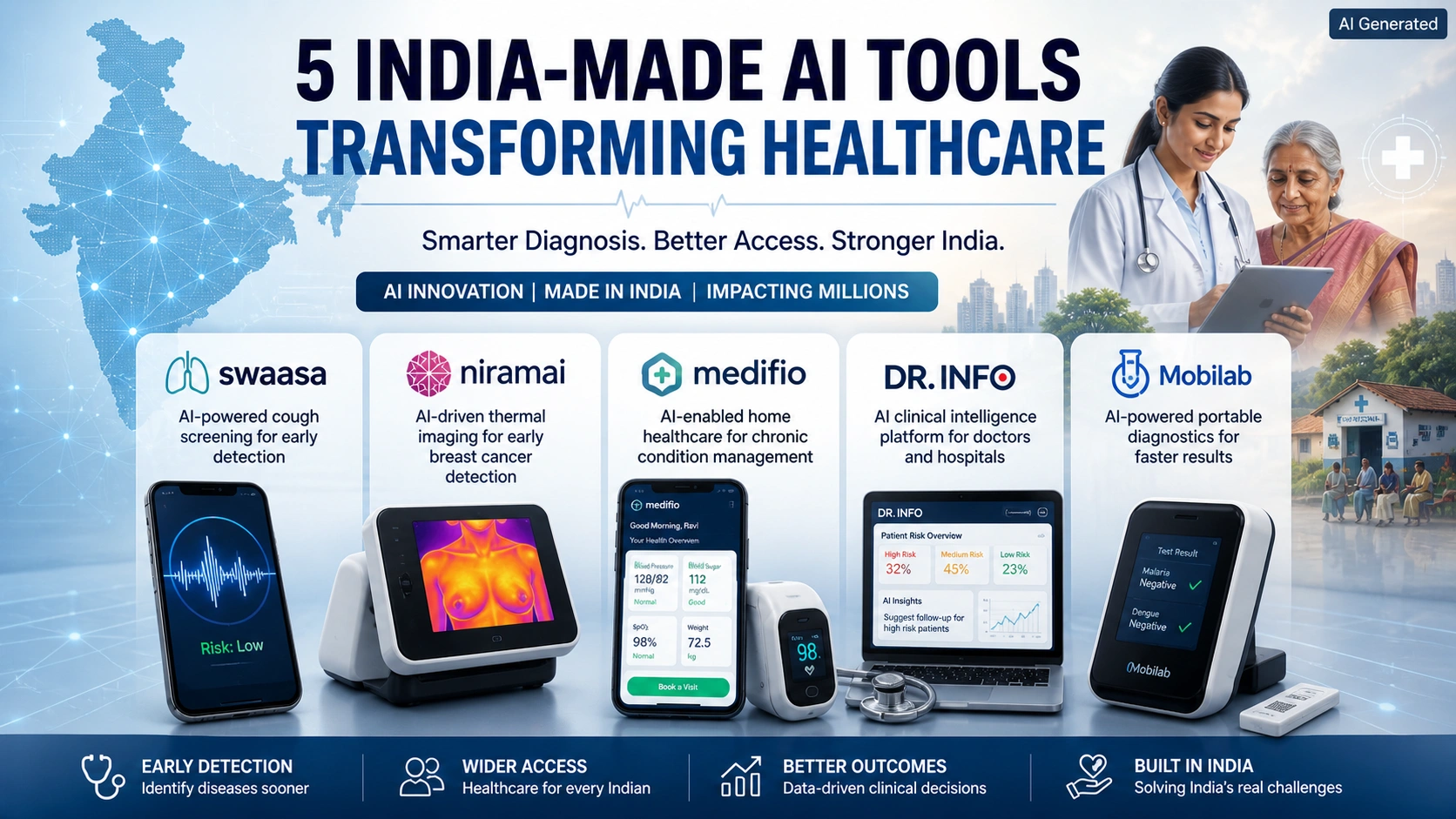
Mobilab, IIT Guwahati Incubated Primary Healthtech Startup
What it does:
An AI-enabled portable biochemistry analyser that performs diagnostic tests for vital organ conditions at the point of care.
Why it matters:
Lab infrastructure is unevenly distributed. This brings diagnostic capability directly to underserved regions.
Best for:
Rural clinics, mobile health units, low-resource healthcare environments.
Quiet advantage:
Compresses the distance between patient and diagnosis—both physically and operationally.
Swaasa — Listening to Disease
What it does:
Analyses short cough recordings using AI to screen for respiratory conditions like tuberculosis, asthma, and COPD.
Why it matters:
Diagnosis in India often begins too late. By turning a simple cough into diagnostic data, Swaasa shifts healthcare from delayed detection to early intervention.
Best for:
Public health programs, rural healthcare workers, mass screening initiatives.
Quiet advantage:
Redefines the entry point of diagnostics—no lab, no equipment, just a smartphone.
Niramai — Seeing Risk Without Contact
What it does:
Uses AI-driven thermal imaging to detect early signs of breast cancer without radiation or physical contact.
Why it matters:
Early detection is the difference between survival and loss, yet access and hesitation remain major barriers. Niramai removes both.
Best for:
Screening camps, small clinics, semi-urban and rural outreach programs.
Quiet advantage:
Transforms preventive healthcare by making screening more accessible, comfortable, and scalable.
Medifio — Healthcare That Comes Home
What it does:
Connects patients with doctors and nurses for home-based care, supported by AI-driven service coordination.
Why it matters:
In many regions, reaching a hospital is still a challenge. Medifio reverses the model by bringing care directly to the patient.
Best for:
Elderly care, chronic illness management, post-hospitalisation support.
Quiet advantage:
Builds continuity in care—something hospitals alone cannot provide.
DR.INFO — Intelligence at the Doctor’s Desk
What it does:
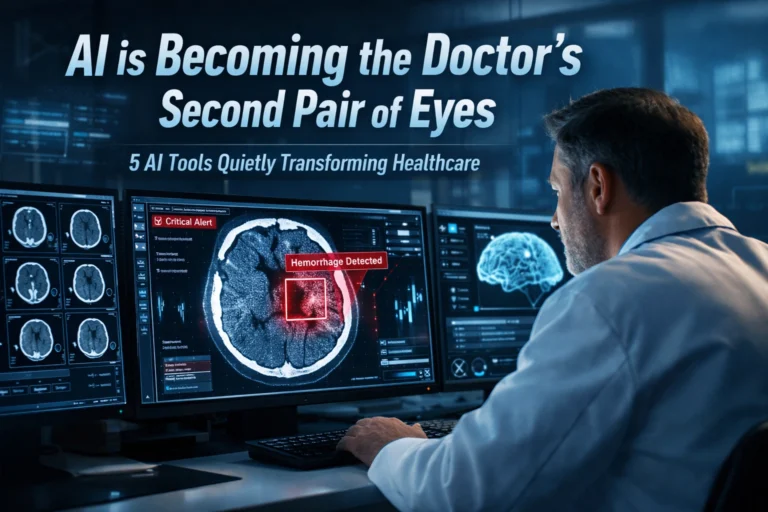
Acts as an AI-powered clinical assistant, helping doctors with structured medical insights and decision support.
Why it matters:
Doctors are overwhelmed not just by patients, but by information. DR.INFO reduces cognitive load while improving decision quality.
Best for:
Clinicians, general practitioners, diagnostic consultations.
Quiet advantage:
Augments medical judgment without interfering with it—subtle, but powerful.
The Quantiq Take
What ties these tools together is not scale—yet.
It is intent.
Each one is solving a constraint that has existed for decades: access, early detection, continuity, or clinical overload.
This is where India’s AI story becomes different.
Not in chasing global benchmarks, but in building for realities others often overlook.
And that is where the next wave of meaningful innovation will come from.https://thequantiq.com/ai-literacy-is-the-new-economic-divide/
One Comment