
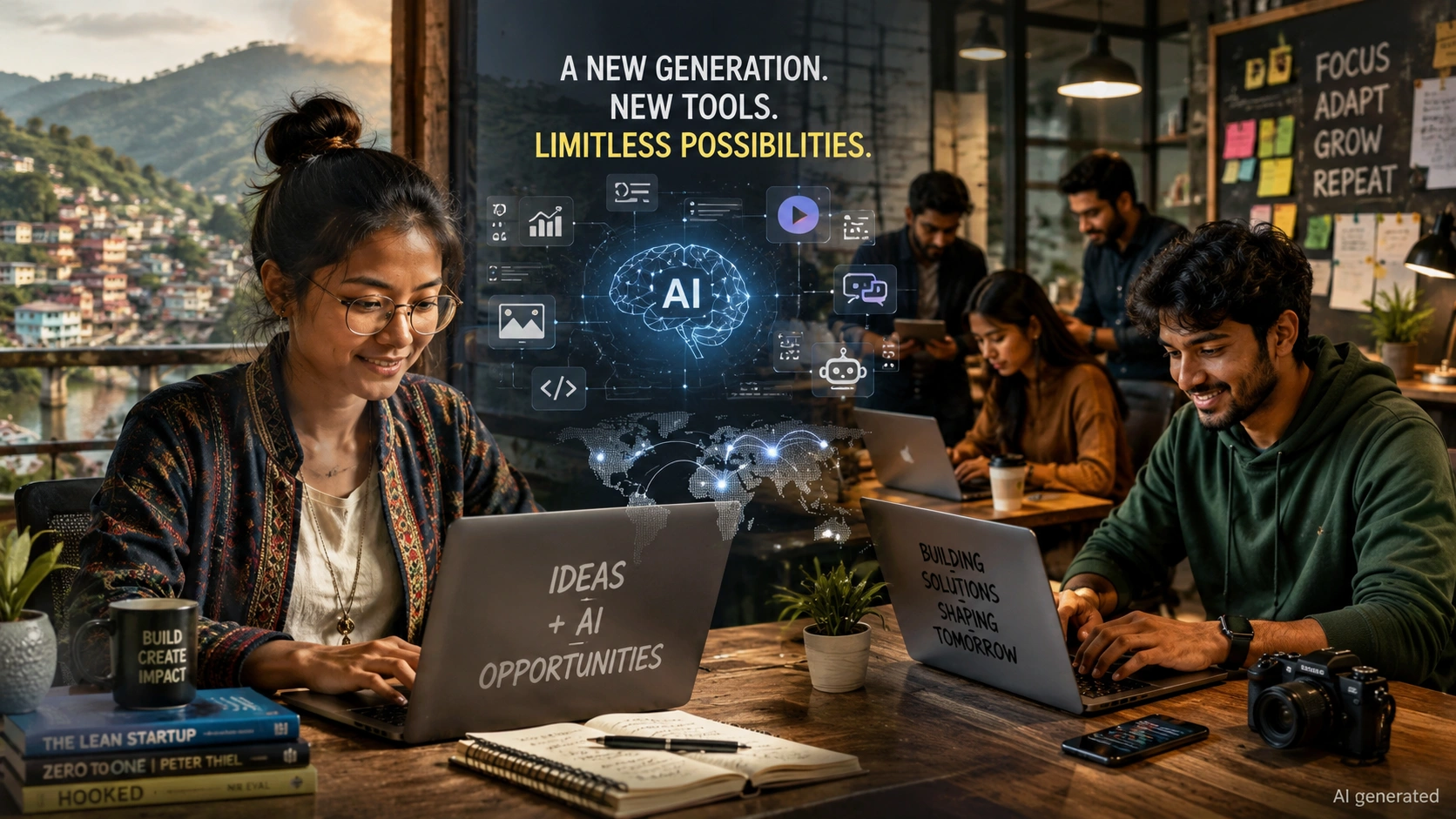
India’s Younger Generation Is Redesigning the Meaning of Work, Risk and Ambition
For generations, India’s middle-class aspirations followed a predictable route. Secure a degree, find a stable job, build a career slowly, and seek long-term security. Entrepreneurship existed, but for many families it remained a risky pursuit associated with uncertainty, financial instability, and social pressure.
That mindset is now beginning to shift in profound ways.
Recent findings shared by LinkedIn India and cited across several business publications reveal a dramatic change in how younger Indians are approaching work and entrepreneurship. According to the findings, nearly 75% of Gen Z entrepreneurs in India are pursuing multiple income streams, compared to 62% among Gen X professionals. Even more striking is the reported 104% year-on-year rise in Indians adding “Founder” to their LinkedIn profiles, suggesting that entrepreneurship is increasingly becoming part of mainstream professional identity rather than a fringe ambition.
These numbers may appear like just another workforce trend at first glance. In reality, they point toward something much deeper.
India’s younger generation is redesigning the very meaning of work, risk, and ambition.
The shift is not happening in isolation. Artificial intelligence is rapidly emerging as one of the biggest forces accelerating this transformation.
For decades, entrepreneurship in India demanded significant resources. Starting a business often required office infrastructure, specialized teams, technical expertise, marketing budgets, and access to networks that many aspiring founders simply did not possess. A good idea alone was rarely enough.
AI is beginning to lower many of those barriers.
Today, a young entrepreneur with a laptop and internet access can build capabilities that previously required an entire organization. AI tools can assist with writing, graphic design, video creation, coding, customer communication, branding, research, and marketing. What once demanded large investments can now often be initiated by a single determined individual working from a small town or even a village.
This is why the LinkedIn findings deserve deeper attention. Around 80% of Indian founders surveyed reportedly believe entrepreneurship is now accessible regardless of background, while 81% feel it is more achievable today than ever before. Equally important, nearly 85% of young entrepreneurs stressed the importance of AI and digital tools for business success.
The implications of these numbers extend far beyond startup culture.
India may be entering the early stages of a new entrepreneurial era driven not only by venture capital-funded startups, but by millions of smaller, AI-assisted ventures created by individuals seeking flexibility, independence, and ownership over their professional lives.
Unlike the earlier startup boom that remained concentrated largely in metropolitan ecosystems, this emerging wave may spread much deeper into the country.
That possibility is especially significant for Northeast India.
Historically, geography has imposed limitations on economic participation in the region. Many talented young people from Assam and other northeastern states often had to migrate to larger cities in search of opportunity, exposure, and professional ecosystems. But AI is beginning to reduce some of those traditional disadvantages.
A student in Guwahati can now build a digital brand serving global audiences. A creator in Shillong can monetize niche content online. An entrepreneur in Jorhat can launch an AI-assisted consultancy, e-commerce venture, or specialized media platform without requiring the kind of infrastructure that businesses once depended on.https://thequantiq.com/assam-economy-ai-age-entrepreneurship-sustainability/
The playing field is not fully equal yet, but it is becoming flatter.
This is why the rise of AI-powered entrepreneurship could become particularly transformative for regions that were previously considered economically peripheral. The next generation of successful Indian businesses may not emerge only from glass towers in Bengaluru or Gurgaon. Some may come from smaller towns where ambition, creativity, and digital access are beginning to intersect in powerful ways.
Yet the transition also carries serious risks.
The lowering of entry barriers may create a flood of low-quality ventures, imitation businesses, and superficial “expert” culture driven more by algorithms than genuine value creation. Social media already rewards visibility faster than credibility. AI can amplify productivity, but it can also amplify noise.
There is also the larger economic question that policymakers and educators cannot afford to ignore.
If AI continues automating repetitive and entry-level tasks, will India create enough meaningful employment opportunities for its massive young population? Or will the country gradually move toward an economy where more individuals are forced into independent entrepreneurial or freelance pathways by necessity rather than choice?
The answer may define India’s economic and social trajectory over the next decade.
This is why AI literacy is becoming as important as traditional education itself. The future will not depend only on access to technology, but on whether people can use technology meaningfully, ethically, and productively to create sustainable livelihoods.
The entrepreneurial transition now underway in India is not merely about startups or side hustles. It reflects a broader cultural rethinking of success itself.
For a growing number of young Indians, success is no longer defined only by stable salaries, corporate titles, or conventional career ladders. Flexibility, creative freedom, ownership, experimentation, and multiple streams of income are increasingly becoming part of the new aspiration economy.
India’s economic story may therefore be entering a new chapter — one where AI does not simply change industries, but reshapes the relationship between individuals and opportunity itself.
And if this transformation continues at its current pace, the country may witness the rise of a generation that is not waiting for permission, perfect conditions, or inherited advantages before attempting to build something of its own.https://thequantiq.com/india-ai-sustainable-civilization/



2 Comments