
India’s MSMEs Know AI Is the Future. Why Are Only 1 in 4 Using It?
Indian small businesses increasingly believe artificial intelligence can transform growth and productivity. The bigger challenge is turning that belief into everyday business practice.
Ask an Indian small-business owner about artificial intelligence today and you are unlikely to hear the words “I have never heard of it.”
The conversation has moved on.
Many entrepreneurs have experimented with ChatGPT or other AI tools. They have used AI to write an email, prepare a social-media post, translate a document, create an image or summarise a long report. Some are already using AI for customer service, marketing, data analysis and business decisions.
Yet there is a striking gap between knowing about AI and actually building it into the business.
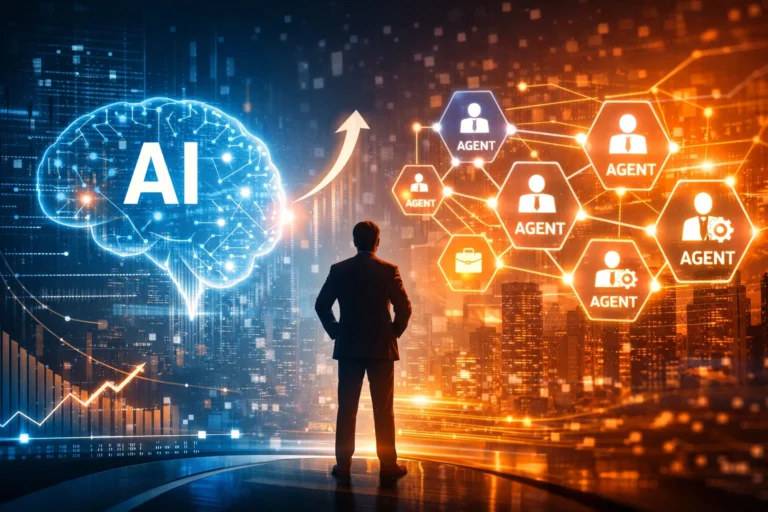
The latest Vi Business MSME Growth Insights Study 2026 found that 57% of the surveyed MSMEs view artificial intelligence as a core tool for enhancing and accelerating business growth, while only 25% say they have already integrated AI into their business practices and operational workflows. The study draws on Vi Business’s ReadyForNext programme, which has engaged more than 2.5 lakh MSMEs across 16 sectors.
In other words, among the businesses covered by the study, more than twice as many see AI as important as those that have actually integrated it.
That gap may become one of India’s most interesting business opportunities over the next few years.https://indiaai.gov.in/
India’s MSME economy is too large to ignore
This matters because India’s MSMEs are not a small corner of the economy waiting for technology to catch up.
Government data puts the number of registered MSMEs at about 67.4 million, based on Udyam and Udyam Assist registrations as of August 2025. The sector contributed around 30.1% of India’s GDP in FY2022-23, accounted for about 45% of goods and services exports, and supported an estimated 290 million jobs according to the government’s MSME Connect platform.
Even modest productivity improvements across such a large economic base could therefore have consequences far beyond individual businesses.
And AI adoption does not necessarily mean deploying robots, hiring data scientists or developing a proprietary large language model.
For a small manufacturer, AI could mean forecasting demand from historical sales and inventory records. For a retailer, it could mean identifying which products are likely to sell next month. A travel company could use it to create personalised itineraries, while an accountant could automate the extraction of information from invoices and financial documents.
The opportunity is not necessarily to make a business more complicated.
It is to make everyday work less complicated.https://msme.gov.in/
The awareness gap is still real
The Vi findings become even more interesting when viewed alongside earlier research.
A 2024 Meta-nasscom study of tech-enabled Indian MSMEs found that 65% reported difficulties arising from limited awareness of available AI tools and resources. The same study found that 72% believed AI training programmes were necessary, while 59% cited financial constraints as a barrier to AI adoption. Nearly half wanted industry-specific examples showing how AI could actually benefit their businesses.
That last point deserves more attention.
An entrepreneur running a small food-processing unit does not necessarily need another presentation about how AI will “transform the future of business.”
The entrepreneur wants to know whether AI can help reduce wastage, forecast demand, identify profitable customers, prepare quotations faster or monitor raw-material prices.
A textile manufacturer wants to know whether AI can help with production planning.
A retailer wants to know whether it can improve inventory management.
A tea producer wants to know whether historical weather, auction and market data can help make better procurement decisions.
The difference is subtle but important.
AI awareness tells an entrepreneur what the technology is. AI literacy tells the entrepreneur what to do with it.https://thequantiq.com/ai-trust-next-frontier-ai-brief-august-2026/
India’s digital maturity is improving, but AI is different
There is little evidence that Indian MSMEs are simply refusing to embrace technology.
Vi Business says its Digital Maturity Index rose from 55.9 in 2023 to 60.8 in 2026, with particularly strong improvement in digital workplace and digital operations. Digital workplace maturity increased from 57.5 to 65.7, while digital operations rose from 56.5 to 62.0 over the same period.
That tells us something important.
The AI adoption gap may not mean Indian MSMEs are technologically backward. It may mean that AI is arriving faster than organisations can redesign themselves around it.
A business can have digital payments, cloud software, social-media accounts, online sales and accounting software and still have employees manually transferring information from one system to another.
That is where the next phase of AI adoption could become particularly valuable.https://thequantiq.com/ai-boom-outpaced-reality-fitch-warning/
From using AI to redesigning work
There is a big difference between using AI occasionally and building an AI-enabled workflow.
Imagine a distributor whose sales team spends every evening preparing a spreadsheet. The first use of AI might simply be asking a chatbot to summarise the spreadsheet.
That is useful, but it is not transformation.
A more mature approach would connect sales data, inventory information and customer history so that the system automatically identifies unusual changes, flags products that may need replenishment and highlights customers whose orders are declining.
The same principle applies across industries.
AI becomes significantly more valuable when it moves from the edge of the business into its operating core.
This is also why cheaper AI tools alone will not close India’s adoption gap. Businesses need relevant data, employee skills, reliable digital infrastructure, and people who understand how to redesign processes around technology.https://thequantiq.com/ai-bandwidth-paradox/
There is an irony here.
Much of the global AI conversation focuses on the largest technology companies, the biggest models and billions of dollars of investment.
But some of AI’s most consequential economic effects could happen somewhere far less glamorous: inside India’s small factories, shops, offices, farms, workshops and family-run enterprises.
A small business does not need to become a technology company to benefit from AI.
It needs to identify where its people spend too much time, where decisions are made with too little information and where repetitive work consumes valuable resources.
Then it needs to ask a simple question:
Can AI help us do this better?
That is where India’s real AI adoption story may begin
The Quantiq Assessment
The emerging evidence suggests that India’s MSMEs do not have an AI awareness problem alone. They have an AI implementation gap.
The 57% figure from the latest Vi study tells us that AI has entered the strategic conversation. The 25% figure tells us that implementation is still considerably behind aspiration.
Closing that gap will require more than cheaper software. It will require practical training, industry-specific use cases, better access to business data and trusted people who can help entrepreneurs move from experimentation to implementation.
Most importantly, MSME owners do not need to ask, “How do I become an AI company?”
They should ask a much more useful question:
“Which part of my business should become intelligent first?”
That may be the question that separates India’s next generation of digitally enabled MSMEs from those that merely use digital tools.
Because the real promise of AI for India’s small businesses is not that machines will replace entrepreneurs.
It is that technology may finally give millions of entrepreneurs access to the kind of intelligence, analysis and productivity tools that were once affordable only to much larger companies.