
Beyond the Commodity Trap: How Ranjit Baruah Is Reinventing Assam Tea Through Innovation and Wellness
The Quantiq Founder Series | Editorial Profile
For over two centuries, Assam has been celebrated for producing some of the world’s finest tea, yet relatively few homegrown brands have converted that agricultural legacy into global consumer businesses. Ranjit Baruah, Founder of Aromica Tea, belongs to a new generation of entrepreneurs determined to change that narrative — combining deep plantation experience with innovation, wellness, sustainability and premium branding to show that Assam’s future may lie not merely in producing more tea, but in creating more value from it.
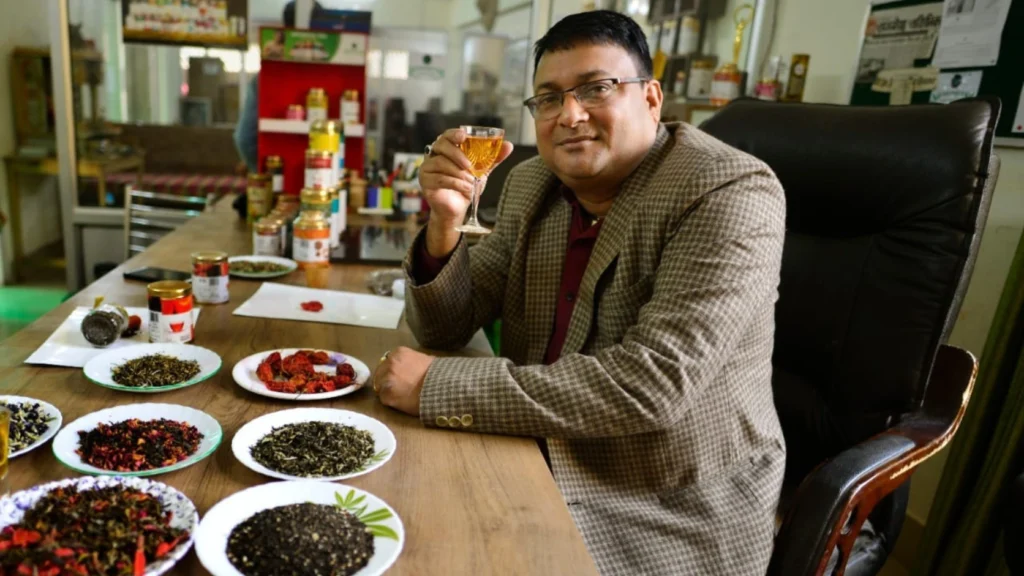
When Experience Meets Reinvention
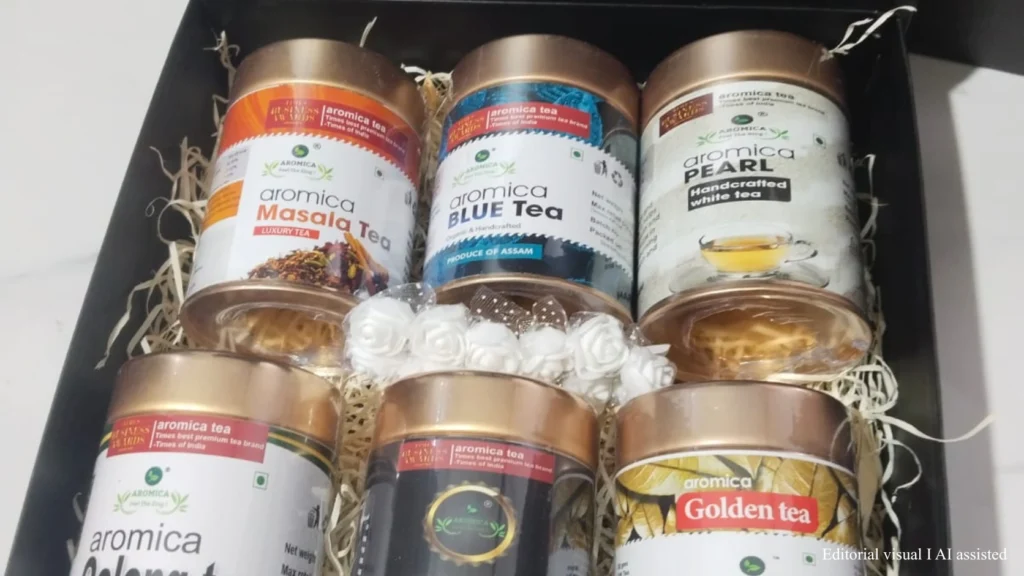
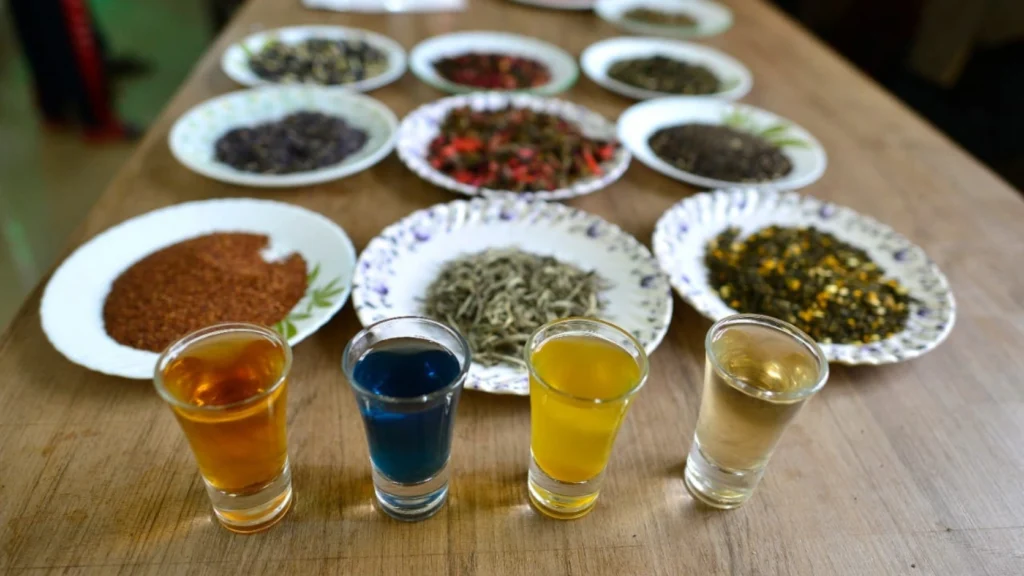
Walk into the Aromica Tea experience centre, and one thing becomes immediately evident: this is not a conventional tea business. Shelves display elegant gift collections instead of ordinary tea packets, and glasses filled with brilliantly coloured infusions challenge long-held assumptions about what Assam tea should look like — premium packaging sitting comfortably alongside conversations about wellness, biodiversity and innovation, as if every product were telling a story beyond the tea leaf itself.
Standing quietly at the centre of this transformation is Ranjit Baruah — soft-spoken and measured, and nothing like the disruptive startup founder chasing rapid growth or headline-grabbing valuations. His journey has been built differently, through patience, decades of industry experience and an unwavering belief that Assam’s tea industry can create far greater value than it does today.
For more than twenty years, he worked within one of India’s most respected tea companies, learning every aspect of plantation management before taking the entrepreneurial leap. When he finally founded Aromica Tea in 2019, he was not entering an unfamiliar industry — he was reimagining one he had spent a lifetime understanding.
Today, Aromica Tea has grown from selling around 800 caddies in its first year to nearly 12,000 caddies in 2025, building a portfolio of 52 specialty products and reaching customers across several international markets. Yet these milestones represent only one part of a larger vision: Baruah is not trying to build another successful tea company — he is attempting to redefine what an Assam tea company can become.https://www.teaboard.gov.in/
Roots in Namrup
For Ranjit Baruah, the journey began in the industrial township of Namrup in Upper Assam, where his father worked with the Hindustan Fertilizer Corporation. Growing up in an environment shaped by industry and discipline, he developed an early appreciation for structured thinking and hard work, although entrepreneurship was not yet part of the picture.
Education took him to Cotton College, one of Assam’s most respected academic institutions, before he pursued Hotel Management — a path that, in hindsight, shares a common thread with tea plantations: understanding quality, service and the consumer experience. Soon after completing his studies, Baruah joined the Williamson Magor Group as a Management Trainee, embarking on a career that would shape the next two decades of his life.
Twenty Years That Changed Everything
Many successful entrepreneurs begin by identifying a market gap; Ranjit Baruah began by mastering an industry from the ground up. During nearly two decades with the Williamson Magor Group, he served across renowned tea estates including Philobari, Baghjan and Monabari — assignments that exposed him to every stage of tea production, from cultivation and plucking to processing, quality control and estate management.
That experience gave him something business schools rarely teach: intuition. He learned that outstanding tea begins long before leaves reach the factory, shaped by climate, soil, cultivation practices, and the judgement of people who understand tea not as a commodity but as a living agricultural product. Looking back, he doesn’t call those years a job; he calls them preparation — a classroom that shaped the industry knowledge underpinning his entrepreneurial journey.
The Leap That Became Aromica
After nearly twenty years inside one of India’s largest tea companies, Baruah reached a point familiar to many experienced professionals: continue building someone else’s legacy, or begin creating his own. The decision was neither impulsive nor driven by dissatisfaction — it was motivated by a conviction that Assam tea deserved to be presented differently to the world. Rather than competing in the crowded commodity market, he envisioned a company that would celebrate Assam’s tea through premium products, wellness-focused innovations and distinctive consumer experiences.
That vision became Aromica Tea — a name that evokes aroma, wellness and sensory experience, qualities meant to define the brand from its earliest days. Instead of treating tea as a routine beverage, Baruah wanted consumers to rediscover it as a lifestyle product rooted in nature, health and craftsmanship.
The beginning was modest: in 2019, Aromica Tea sold approximately 800 caddies, with no grand marketing campaigns or large distribution networks. Growth came gradually, supported by product quality, customer trust and a commitment to innovation. Six years later, annual sales have grown to around 12,000 caddies, and the company has evolved into a recognised premium tea brand with an expanding international footprint.
Curiosity Became the Company’s Biggest Asset
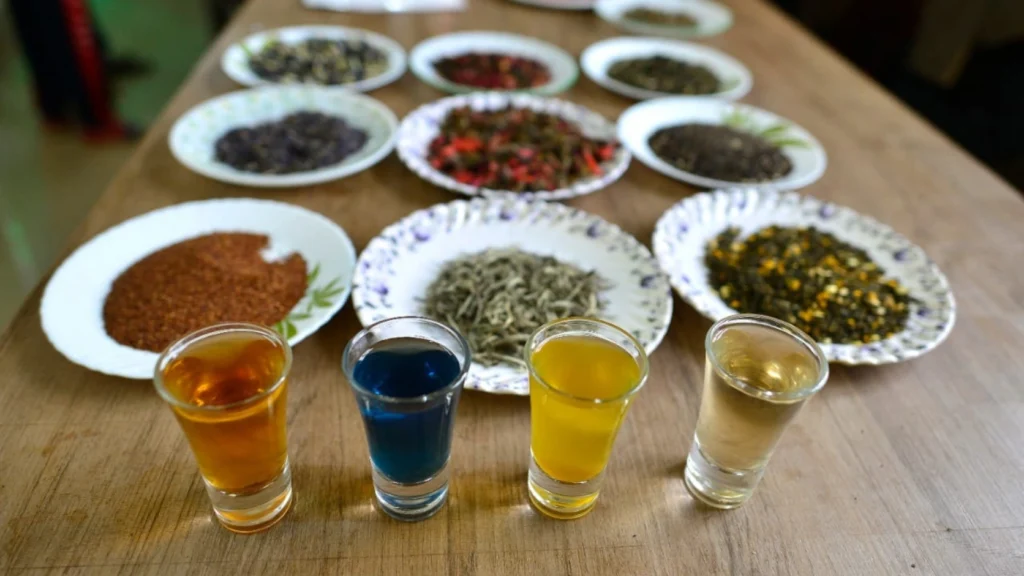
For many businesses, innovation is an occasional project. For Aromica Tea, it has become a continuous discipline. Ranjit Baruah does not separate innovation from everyday business — he speaks of it not as a marketing strategy but as a mindset that constantly questions established practices and searches for new possibilities. That curiosity has transformed a relatively young company into one of Assam’s most distinctive premium tea brands, one that competes on ideas rather than price or volume.https://thequantiq.com/assam-tea-prices-exports-2026-intelligence/
A Restless Mind in Constant Search
Asked where his innovative thinking comes from, Baruah smiled before answering. Mr. Baruah said, “Innovation comes from my restless mind, which is in churn all the time.”
The statement explains why Aromica Tea’s product portfolio bears little resemblance to that of a conventional tea company. While many brands remain focused on traditional black or green tea, Baruah has consistently explored how Assam tea can intersect with wellness, nutrition, indigenous knowledge and premium gifting. Innovation, in his view, begins with curiosity, matures through experimentation, and succeeds only when it creates genuine value for consumers — a philosophy that has allowed Aromica Tea to move beyond commodity thinking into categories where differentiation matters more than scale.
Redefining Tea for a New Generation
Consumer expectations are changing rapidly; today’s tea drinkers no longer look solely for flavour but for beverages that support healthier lifestyles, tell authentic stories and offer memorable experiences. Baruah recognised this shift early, and instead of asking how to sell more tea, began asking how tea could become more relevant to modern consumers. The answer was to combine Assam’s exceptional tea with carefully selected herbs, botanicals and functional ingredients designed to address changing preferences rather than simply add another flavour — an approach that repositioned Aromica Tea from a tea company into a wellness-oriented lifestyle brand, reflecting a broader truth: consumers increasingly reward brands that combine authenticity with innovation.
Innovation Must Be Backed by Science
Creativity alone is not enough. Baruah is careful to ensure that every new product undergoes rigorous evaluation before reaching consumers. “We get the products tested in laboratories before introducing them into the market,” he explains — a disciplined approach that distinguishes innovation from experimentation, shaped by years spent inside professionally managed tea estates where quality standards are non-negotiable.
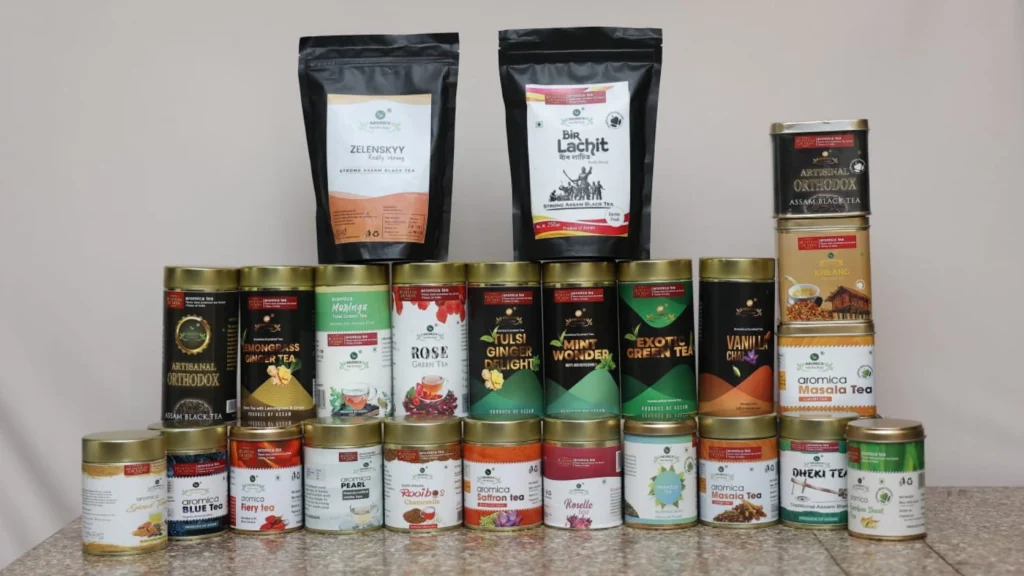
Building a Portfolio Beyond Conventional Tea
Since its launch in 2019, Aromica Tea has expanded its offerings to 52 specialty products, each developed with a distinct purpose rather than simply adding another stock-keeping unit to the catalogue. Some celebrate Assam’s rich botanical diversity through indigenous herbs; others focus on wellness or have been created specifically for premium gifting and international markets. The objective has never been variety for its own sake, but relevance — a portfolio that speaks to health-conscious buyers, corporate gifting markets, international consumers and travellers seeking authentic experiences from Assam, while reducing dependence on any single category.https://thequantiq.com/tea-country-tee-country-assam-premium-plantation-tourism/
Premium Niches and Cultural Storytelling
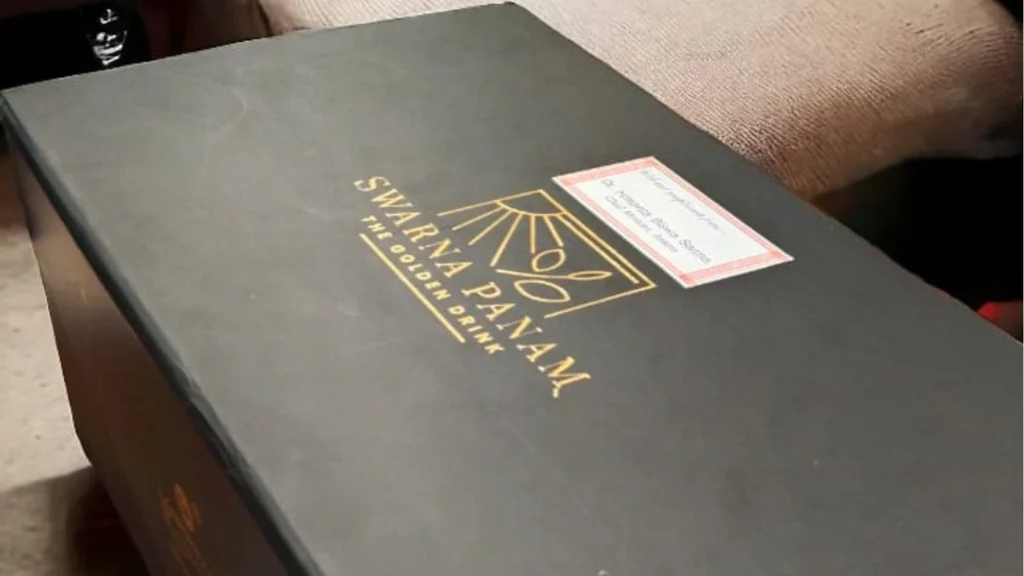
Among Aromica Tea’s most talked-about innovations is its edible gold leaf tea — an extravagant-looking product that reflects Baruah’s willingness to explore premium niches few tea companies attempt, positioning tea as a luxury experience for gifting and celebration rather than only an everyday beverage. Other creations draw on history and culture: blends named after Lachit Borphukan, Assam’s legendary military leader, celebrate regional pride, while others honour personalities and partnerships beyond India’s borders. Together, these products reinforce Baruah’s belief that every premium brand needs a compelling narrative — that tea can communicate identity, authenticity and purpose all at once.
Sustainability Is Not a Marketing Campaign
For many companies, sustainability is advertising; at Aromica Tea, it begins with materials and processes. The company has adopted environmentally responsible packaging, incorporating natural materials such as banana fibre and water hyacinth wherever practical — choices that support traditional craftsmanship and locally available resources, reflecting a belief that premium brands increasingly compete on environmental responsibility, not product quality alone.
Quality Begins Long Before the Factory
One theme surfaced repeatedly throughout the conversation: quality. For Baruah, quality is not something corrected during manufacturing — it begins in the field. He said,“Quality starts from the plucking stage.”
Taking Assam’s Tea Beyond Assam
By the time Aromica Tea had established itself as an innovative premium brand, Ranjit Baruah was already thinking beyond India’s borders. For decades, Assam has exported millions of kilograms of tea every year, yet despite producing one of the world’s most recognised teas, relatively few brands born in Assam have become household names internationally. That paradox has shaped much of Baruah’s entrepreneurial thinking: he is convinced that Assam’s future prosperity will come not from exporting larger quantities of tea, but from exporting brands, stories, experiences and trust — elements that create far greater value than a commodity ever can. His ambition has never been to sell tea overseas, but to build a global brand rooted in Assam
From Tea Exporter to Brand Builder
The distinction may appear subtle, but it changes everything: exporting tea is a transaction, while building a brand is a long-term relationship built on reputation and consumer confidence. Baruah believes Assam possesses every natural advantage required to build internationally respected tea brands — the region already enjoys worldwide recognition for the quality of its tea, and what remains is converting that agricultural reputation into consumer loyalty.
“This is the area we are trying to address,” he says. “We started late, but a few brands born out of Assam have already made it into the global market.” Those words capture the broader mission behind Aromica Tea — not to compete with the world’s largest tea corporations, but to demonstrate that premium brands from Northeast India can compete on quality, innovation and authenticity.
Building Trust Across Borders
consistency, authenticity and confidence that every purchase will meet the standards promised by the brand — a reality Baruah understands well. Rather than describing exports as difficult, he describes them as demanding.
“It is not difficult. But the process is slow. Winning the buyers’ trust in a foreign land has its own grind, which is part of the game,” Mr. Baruah emphasised.
That patient mindset explains much about Aromica Tea’s international expansion. Instead of chasing rapid geographical growth, the company has focused on building credibility one market at a time. Today, its products have reached consumers in Japan, the United Kingdom, Canada, Australia, Singapore, Abu Dhabi and New Zealand, with preparations underway to expand into Fiji. Alongside its own premium collections, the company also undertakes white-label manufacturing for international partners — enabling Assam’s expertise to travel through multiple brands and distribution channels.
The Challenges That Never Appear on Store Shelves
Consumers usually encounter only the finished product, rarely the obstacles behind it. Building an international premium brand from Northeast India demands resilience long before the first export order is dispatched, and Baruah identifies two challenges that continue to test entrepreneurs from the region: finance and logistics. Neither is unique to Aromica Tea — distance from major ports, higher transportation costs and limited access to growth capital affect countless businesses across Northeast India, forcing entrepreneurs to work harder just to compete on equal terms.
Yet Baruah refuses to view these challenges as excuses. He believes sustainable businesses are built by strengthening what remains within an entrepreneur’s control — deep domain expertise, consistency, perseverance and meaningful service to consumers — qualities that eventually become more difficult for competitors to replicate than financial resources alone.
Growing Together with Small Tea Growers
Perhaps the most revealing part of the conversation concerned not exports or product innovation, but partnerships. Aromica Tea currently works with approximately 250 small tea growers across Assam and Arunachal Pradesh, and for Baruah, these growers are partners in creating quality, not simply suppliers. He believes that while large tea companies benefit from specialised expertise, established organisational structures and significant financial resources, many independent growers operate without those advantages.
“The bigger tea companies have robust organisational structures with super-specialisation capabilities besides financial clout,” he explains. “Small tea growers are not armed with such capabilities. They need experienced entrepreneurs like us to back them and strengthen them.” His solution is collaborative rather than competitive: entrepreneurs contributing knowledge, market access and product development capabilities so that growers can realise greater value from the tea they produce — strengthening the entire ecosystem in the process.
Beyond Tea: Building an Experience Economy
As the discussion turned towards the future, Baruah described opportunities that extend far beyond packaged tea. He envisions Assam as a destination where visitors experience tea rather than merely purchase it. “We should have tea cafés everywhere. Anybody landing in Assam must immediately get the feeling that they have arrived in Assam.” His vision extends further still — tea-based cosmetics, wellness products, experiential retail, premium gifting and tea tourism together describing an experience economy, where Assam’s tea becomes the foundation for hospitality, wellness, culture and tourism — much as wine and coffee regions elsewhere have shown agriculture can generate value far beyond farming.
A Global Wellness Destination in the Making
The conversation eventually moved beyond products altogether. Baruah believes Assam possesses the natural resources, biodiversity and cultural heritage to emerge as a globally recognised wellness destination. “Certainly, Assam can become the world’s premium wellness destination. The proposed Tea & Golf Policy of Assam must include this aspect too.” It is an ambitious vision, but one that aligns closely with changing global consumer preferences — travellers increasingly seek authentic destinations where nature, wellness, local culture and sustainable experiences come together, and Assam already possesses those ingredients. Tea may simply become the thread that connects them.
Leadership, Inclusion and the Future Beyond Tea
As the conversation drew to a close, the discussion moved away from products, exports and innovation, and towards something more enduring: leadership. For Ranjit Baruah, entrepreneurship has never been solely about building a profitable company — it is about creating opportunities, strengthening communities and leaving the tea industry better than he found it. Baruah rarely measures success through sales figures alone; he speaks more often about growers than markets, more about quality than competition, more about purpose than profit — a perspective that explains why his vision for Assam’s tea industry extends far beyond factory gates and export statistics.
Building an Industry That Includes Everyone
Perhaps the most encouraging aspect of the conversation was Baruah’s conviction that the future of Assam’s tea industry should be judged not only by production or exports, but by the opportunities it creates for people. Asked what reforms he would recommend to policymakers, he did not begin with machinery, subsidies or factories — he spoke about strengthening small tea growers, preserving uncompromising quality standards, expanding sustainability across the value chain and creating greater employment opportunities for women. The recommendation deserves serious attention. Women have always been the backbone of Assam’s tea gardens, particularly in field operations, yet their representation remains comparatively limited in higher-value activities such as branding, product development, retail management, tea tourism and entrepreneurship. Baruah believes the industry’s next phase should consciously expand those opportunities — not simply to improve gender participation, but to strengthen the industry’s capacity for innovation, leadership and long-term growth.
Business Can Become a Force for Inclusion
One answer during the conversation stood apart from every other — a response to a hypothetical question: if someone invested ₹100 crore in him to transform Assam’s tea industry, where would he deploy the capital? Many entrepreneurs might have spoken about new factories, advanced machinery or export infrastructure. Baruah imagined something entirely different.
He said, “I would invest in a tea café chain where differently abled people would be employed.”
The answer encapsulates his philosophy. Opening cafés is really a means to an end: building inclusive workplaces where a business can turn a profit while also creating dignity, opportunity and social participation. A network of tea cafés could introduce visitors to Assam’s tea culture, strengthen local brands, encourage tea tourism and provide meaningful employment for differently abled youth. Commercial success and social inclusion, in Baruah’s imagination, reinforce each other rather than compete.
Advice for the Next Generation of Entrepreneurs
Every entrepreneurial journey contains moments of uncertainty, and Baruah understands that reality better than most. Leaving a stable corporate career after nearly two decades to establish a new venture demanded conviction, resilience and patience — the road from selling a few hundred caddies to building a recognised premium brand was neither quick nor predictable.
He advised, “Never give up. It takes time to become successful in business. Don’t give importance to what other people say.” It is practical advice for entrepreneurs from Northeast India, where recognition often arrives more slowly than in India’s traditional commercial centres — which is exactly why persistence becomes a competitive advantage.
Three Lessons from Ranjit Baruah’s Entrepreneurial Journey
- Master your domain before disrupting it. Baruah’s two decades in tea plantations gave him the practical knowledge that became Aromica Tea’s strongest competitive advantage.
- Quality begins at the source, and brands create more value than commodities. Premium branding cannot compensate for poor raw materials — and Assam’s long-term opportunity lies in building globally respected brands, not just producing exceptional tea.
- Businesses should strengthen communities, not merely generate profits. Supporting small growers, creating opportunities for women, and promoting employment for differently abled youth all reflect a broader understanding of entrepreneurship
The Quantiq Perspective
For more than two centuries, Assam has earned worldwide recognition for producing some of the finest tea on earth. The next chapter of that story, however, will not be written in tea gardens alone — it will be written by entrepreneurs who understand that value today is created through innovation, branding, design, storytelling, sustainability and consumer experience, not production alone.
Ranjit Baruah represents that new generation of founders. His journey points to a wider future for Assam’s tea industry: wellness products inspired by indigenous knowledge, premium brands that command global recognition, stronger partnerships with small tea growers, inclusive employment models, and immersive experiences that draw visitors to discover Assam through tea. In many ways, Aromica Tea reflects a larger transformation taking place across Northeast India — from commodity to creativity, from production to experience, and from volume to value. If Assam succeeds in that transition, entrepreneurs like Ranjit Baruah will not simply have built successful companies; they will have helped redefine the future of one of India’s most iconic industries.





One Comment