The Ri-Bhoi Signal: Why Northeast India May Finally Be Ready To Enter The Global Spice Export Economy
For decades, Northeast India has quietly grown some of the finest spices in the country. Ginger from the hill states, Lakadong turmeric from Meghalaya, Bhut Jolokia from Nagaland, large cardamom from Sikkim, black pepper from Arunachal Pradesh and several indigenous varieties grown across the region have long enjoyed an excellent reputation for quality. Yet despite possessing these extraordinary agricultural assets, Northeast India has remained largely absent from the global spice export conversation.
That may finally be beginning to change.
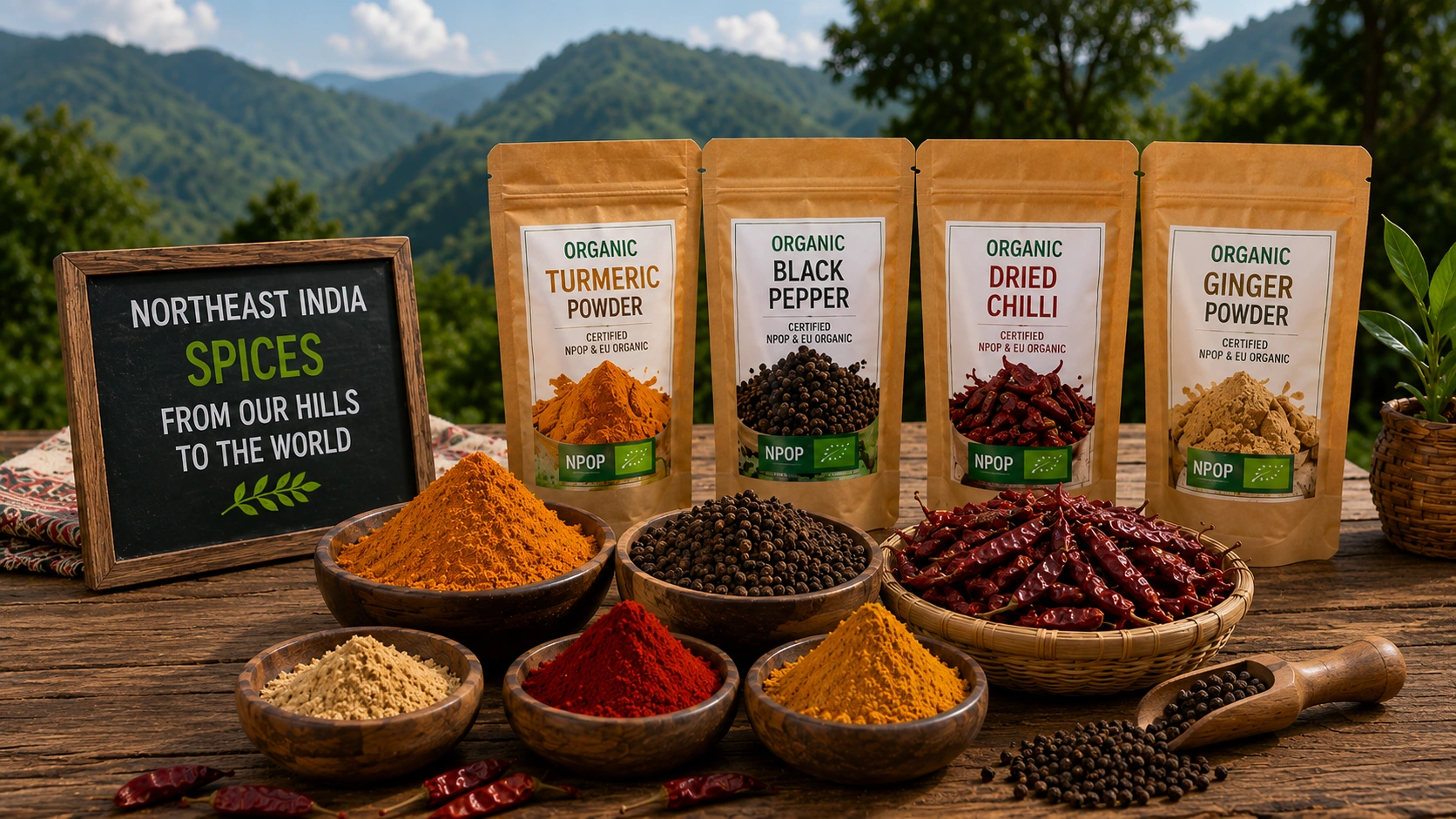
In a significant development this week, Union Finance Minister Nirmala Sitharaman inaugurated what could eventually become one of the most strategically important agri-processing developments in Northeast India in recent years.. Located at Bhoirymbong in Meghalaya’s Ri-Bhoi district, the newly established organic spice processing facility is now the largest such plant in the entire Northeast. Built under the Centre’s Mission Organic Value Chain Development for North Eastern Region, the facility has the capacity to process more than 10,000 metric tonnes of high-value spices annually, including ginger, turmeric, black pepper and chilli.
However, the real story here is not the size of the plant.
The real story is that for the first time, Northeast India may finally be building the infrastructure required not merely to grow premium spices, but to compete seriously in global export markets.https://thequantiq.com/northeast-india-exports-global-opportunity/
Why This Factory Matters More Than It Appears
At first glance, this looks like another infrastructure announcement. Governments inaugurate factories regularly, and such announcements often disappear from public conversation within days.
Ri-Bhoi is different.
The most important detail is not the processing capacity. It is the certification architecture built into the facility. The unit carries both National Programme for Organic Production certification and European Union Organic Standards certification simultaneously.
That distinction changes everything.
In global agricultural trade today, buyers are no longer purchasing products based solely on quality. They increasingly buy trust. They pay premiums for traceability, sustainability, food safety compliance and internationally recognized certification systems.
In simple terms, growing excellent turmeric is no longer enough.
Global buyers increasingly want proof.
This Ri-Bhoi facility creates precisely that missing bridge between farm production and export-ready trust infrastructure.
Northeast India Has Always Had The Product. It Never Had The Export Infrastructure
For years, the biggest misconception about Northeast India’s agricultural economy has been the assumption that the region lacked export potential.
It never did.
The region has always possessed some extraordinary structural advantages.
Much of Northeast India’s hill agriculture remains naturally low in chemical inputs simply because synthetic fertilizer and pesticide supply chains historically never penetrated remote farming belts at industrial scale. Ironically, what once appeared to be logistical backwardness may now be turning into one of the region’s greatest competitive advantages.
As global demand shifts toward cleaner, traceable and organically certified agricultural products, Northeast India suddenly finds itself unusually well positioned.
The problem was never product quality.
The real problem was always the missing middle.
There were too few certified processing facilities. Too little export documentation support. Limited access to international compliance systems. Weak aggregation mechanisms. And perhaps most importantly, a lack of infrastructure capable of converting agricultural production into export-ready products.
Ri-Bhoi may be the first serious attempt at closing that gap.https://thequantiq.com/inlamobi-blue-valley-cluster-northeast-entrepreneurs/
The Global Spice Market Is Growing Faster Than Most Producers Realize
The timing could not be more significant.
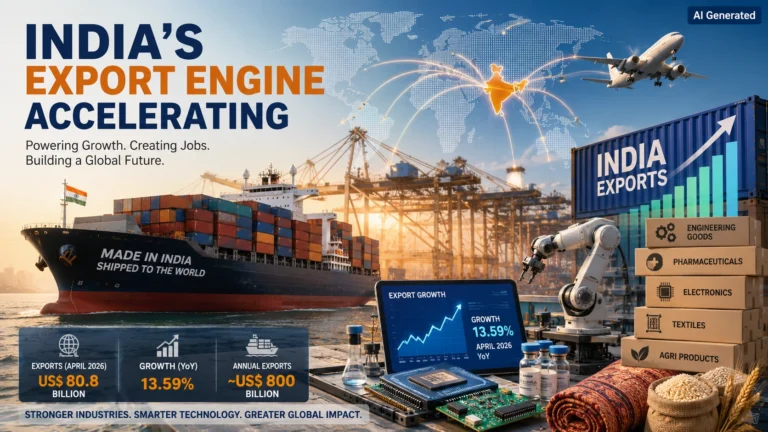
India remains the world’s largest producer and exporter of spices, shipping more than fifty varieties to nearly two hundred countries worldwide. In the last financial year, India’s spice exports crossed approximately US$ 4.7 billion, and projections suggest the global spice trade could expand substantially over the next decade.
But the larger shift happening globally deserves attention.
Demand patterns are changing rapidly.
Consumers in North America and Europe are increasingly paying premium prices for organic-certified turmeric, ginger, black pepper and wellness-oriented spice products. Turmeric, for example, has moved far beyond kitchen consumption and now sits at the center of a rapidly expanding global wellness market because of its anti-inflammatory and antioxidant positioning.
Ginger and pepper are witnessing similar demand patterns.
At the same time, climate disruptions are affecting supply from competing countries. Recent crop failures in Guatemala, one of the world’s major cardamom-producing regions, have already created fresh export opportunities for Indian producers.
This is precisely why timing matters.
Northeast India may be entering the market at exactly the right moment.https://thequantiq.com/gi-tags-not-business-models/
Why Certification Has Quietly Become The New Competitive Advantage
One important lesson global agriculture has taught over the last decade is that production alone no longer determines export success.
Certification increasingly does.
A spice producer hoping to export internationally today requires far more than agricultural output. Import Export Code registration, Spices Board certification, APEDA registration, food safety licenses and globally recognized certifications such as ISO 22000, HACCP and international organic equivalency systems have become part of modern export economics.
In other words, global agricultural trade is increasingly becoming a documentation business.
This is where most small producers struggle.
The cost of obtaining certifications individually often becomes prohibitive. Laboratory testing, export documentation, food safety audits and compliance procedures require scale.
That is precisely why the Ri-Bhoi model deserves attention.
The facility is linked directly to a farmer-owned producer company structure involving over 5,500 organic farmers. This means farmers are not merely growing spices. They are becoming part of a structured export ecosystem capable of collectively accessing markets that individual producers could never reach independently.
That governance architecture may prove even more important than the factory itself.
The Opportunity Extends Far Beyond Meghalaya
The mistake would be to view Ri-Bhoi as a Meghalaya story.
This development should concern the entire Northeast.
Imagine the possibilities.
Nagaland’s chilli belts now possess stronger pathways toward global specialty spice markets. Sikkim’s large cardamom producers can begin targeting premium export buyers more systematically. Assam’s ginger growers suddenly have a far more credible regional processing model to learn from. Arunachal Pradesh and Manipur producers can begin thinking beyond domestic agricultural markets.
Even Bhutan, with its strong organic agriculture positioning, should be watching these developments carefully.
The larger signal is clear.
Northeast India may finally be entering a phase where agricultural production can begin connecting directly with global export systems.
That transition changes regional economics fundamentally.
The Future Belongs To Export-Ready Agriculture
For too long, Indian agriculture has focused primarily on production.
The future will increasingly reward something else.
Export readiness.
The global buyer today pays not merely for crops. Buyers increasingly pay for certification, traceability, sustainability assurance, food safety compliance and predictable supply consistency.
This means agricultural prosperity in the coming decade will depend less on what farmers grow and more on whether entire ecosystems exist around what farmers grow.
Those ecosystems include processing plants, testing laboratories, certification support systems, export documentation infrastructure and cooperative aggregation models.
Ri-Bhoi demonstrates what happens when these missing layers finally begin coming together.
What Northeast Producers Must Understand Now
The lesson for producers across Northeast India is becoming increasingly clear.
Waiting until export infrastructure fully arrives in every district may be a mistake.
The producers who begin preparing early will eventually hold first-mover advantage.
This means understanding organic certification requirements now. It means joining or forming producer companies rather than remaining fragmented smallholders. It means beginning conversations with APEDA, the Spices Board and export advisory agencies much earlier.
The biggest mistake would be assuming exports begin when the factory arrives.
Exports begin much earlier.
They begin when producers start preparing for international compliance systems.
The Bigger Shift Nobody Should Ignore
The inauguration at Ri-Bhoi should not be viewed as a ceremonial infrastructure event.
It is better understood as proof that Northeast India may finally be entering a new economic phase.
For decades, the region possessed exceptional agricultural assets but lacked the systems needed to convert those assets into export-ready products.
That equation may now be changing.
The Quantiq has repeatedly argued that Northeast India’s problem has rarely been a shortage of natural resources.
The real problem has been missing value architecture between production and market access.
Ri-Bhoi quietly demonstrates what happens when that architecture finally begins appearing.
The strategic question now is no longer whether Northeast India can grow world-class spices.
The real question is whether the region can build enough export-ready infrastructure fast enough before the global opportunity window narrows.
Because for perhaps the first time in decades, Northeast India is not merely growing premium agricultural products.
It may finally be preparing to sell them to the world on its own terms.https://www.indianspices.com/