
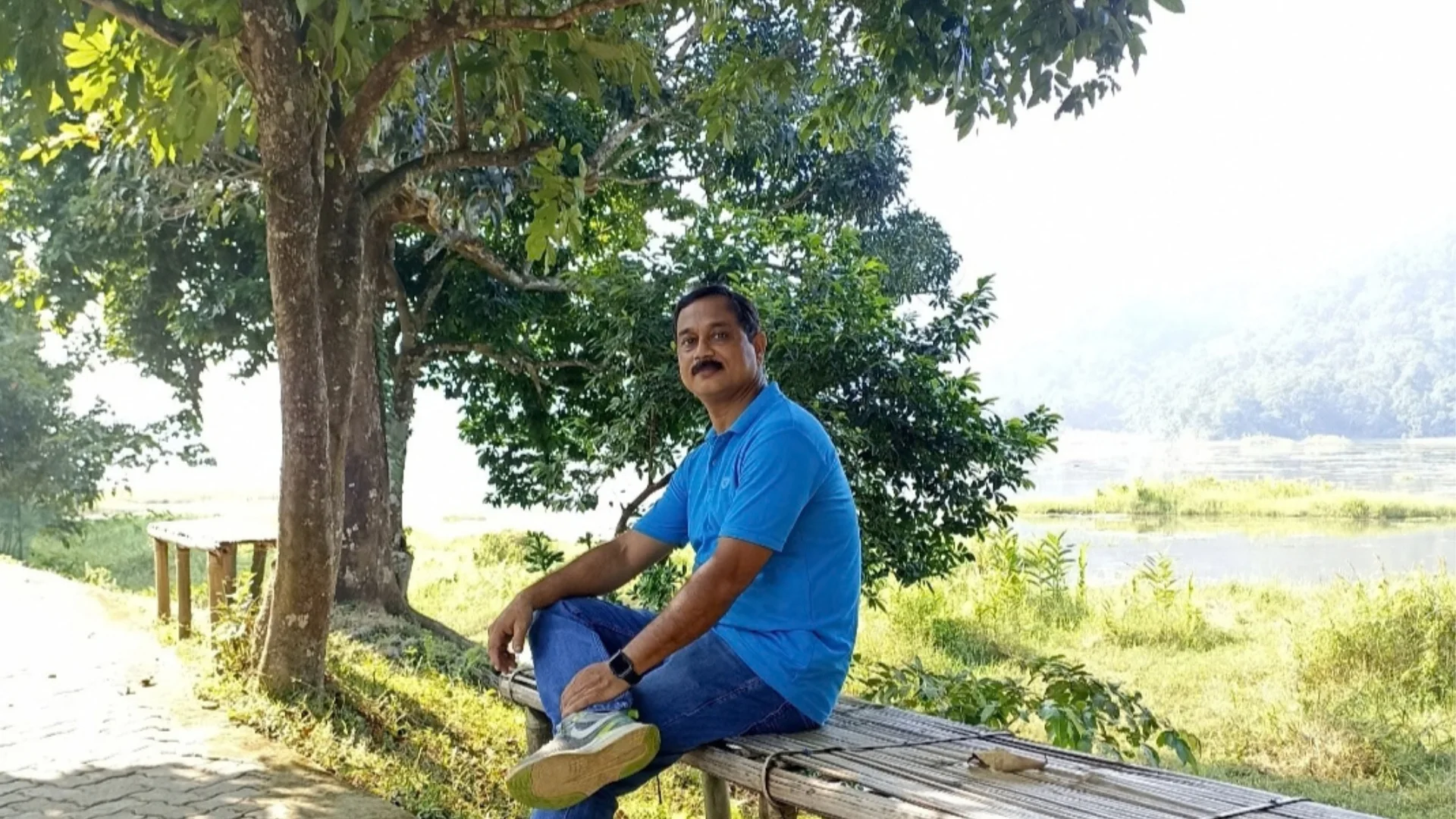
The Accidental Entrepreneur of Kaziranga: How Amitabh Sarma Built Tiger Camp
Founder Series | The Quantiq
Some opportunities do not arrive looking like opportunities. Sometimes they come disguised as problems.
That is the story of Amitabh Sarma, whose entrepreneurial journey began not with a business plan or a desire to build a resort, but with a problem he was trying to solve more than a decade ago.
I have known Amitabh for more than one and a half decades. Over the years, I had often heard visitors speak warmly about their experience at Tiger Camp Kaziranga. Their comments made me curious.
What was it about the place that made people remember it?
Was it the cottages, the food, the service or the location? Or was there something less tangible that made guests feel comfortable and connected with the place?
When I recently sat down with Amitabh to understand his journey, I discovered a story that goes far beyond a resort in Kaziranga.
It is a story about a hotel professional who became an entrepreneur almost by accident.
A career that began at Brahmaputra Ashok
Amitabh’s association with the hospitality industry began in 1988.
While pursuing his diploma at the then Food Craft Institute, he joined Hotel Brahmaputra Ashok in Guwahati as an intern. The hotel was a joint venture between ITDC and the Assam Tourism Department and was among the prominent hospitality establishments in the state.
The internship became the beginning of a much longer relationship.
Whenever Brahmaputra Ashok hosted a major event, students from the institute were often brought in to help address the shortage of skilled manpower. Amitabh therefore got repeated exposure to the hotel and its operations.
After completing his professional course in 1989, he formally joined the hotel as a front-office executive.
His career then moved well beyond the front desk.
Amitabh became one of the trusted young professionals in the organisation. His seniors gave him opportunities to work across different functional areas of hotel operations. Over time, he developed an understanding of hospitality that went beyond serving guests.
He learned how a hotel actually works.
That experience would eventually take him to Kaziranga.
An assignment that changed everything
In 2005, Assam was preparing to celebrate the centenary of Kaziranga.
One of the challenges facing the government was the shortage of accommodation for visitors to the national park. Brahmaputra Ashok was entrusted with developing a tourism property in Kaziranga.
The project involved a 13-bigha plot of land and plans for ten huts, a restaurant and other facilities.
The property was named Kaziranga Jungle Camp.
By then, Amitabh had established himself as a dependable hotel operations professional. The management therefore entrusted him with the responsibility of running the new property.
He would manage Kaziranga Jungle Camp from 2006 to 2016.
For nearly a decade, Kaziranga became his workplace, but it also became something more.
He began understanding the rhythms of the destination, the expectations of visitors and the challenges of running a hospitality business in a place where nature itself is part of the experience.
Then came a problem.
When a problem became an investment
The approach road to Kaziranga Jungle Camp became a source of trouble. Some people with vested interests began obstructing access to the property.
Amitabh and his colleagues explored several possible solutions.
Eventually, he and two colleagues decided that the more practical answer was to acquire an adjoining piece of land and create an alternative approach road.
There was, however, no immediate funding available from the obvious sources.
Amitabh decided to invest his own money.
At that point, he was still an employee.
He was not acquiring land to build his own resort. He was trying to solve an operational problem for the property he had been entrusted to run.
He could not have known that this decision would eventually change his life.
The end of one chapter
In 2017, Amitabh’s long association with Brahmaputra Ashok came to an end.
The Assam government decided to demolish the hotel and construct a world-class convention centre at the site. The employees were offered a Voluntary Retirement Scheme.
Amitabh recalls that the package was among the best VRS packages available in the country at the time. The then Tourism Minister, who is now Assam’s Chief Minister, had assured the employees that they would receive a good package.
According to Amitabh, that assurance was honoured.
But there was another twist.
The original Kaziranga Jungle Camp property was eventually allocated for another government project.
The hotel he had spent years managing was gone.
The land he had purchased to solve the access problem, however, remained.
That piece of land would become the foundation of his second life in hospitality.
The accidental entrepreneur
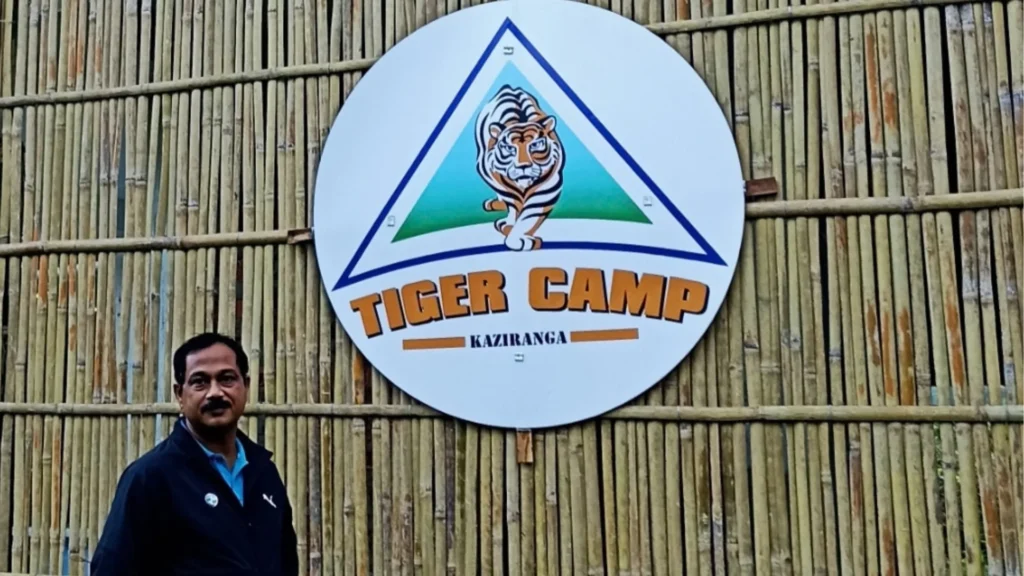
In 2022, Amitabh decided to build Tiger Camp Kaziranga.
He invested his own funds, including a substantial part of the money he had received through the VRS. A close friend also came forward to invest.
This time, there was no corporate organisation behind him.
There was no established hotel infrastructure.
There was only a piece of land, years of hospitality experience, personal savings and the willingness to take a risk.
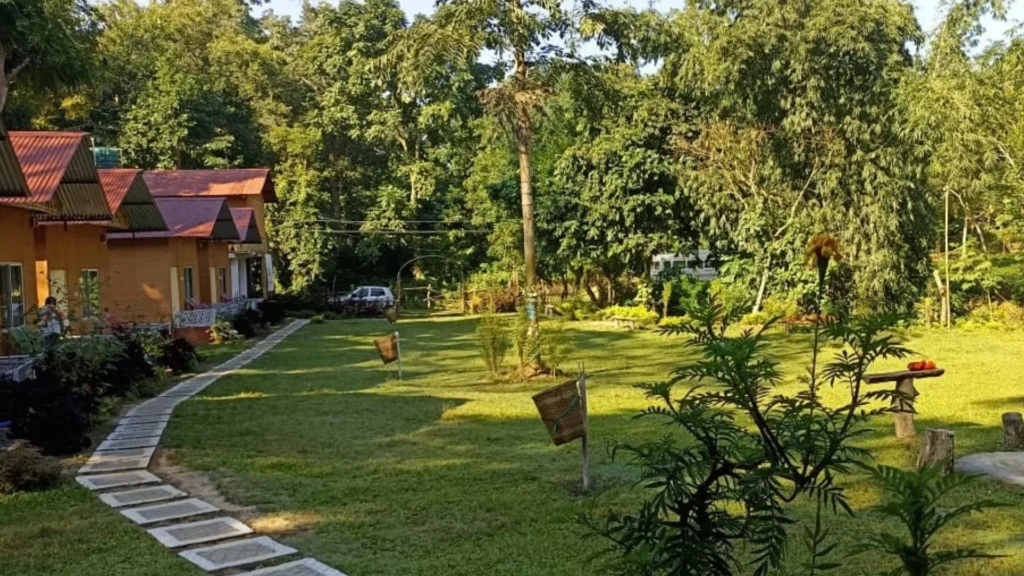
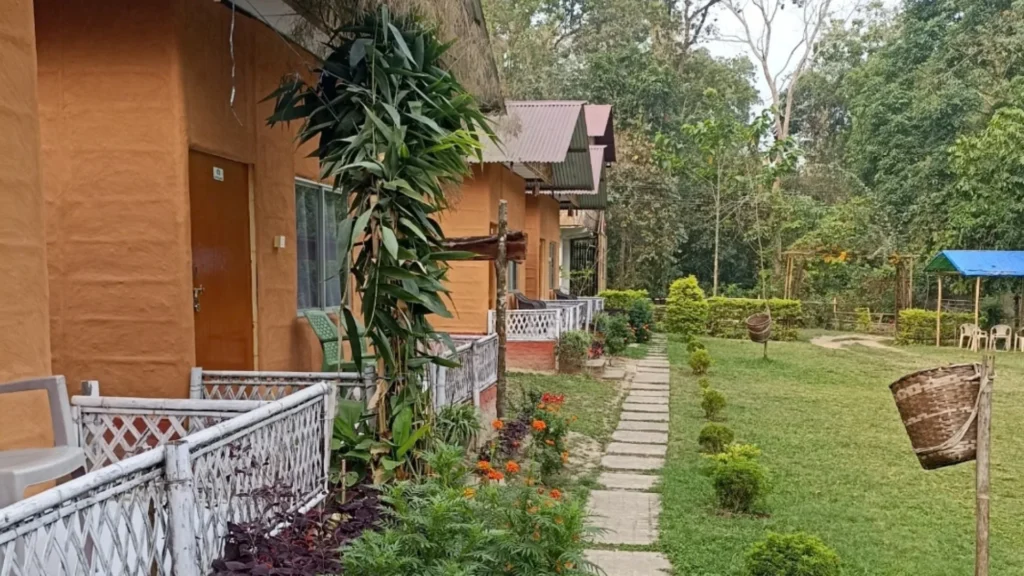
Tiger Camp Kaziranga began with eight cottages.
The cottages are designed for different kinds of travellers. A small family of four can stay comfortably, while larger groups of up to twelve people can also be accommodated.
There is another feature that reflects the character of the property.
The cottages are built using eco-friendly materials, with bamboo playing a major role in their construction.
In a destination like Kaziranga, that choice feels more than aesthetic. The accommodation sits within an environment where nature is not simply a backdrop for tourism. It is the reason people come here.
What makes guests come back?
This was the question I was most interested in exploring.
I had repeatedly heard visitors speak highly of their experience at Tiger Camp. Yet good accommodation is no longer unusual in a destination like Kaziranga.
So what creates the difference?
The answer may lie partly in the numbers.
Kaziranga’s tourism season generally runs from October to May. Tiger Camp sees occupancy of around 70 percent during October and November. December and January can reach almost 100 percent occupancy, while February to May generally remains in the 60 to 70 percent range.
But one number stood out to me more than occupancy.
Amitabh says around 80 percent of his guests are repeat visitors.
That is significant for a hospitality business.
A guest may choose a property because of its location, photographs or recommendations. But returning is a different decision. It suggests that the first experience created enough value for the guest to come back.
For Amitabh, the appreciation he receives from visitors appears to be one of the most satisfying parts of running the business.
After decades in hospitality, the reaction of a guest seems to matter to him as much as the business itself.
Hospitality beyond the room
The more I listened to Amitabh, the more I realised that Tiger Camp is not simply about accommodation.
A hotel room can provide comfort.
A resort can provide facilities.
But hospitality becomes memorable when the people running the property understand the destination and the people who come to experience it.
Amitabh has spent much of his professional life doing exactly that.
He understands hotel operations from the inside. He has also spent years observing visitors to Kaziranga.
That combination gives him a useful perspective.
He knows what guests expect when they arrive. More importantly, he appears to understand that those expectations can change once they begin experiencing the destination.
This is where his personality becomes important.
An entrepreneur who keeps exploring
Amitabh is naturally curious about nature.
Even after building his own property, he continues to explore the areas around Tiger Camp Kaziranga.
He is constantly looking for new possibilities.
What else can a guest experience beyond a safari?
What is there around the property that visitors may not know about?
Can a stay in Kaziranga become more than a room, a meal and a jeep ride into the national park?
These questions are important because tourism is increasingly moving towards experiences.
Travellers may visit a destination for its famous attraction. They remember it, however, through the experiences they collect around it.
For a hospitality entrepreneur, that makes value addition a continuous process.
There is always another experience to discover.
From a problem to an opportunity
There is a remarkable symmetry in Amitabh’s journey.
More than a decade ago, he invested his personal money to solve a problem for a property that did not belong to him.
Years later, that investment became the foundation for a property that does belong to him.
The irony is difficult to miss.
The land was originally acquired because there was a problem with an approach road.
It eventually became the road to entrepreneurship.
Amitabh did not begin his career intending to become a hotel entrepreneur. He began as a student looking for practical experience.
He became a hotel professional.
Then he became an operations specialist.
Then a problem solver.
And eventually, almost three decades after entering the hospitality industry, he became an entrepreneur.
The next chapter of Tiger Camp
Today, Amitabh seems comfortable with the business he has built.
There is no sense of a man who is trying to build the biggest resort in Kaziranga.
Instead, there is a sense of someone who wants to keep improving the experience.
That may explain why he continues to explore the landscape around Tiger Camp.
The business may have begun with eight cottages, but his idea of hospitality appears to extend beyond the physical property.
The real product may be the experience of Kaziranga itself.
The cottages provide the base.
The food provides another connection.
The service creates comfort.
The surrounding landscape provides the setting.
And the entrepreneur keeps searching for the experiences that can connect all of them.
Perhaps that is also the larger lesson from Amitabh Sarma’s journey.
Entrepreneurship does not always begin with an idea.
Sometimes it begins with responsibility.
Sometimes it begins with a problem that nobody else is willing to solve.
And sometimes, the investment you make to solve that problem today becomes the opportunity you discover years later.
For Amitabh, the road to Tiger Camp Kaziranga began with a road he needed to build for Kaziranga Jungle Camp.
He did not know then where that road would lead him.
Today, it has taken him from being a hotel professional to becoming the owner of a hospitality business that brings visitors back to Kaziranga, year after year.
And perhaps the most interesting part of his entrepreneurial journey is that he is still exploring where the road goes next.