
Tea Is More Than an Industry in Assam
Rethinking Tea Beyond Production, Towards Value, Identity and the Future Economy.
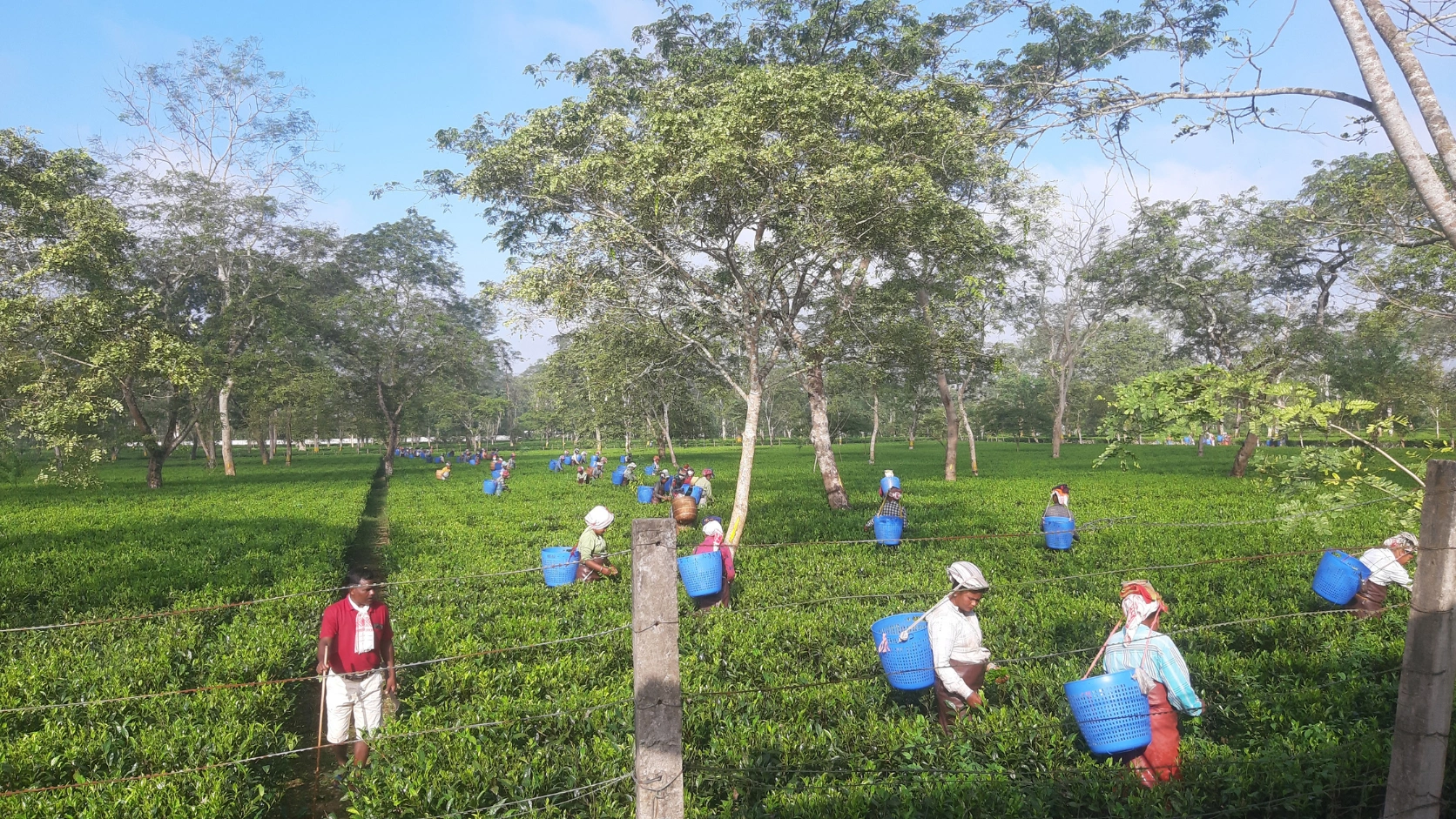
For Assam, tea is not merely an agricultural commodity. It is memory, geography, labour, identity, economy and emotion woven into everyday life.
From the misty mornings of Upper Assam to roadside tea stalls in small towns and cities, tea has shaped not only the economy of the region but also its rhythm of life. Entire generations grew up around tea estates. Roads, railways, townships and commercial activity evolved around the industry. Few sectors have influenced Assam’s modern history as deeply as tea.
Globally too, Assam tea commands enormous respect. Its bold flavour, deep colour and distinctive strength have made it one of the most recognized tea identities in the world. Even today, when someone speaks of strong breakfast tea in many parts of the globe, Assam often enters the conversation naturally.
Yet, somewhere between legacy and modernity, a difficult but important question quietly emerges.
Has Assam fully captured the value of what it produces?
That question is not about diminishing the contribution of the tea industry. On the contrary, it emerges precisely because tea remains so important to Assam’s future.
The global tea economy is changing rapidly. Consumers are no longer buying tea only as a beverage. Increasingly, they are buying wellness, experience, sustainability, traceability, story, lifestyle and emotional connection.
In many parts of the world, tea has evolved into a premium cultural and wellness product category. Japan transformed tea into ritual and philosophy. China built entire ecosystems around terroir, heritage and premium consumption. Sri Lanka successfully strengthened the global identity of Ceylon Tea beyond mere production.
Meanwhile, Assam still largely remains identified with production strength and bulk tea.
That is both its strength and its challenge.
For decades, the industry naturally focused on cultivation, scale, manufacturing and exports. But the future economy may increasingly reward something different — branding, intellectual property, wellness innovation, tourism, direct consumer connection and storytelling.
The world today does not merely consume products. It consumes narratives.
This shift opens a new conversation for Assam.
Can Assam move beyond being only a producer of tea and gradually become a creator of tea-based experiences, brands and future-facing ecosystems? The opportunity is enormous.
Globally, wellness tea is becoming a rapidly growing category. Consumers increasingly seek products connected with better sleep, stress management, digestive wellness, mental clarity and mindful living. At the same time, younger consumers are showing growing interest in single-origin products, artisanal beverages, sustainable sourcing and authenticity.
One does not need to look only overseas to understand the potential of specialty tea.

Hidden within Assam itself are powerful examples of value creation through tradition and uniqueness. Among them, Phalap — the handmade tea associated with the Singpho community of Upper Assam — stands out as a remarkable story of heritage and market possibility. Carefully handcrafted using traditional knowledge systems passed down through generations, Phalap represents more than a beverage; it reflects culture, memory and artisanal skill. Its growing demand among specialty tea enthusiasts and premium buyers demonstrates an important lesson: when tea carries authenticity, story and distinctiveness, it can command significantly higher value than ordinary commodity tea.https://thequantiq.com/the-72-hour-rule-northeast-india-tourism/
The story of Phalap quietly reminds us that some of Assam’s most valuable innovations may already exist within its own cultural landscape, waiting to be recognized, refined and introduced more confidently to wider markets.
This is where Assam possesses natural advantages that many regions cannot easily replicate. The region carries deep tea heritage, biodiversity, emotional identity, skilled human ecosystems, climatic uniqueness and global recognition.
Yet another powerful opportunity lies in tea tourism.
Across the world, experiential travel is growing rapidly. People no longer travel merely to see places; they increasingly travel to feel stories and experiences. Assam’s tea gardens, colonial heritage, river landscapes, biodiversity and cultural depth could potentially support immersive tea trails, luxury tea stays, wellness retreats, tea tasting journeys and tea-and-cuisine experiences.
The possibilities remain largely underexplored.https://thequantiq.com/industrial-hemp-northeast-india-slow-fashion/
Then comes the next frontier: TeaTech.
Artificial Intelligence, climate intelligence systems, traceability tools and immersive digital experiences are beginning to reshape agricultural and consumer industries globally. Tea will not remain untouched by these transformations.
Imagine a future where consumers scan a tea package and instantly discover the estate, harvest season, sustainability practices, flavour profile, artisan story and climate footprint behind the product. Imagine AI-assisted flavour recommendation systems, immersive virtual tea estate experiences and premium traceable tea ecosystems built around Assam’s heritage.
The conversation may sound futuristic today, but globally these transitions have already begun.
This is why Assam’s tea story may now require a second phase. The first phase established Assam as one of the world’s great tea-producing regions.
The next phase may require Assam to think more deeply about value creation, branding, innovation, wellness, sustainability and experience-led economies.
This transition is not about abandoning tradition. It is about layering innovation over heritage.
Importantly, this conversation should not become one of blame or negativity. The tea industry has carried Assam’s economy through multiple historical transitions and remains one of the region’s most important economic pillars. The objective now should be constructive reimagination.
In fact, there are already a few professionals and entrepreneurs from Assam with decades of hands-on experience who have quietly experimented with specialty tea development, premium positioning and value-added tea products, building impressive niche markets and generating strong revenues in the process. Their journeys demonstrate that the possibilities are real, not theoretical. In the coming days, The Quantiq plans to introduce some of these stories to readers in greater depth, exploring how innovation and market understanding are opening new pathways within the tea economy.
There is also a deeply emotional geography attached to Assam’s tea story that deserves renewed attention.
Take a slow drive along the old national highway stretching from Dibrugarh toward Talap in Upper Assam and one begins to understand how profoundly tea shaped the region’s urban landscape and mobility patterns. Along this historic corridor, the railway track runs almost parallel to the highway through vast stretches, quietly narrating the story of an industry that transformed Upper Assam over generations.
Small tea towns appear one after another almost rhythmically, punctuated by railway stations every few kilometres. Tea gardens unfold endlessly across the landscape. Markets, settlements, railway connectivity and commercial activity evolved around this tea geography over decades, creating a remarkably unique economic and cultural corridor.
This stretch deserves far greater recognition than it currently receives.
Perhaps one day, the Dibrugarh–Talap highway corridor, along with its parallel railway alignment and tea landscapes, should be preserved and promoted as a Tea Heritage Highway of Assam — not merely as transport infrastructure, but as a living historical archive of how tea shaped the social, economic, and urban evolution of Upper Assam.
Few industries leave behind such a visible civilizational footprint.
Perhaps the larger question for the coming decade is not whether Assam can produce more tea.
Perhaps the more important question is whether Assam can build greater value around tea.
Because the future global economy may increasingly reward not merely those who produce commodities, but those who build meaning, trust, experience, identity and intellectual ecosystems around them.
Tea gave Assam global recognition.
The next challenge may be ensuring that Assam also captures a larger share of the future value emerging around tea.
And that conversation may only just be beginning.https://thequantiq.com/northeast-india-airport-growth-economic-impact/