Skip to content
The Quantiq


Subscribe

  • AI & Future TechExpand
    • AI Tools & Reviews
    • AI in Everyday Life
    • Future of Work
    • Robotics & Automation
  • Business & EconomyExpand
    • Policy
    • Corporate & Industry
    • MSME & Startups
    • Finance
    • Digital Economy
  • Innovation & StartupsExpand
    • Funding & VC
    • Rural Innovation
    • Startup Stories
    • Tech Innovations
  • North East InsightExpand
    • Economy of NE India
    • Entrepreneurship in NE
    • Government & Policy
    • Infrastructure & Development
    • Tourism & Heritage
  • SustainabilityExpand
    • The Carbon Ledger
  • IntelligenceExpand
    • Health
    • Auto & Mobility
Subscribe
The Quantiq

From Hidden Valleys to Hospitality Capital: The Dirang Signal That Redraws Northeast India’s Tourism MapThe Trans-Himalayan Surge: How the North East–Bhutan Corridor Is Rewriting Asia’s Tourism Map (2022–2025)THE QUANTIQ | MID-WEEK BRIEFThe Green Goldmine: Monetizing North East India’s Medicinal Bio-WealthThe Sovereign Spine: How Assam’s NDC-NER Is Rewiring India’s Digital Future from the Edge

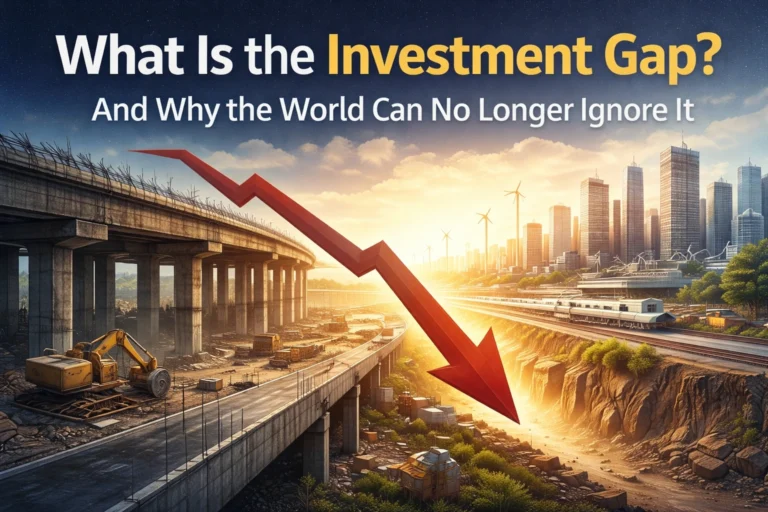
  • Illustration of global investment gap showing incomplete infrastructure and economic disparity
    Business & Economy

    What Is the Investment Gap? And Why the World Can No Longer Ignore It

    ByTeam TQ April 13, 2026April 13, 2026

    A Gap You Cannot See, But Can Feel There are gaps that can be measured, and there are those that are experienced long before they are understood. The investment gap belongs to the latter. It does not announce itself with headlines or market crashes. It reveals itself more quietly—in unfinished roads, delayed projects, underfunded systems,…

    Read More What Is the Investment Gap? And Why the World Can No Longer Ignore ItContinue

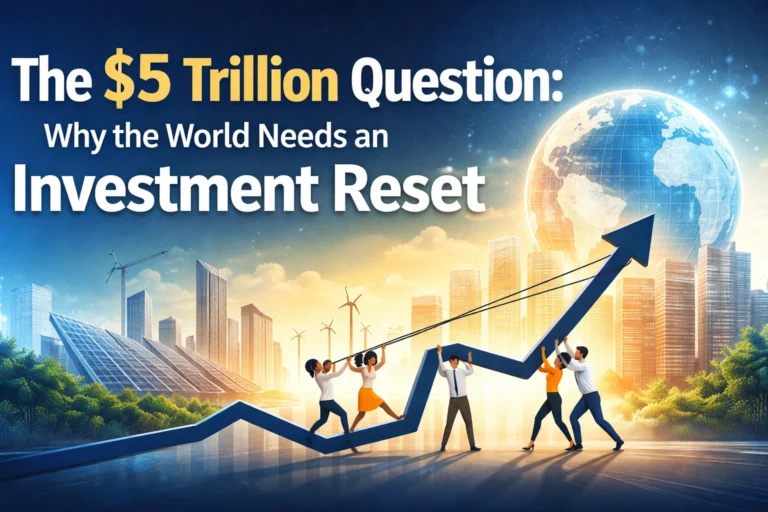
  • Illustration of global investment growth with rising arrow, renewable energy infrastructure, and city skyline representing economic expansion and sustainability
    Business & Economy

    The $5 Trillion Question: Why the World Needs an Investment Reset

    ByTeam TQ April 13, 2026April 13, 2026

    When Numbers Start Sending Signals There are moments in history when numbers stop behaving like statistics and begin to feel like signals. This is one of those moments. In its latest report, Accelerating Investment: Challenges and Policies, the World Bank Group lays out a striking proposition: to stay on course with development goals and climate…

    Read More The $5 Trillion Question: Why the World Needs an Investment ResetContinue

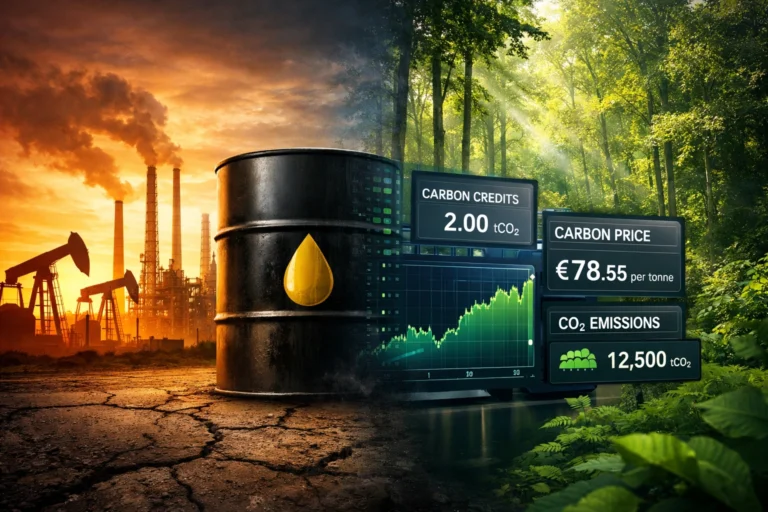
  • Digital illustration contrasting an oil refinery and barrel with a forest and carbon credit dashboard, symbolising the shift from fossil fuel economy to carbon pricing and climate finance.
    Sustainability | The Carbon Ledger

    The Carbon Economy: The New Oil of the 21st Century?

    ByTeam TQ February 26, 2026February 26, 2026

    The 21st Century’s New Economic Variable The 20th century was shaped by oil. Currencies were built around it. Wars were fought over it. Entire industries depended on it. Today, however, something quieter is beginning to influence global trade and finance. Carbon. Not fossil fuels themselves — but the right to emit them. In fact, the…

    Read More The Carbon Economy: The New Oil of the 21st Century?Continue

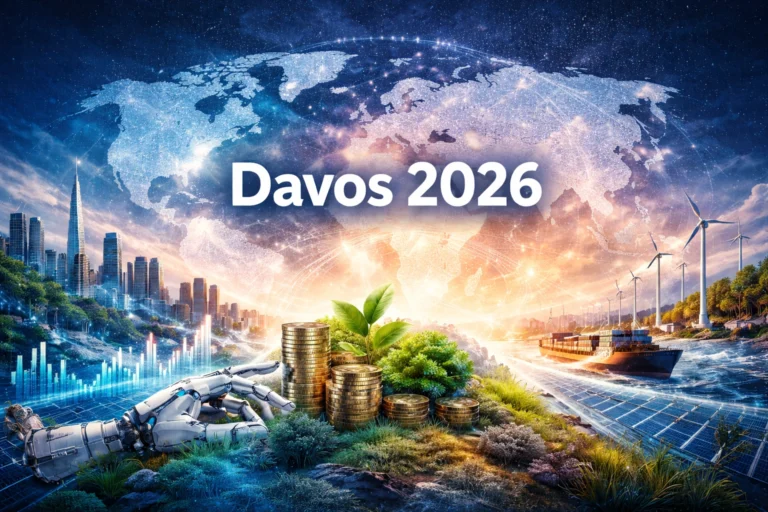
  • Abstract illustration for Davos 2026 showing global economic signals through a connected world map, AI technology, capital flows, renewable energy, and international trade.
    Business & Economy | Policy

    WEF Davos 2026: The Signals Shaping the Global Economy — and India’s Make-or-Break Choices

    ByTeam TQ January 25, 2026January 30, 2026

    Once caricatured as elite networking or grandstanding diplomacy, the annual meeting of the World Economic Forum now serves a different function. It is no longer where deals are struck in public view; it is where global alignment is tested. Capital, governments, and technology leaders use Davos to reveal priorities, anxieties, and limits—often through repetition rather…

    Read More WEF Davos 2026: The Signals Shaping the Global Economy — and India’s Make-or-Break ChoicesContinue

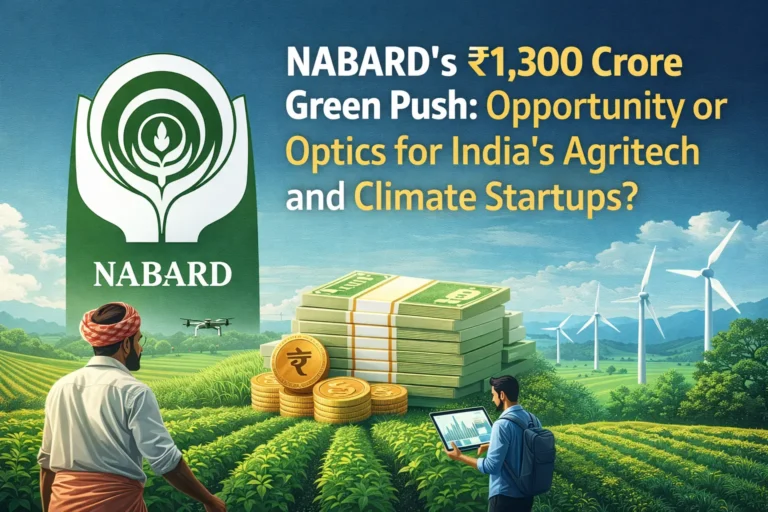
  • Visual representation of NABARD’s ₹1,300 crore green fund supporting agritech, climate startups, and rural innovation in India.
    Business & Economy | Entrepreneurship in NE | Funding & VC | MSME & Startups | Rural Innovation

    NABARD’s ₹1,300 Crore Green Push: Opportunity or Optics for India’s Agritech and Climate Startups?

    ByTeam TQ January 13, 2026January 13, 2026

    The announcement that National Bank for Agriculture and Rural Development (NABARD) plans to launch two new funds worth ₹1,300 crore in January 2026 has generated quiet optimism across India’s agritech and climate innovation ecosystem. At first glance, the initiative appears timely and well-aligned with India’s stated priorities: sustainable agriculture, climate resilience, and rural transformation. However,…

    Read More NABARD’s ₹1,300 Crore Green Push: Opportunity or Optics for India’s Agritech and Climate Startups?Continue

Facebook FacebookInstagram InstagramYouTube YouTube
  • About The Quantiq
  • Contact Us
  • Home
  • Privacy Policy
  • Subscription

© 2026 The Quantiq Media Labs LLP. All trademarks, logos, content, and intellectual property are protected.

  • AI & Future Tech
    • AI Tools & Reviews
    • AI in Everyday Life
    • Future of Work
    • Robotics & Automation
  • Business & Economy
    • Policy
    • Corporate & Industry
    • MSME & Startups
    • Finance
    • Digital Economy
  • Innovation & Startups
    • Funding & VC
    • Rural Innovation
    • Startup Stories
    • Tech Innovations
  • North East Insight
    • Economy of NE India
    • Entrepreneurship in NE
    • Government & Policy
    • Infrastructure & Development
    • Tourism & Heritage
  • Sustainability
    • The Carbon Ledger
  • Intelligence
    • Health
    • Auto & Mobility
Search